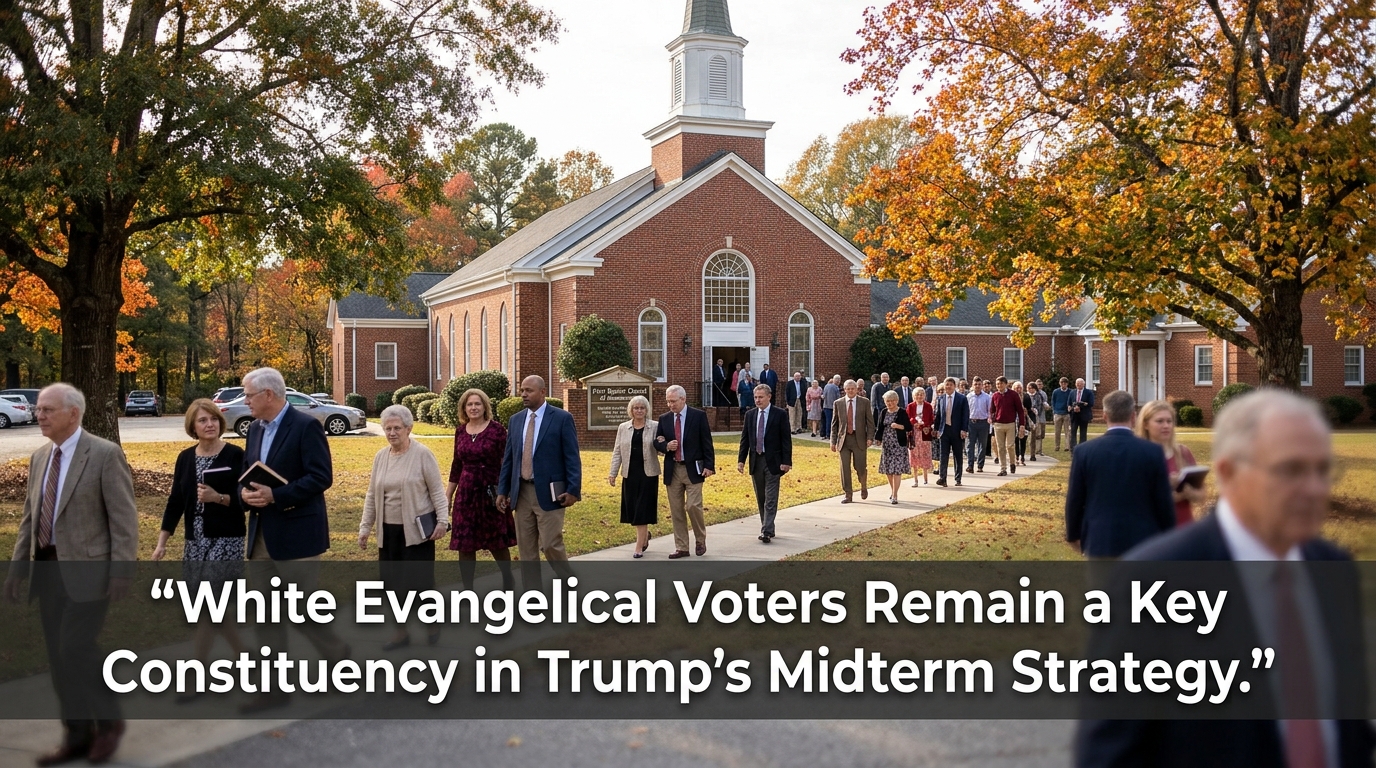


White evangelical Christians remain an important constituency for President Donald Trump and the Republican Party as campaigns prepare for the November 3 midterm elections.
A Reuters report published October 22 described continued support for Trump among white evangelical voters, even as the president faces broader political challenges and voter frustration over economic conditions.
Interviews and Reuters/Ipsos polling discussed in the report indicate that this constituency could play an important role in Republican turnout during the final days of the campaign.
Religious identity and political participation
White evangelical voters have been an influential part of the Republican electoral coalition for multiple election cycles. Issues such as abortion, religious liberty, judicial appointments and education have helped shape political engagement among many voters in this group.
However, religious affiliation does not determine every individual's political preferences. Evangelical communities include differing views on economic policy, foreign affairs, immigration and the responsibilities of government.
Local churches and community networks can also provide spaces for political discussion, although religious institutions vary in their approach to direct campaign activity.
Turnout matters in close contests
The significance of any constituency depends partly on how many eligible voters participate and where those voters live. In closely contested congressional races, differences in turnout can influence the final margin.
Republican candidates are seeking to maintain support among established voters while also addressing concerns about household costs and the administration's policy decisions. Democrats are attempting to mobilize their own constituencies and appeal to voters dissatisfied with the direction of the country.
The November elections will provide another measure of how religious identity intersects with economic concerns and party loyalty in American politics.