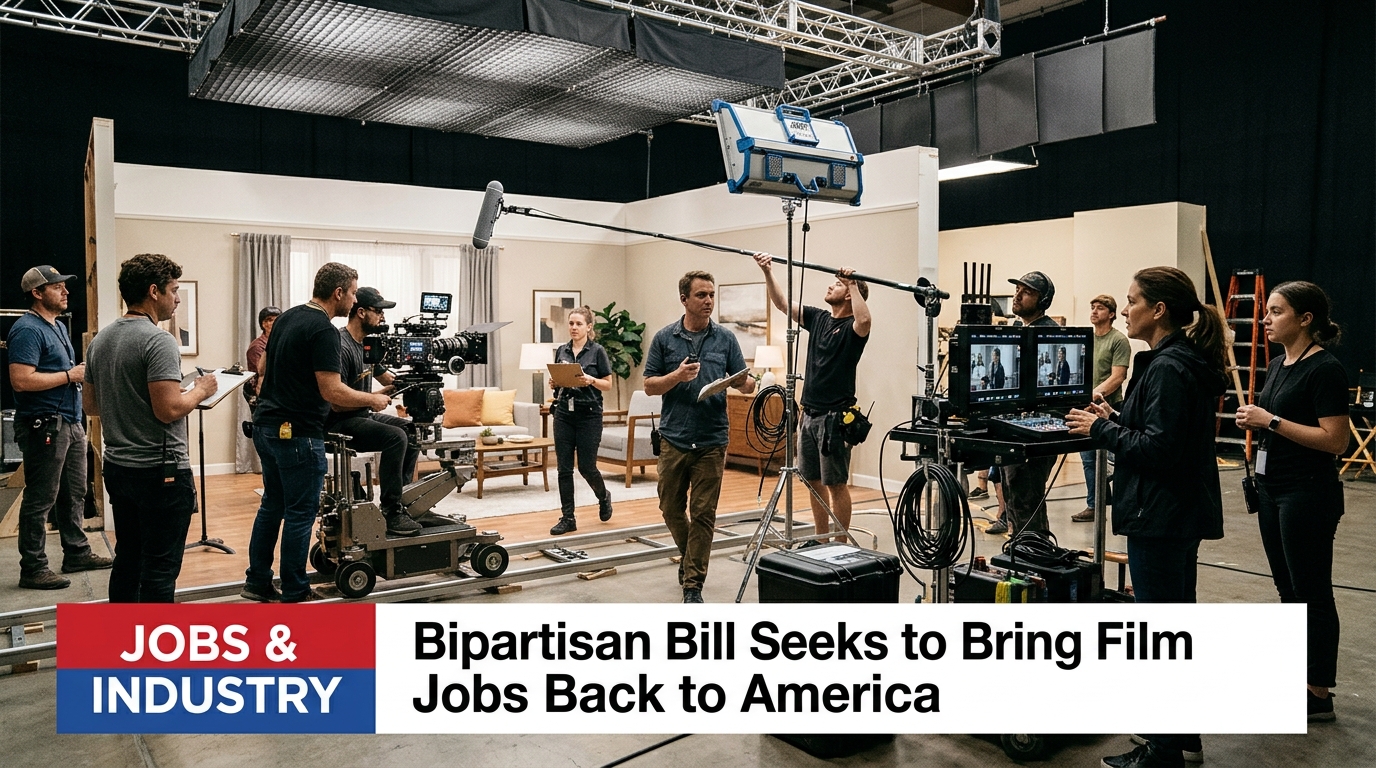


A bipartisan group of lawmakers has introduced legislation designed to encourage more film and television production in the United States through a proposed federal tax credit. The Motion Picture, Television, and Entertainment Revitalization Act is intended to make American production more competitive with countries that offer financial incentives to attract studios and production companies.
The proposal has support from lawmakers in both parties and both chambers of Congress, reflecting concern that production work has increasingly moved to countries offering attractive tax arrangements. Supporters argue that the shift affects not only actors and studios but also the large network of workers and small businesses that support film and television production.
What the proposal would offer
The legislation would establish a federal tax credit for qualifying production expenses, with a focus on labor costs for American workers. The proposal includes conditions intended to ensure that a substantial portion of a production takes place in the United States.
Additional incentives could apply to certain productions that meet specified criteria, including independent projects and productions that carry out qualifying work in rural areas or locations recovering from disasters. The proposal also includes provisions intended to encourage production activity and employment across multiple states.
The legislation is not yet law. It has been referred to the relevant congressional tax committees, where lawmakers can review its design, potential cost and likely effect on production decisions.
Why the issue has become political
Film and television production can generate employment across many sectors, including construction, transportation, catering, costume design, visual effects, equipment rental and post-production services. When a production moves abroad, the effect can reach far beyond the cast and the studio directly responsible for the project.
Supporters of a federal credit say a national approach could complement state-level incentives and help U.S. production companies compete with international markets. They argue that a federal framework would give companies greater certainty when deciding where to invest.
Critics of tax incentives generally question whether the public benefits justify the cost to government revenue. Policymakers will need to consider whether the proposal generates new domestic activity or primarily subsidizes projects that would have been produced in the United States anyway.
The next legislative test
The bill's future will depend on congressional support, detailed tax analysis and the ability to reconcile differing views on industrial policy. Lawmakers may seek information about expected job creation, the distribution of benefits among states and how the credit would be monitored.
For the entertainment industry, the central question is whether the proposal can turn bipartisan interest into a workable national policy. For Congress, the debate is another test of how tax incentives should be used to influence investment, employment and domestic economic activity.