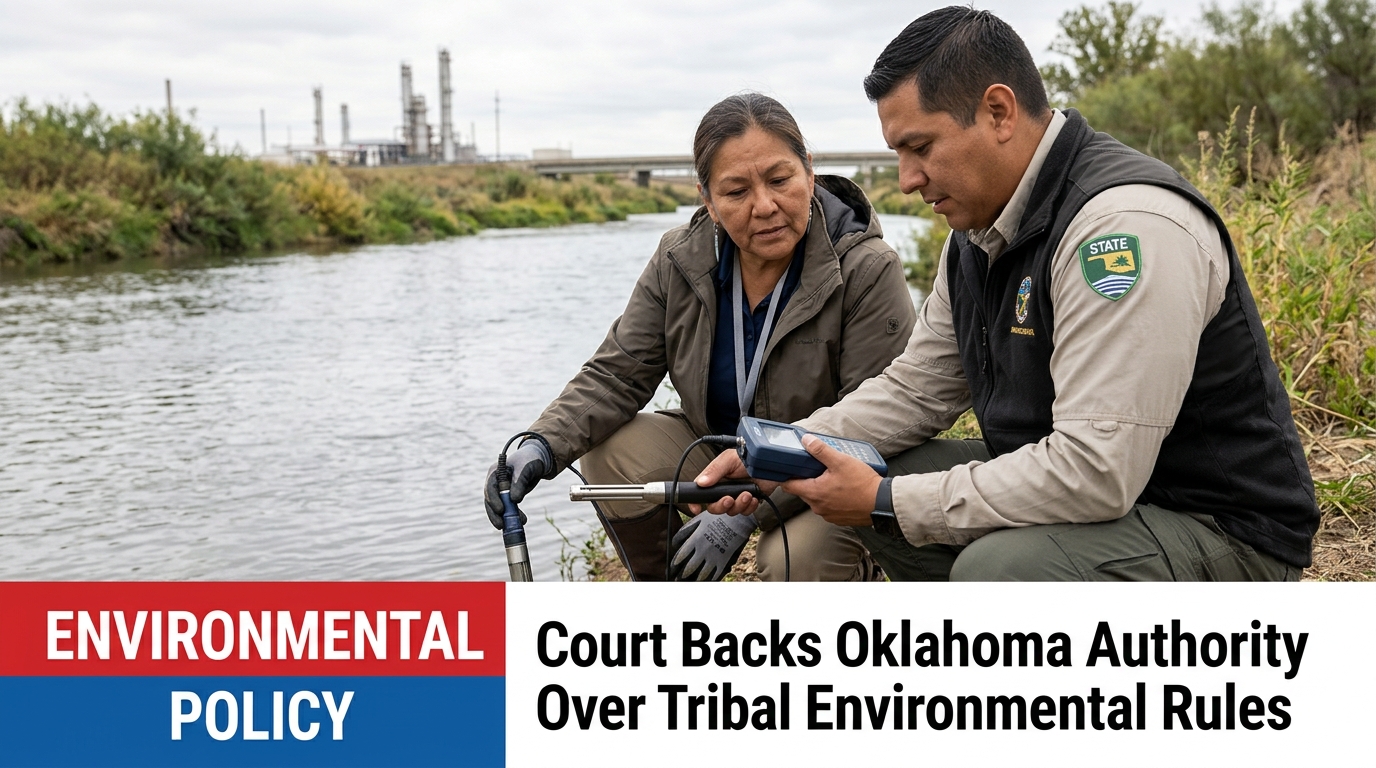


A divided federal appeals court has upheld a Trump administration decision allowing Oklahoma to exercise broad authority over environmental regulation on tribal lands. The ruling represents a significant development in a long-running dispute over the balance of power among state governments, federal agencies and Native American tribes.
The case involves an unusual provision of federal law that the Environmental Protection Agency used to approve Oklahoma's request for regulatory authority. The provision has become controversial because it affects who can set and enforce environmental standards in areas where tribal sovereignty and state jurisdiction intersect.
A complicated legal history
The dispute developed after the Supreme Court's 2020 decision in McGirt v. Oklahoma, which recognized that much of eastern Oklahoma remains within the boundaries of a historical Native American reservation for purposes of federal criminal law. The decision prompted wider questions about how other laws and government responsibilities apply within those boundaries.
Oklahoma sought authority to administer environmental regulations in tribal areas. Under the Biden administration, the EPA initially withdrew its earlier approval and later restored it with conditions requiring consultation with affected tribes. The Trump administration subsequently removed those conditions.
The Pawnee Nation challenged the decision, arguing that the relevant statutory provision could no longer be relied upon and that tribal consultation safeguards were necessary. The appeals court majority rejected that interpretation and concluded that the law required the EPA to approve valid state requests without imposing the disputed conditions.
Why the ruling matters
Environmental regulation affects air quality, water protection, industrial permits and enforcement actions. The authority to issue permits or establish regulatory standards can have significant consequences for communities living near industrial facilities and other sources of pollution.
The ruling also raises questions about the practical meaning of tribal sovereignty. Tribal governments maintain legal rights and governing responsibilities, but the relationship between tribal authority and state or federal regulation can be complicated by overlapping statutes and court decisions.
The dissenting judge argued that the decision could weaken tribal sovereignty unless Congress clearly authorized the change. The disagreement reflects a wider legal debate over how historical statutes should be interpreted when they affect modern tribal governance.
Possible next steps
The Pawnee Nation is considering its legal options. Further litigation could determine whether the decision stands or whether additional review is sought.
The case may also prompt lawmakers to examine whether federal environmental statutes adequately clarify the roles of states, tribes and federal regulators. For affected communities, the practical impact will depend on how regulatory authority is exercised and whether environmental protections remain effective.