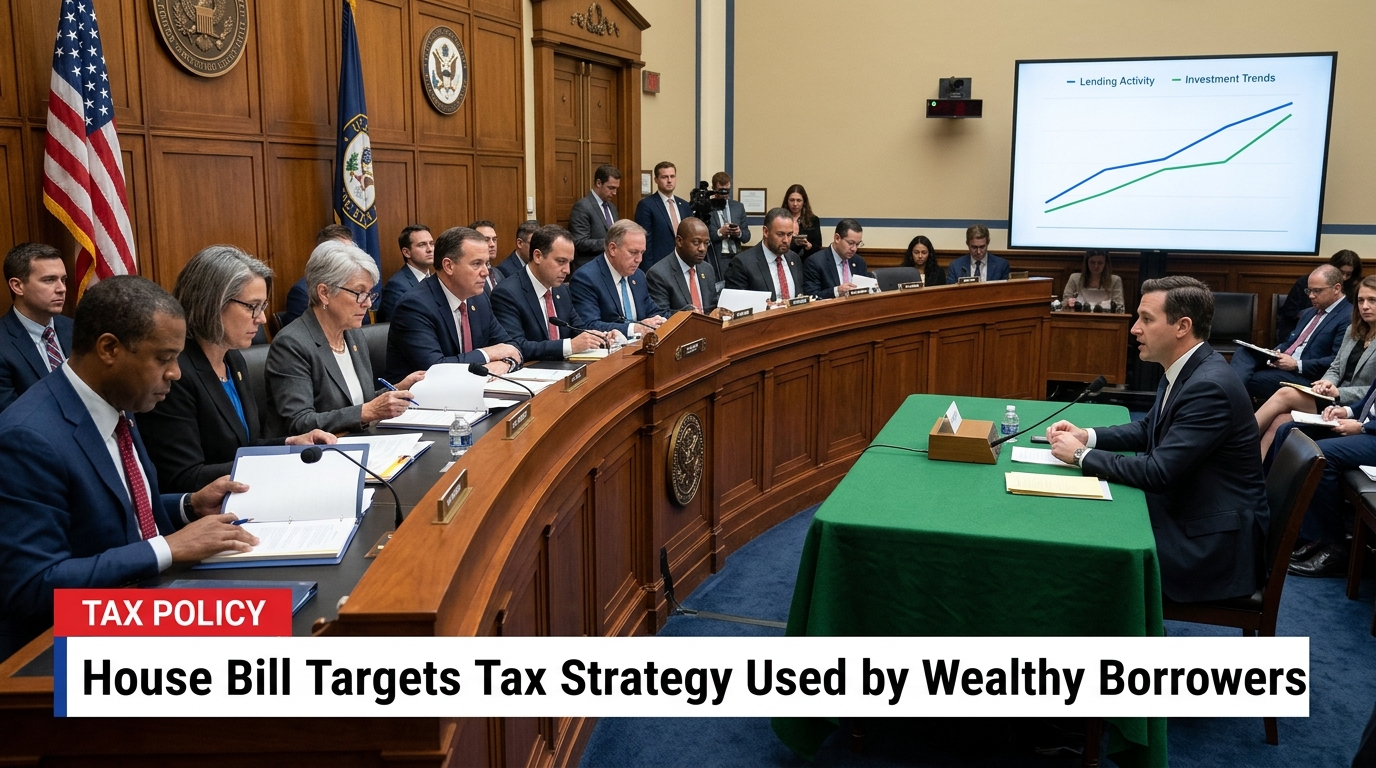


A new House proposal seeks to change how certain large loans backed by stocks and other valuable assets are taxed. Introduced by Democratic Representative Laura Friedman of California, the Pay Your Taxes Avoided by Borrowing Act is designed to address a strategy sometimes described as “buy, borrow, die,” in which wealthy individuals borrow against appreciating assets rather than selling them and realizing taxable gains.
Under current tax rules, a loan generally is not treated as income simply because the borrower receives cash. As a result, someone with a large investment portfolio may be able to finance spending by borrowing against assets that have increased in value, potentially delaying the capital-gains tax that would apply if those assets were sold.
How the proposed tax would work
The legislation would impose a 23.8% excise tax on covered asset-backed loans above a specified threshold. Under the proposal, the tax would apply to the portion of covered borrowing above $1 million, with related parties counted together to limit the ability to divide loans among connected borrowers.
The bill includes exemptions for several common types of borrowing, including qualifying primary-residence mortgages up to a specified amount, student loans, business loans and certain margin loans used for securities trading. It also proposes reporting requirements for lenders and a mechanism intended to prevent borrowers from being taxed twice when the underlying assets are eventually sold.
The proposal would not automatically become law simply because it has been introduced. It must advance through the relevant House committee, secure sufficient support in the chamber and navigate the Senate's legislative process.
Supporters and critics may disagree over fairness
Supporters argue that borrowing against wealth can allow some high-net-worth individuals to access substantial funds while avoiding the tax liabilities that would arise from selling investments. They say the proposal would reduce the difference between taxpayers who earn income through wages and those who finance spending through large asset-backed loans.
Critics may question whether the tax would be difficult to administer, whether it could affect investment decisions or whether its design could create unintended effects for lenders and borrowers. They may also challenge the proposal's assumptions about how much revenue it would generate.
The road from proposal to policy
The bill's prospects will depend on whether lawmakers see it as a workable way to address tax avoidance or as a complex change to financial markets. Detailed legislative analysis would be needed to estimate revenue effects and identify implementation challenges.
The debate reflects a broader disagreement over how the federal tax system should treat wealth, borrowing and investment. The next important step is congressional review, where lawmakers can amend the proposal, hold hearings or decide whether it should advance.