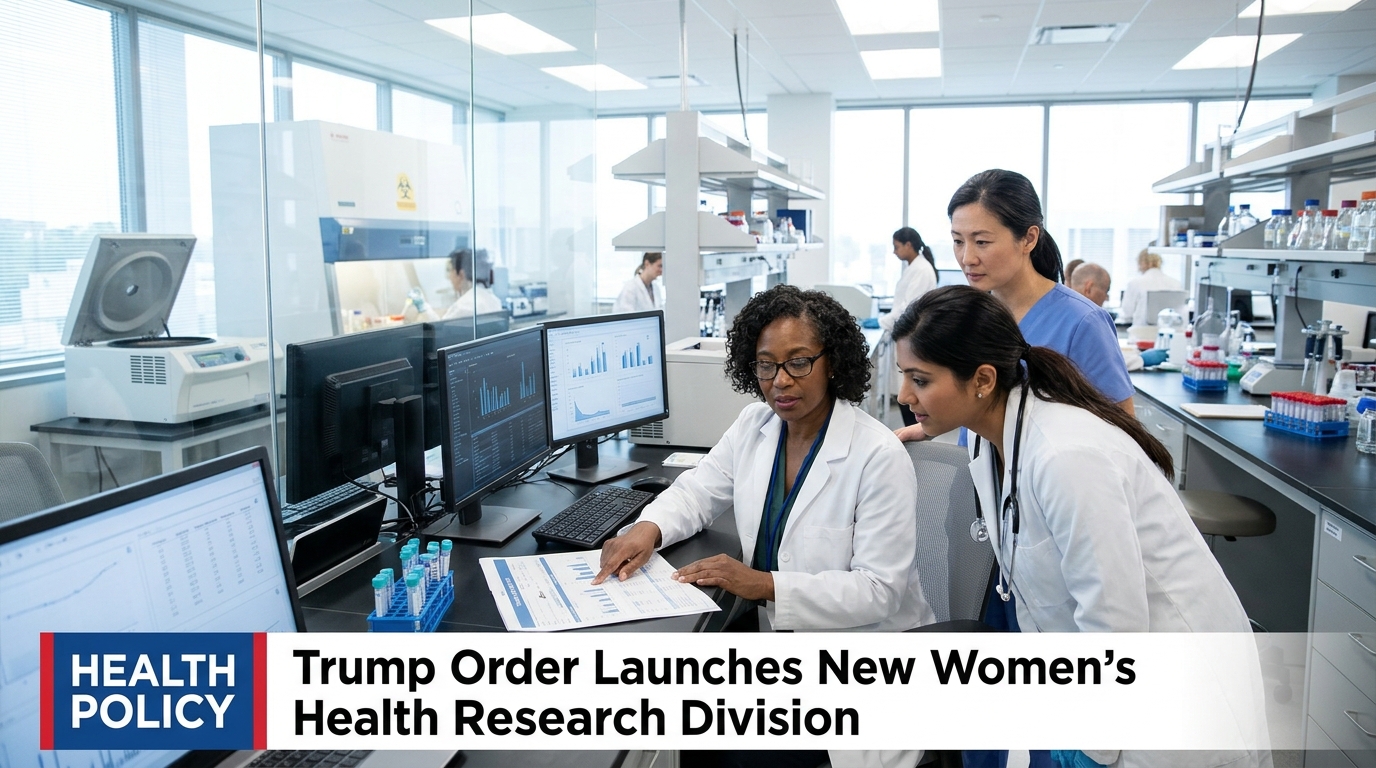


The Trump administration has announced plans to establish a new Women’s Health Division within the National Institutes of Health, placing research into conditions affecting women more prominently within the federal health agenda. The initiative was announced through an executive order signed on October 19 and is intended to coordinate research across different stages of women’s lives.
The order directs the Department of Health and Human Services to establish the division within 90 days. It also creates a White House Women’s Health Task Force intended to coordinate federal efforts and improve collaboration among health agencies.
Addressing gaps in research
Women’s health advocates and researchers have long called for more systematic study of conditions that affect women differently or disproportionately. Areas identified in the administration’s announcement include cardiovascular disease, autoimmune conditions, chronic pain, endometriosis, infertility, maternal health, menopause and osteoporosis.
The initiative is designed to improve the way research priorities are identified, studies are reviewed and scientific findings are translated into clinical practice. Greater coordination could help researchers identify gaps in evidence and encourage work on conditions that have historically received limited attention.
However, creating a new division is only the first step. The impact will depend on how the administration defines its authority, allocates resources, coordinates with existing NIH offices and evaluates research outcomes.
Questions of funding and implementation
Federal health research operates through a complex network of institutes, grants, clinical studies and scientific review processes. A new division will need to work with existing programs rather than simply duplicate their responsibilities. Clear guidance on leadership, staffing and funding will therefore be important.
Researchers will also look for details about whether the initiative changes grant opportunities, expands clinical-trial participation or improves the representation of women in studies. Such implementation decisions are often more consequential than the announcement of a new organizational unit.
The administration says the effort will support stronger scientific evidence and better outcomes across women’s lives. The success of the initiative will ultimately depend on whether new research leads to measurable improvements in prevention, diagnosis and treatment.
A political commitment with long-term consequences
Women’s health has become an important subject in debates about federal healthcare policy, medical research and public investment. The executive order gives the administration a framework for presenting the issue as a priority while placing responsibility on federal agencies to demonstrate progress.
Congress may also examine whether existing appropriations are sufficient to support the initiative and how its results should be measured. For patients and clinicians, the most meaningful outcomes will be practical: better evidence, clearer treatment options and improved access to effective care.