

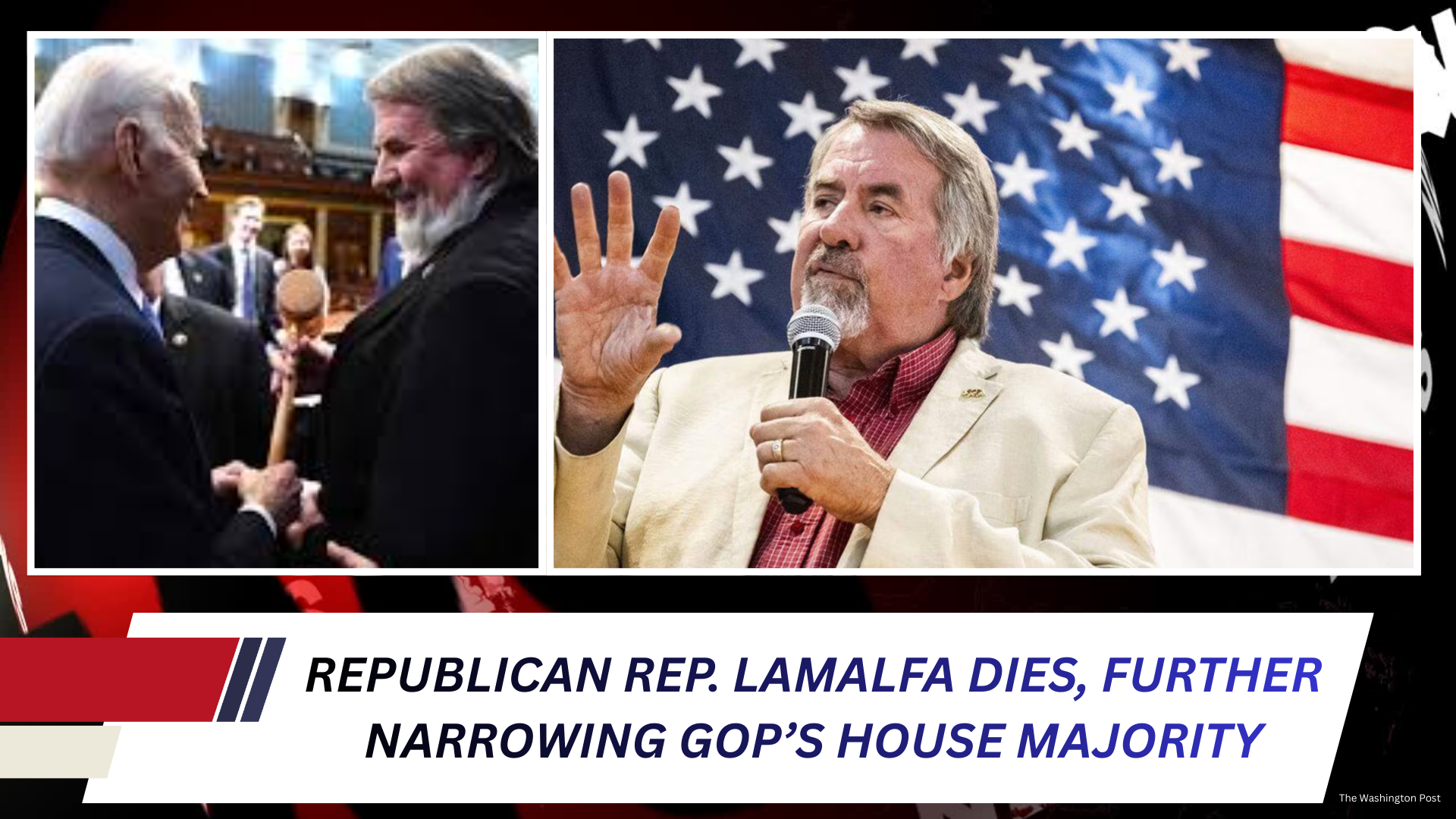


Republican Representative Doug LaMalfa of California has died at the age of 65, marking a sudden loss for the GOP and further narrowing its slim majority in the U.S. House of Representatives. LaMalfa, a seven-term congressman known for his advocacy on behalf of rural communities and conservative policy priorities, passed away following a medical emergency. His death creates a vacancy that will trigger a special election under California law.
LaMalfa’s passing reduces the Republican majority to 218 seats against 213 for Democrats, leaving party leadership with little room for dissent as they attempt to advance their legislative agenda. The timing adds pressure on Speaker Mike Johnson and fellow GOP lawmakers, coming alongside other personnel challenges, including the hospitalization of Rep. Jim Baird of Indiana. Both events underscore the fragility of the narrow Republican control of the House.
Born and raised in Northern California, LaMalfa was a fourth-generation rice farmer before entering politics. He began his career in the California state legislature before winning a congressional seat in 2012 to represent the largely rural 1st District, stretching from the Oregon border to Sacramento. LaMalfa built a reputation among constituents as a practical, engaged representative who prioritized issues such as agricultural policy, water management, wildfire prevention, and forestry oversight.
In Washington, LaMalfa was a reliable conservative voice, supporting former President Trump and aligning with Republican priorities on taxation, energy policy, and social issues. He served on key committees overseeing agriculture, transportation, and natural resources, and was an active member of the Congressional Western Caucus, which advocates for policies affecting rural western states. Colleagues described him as diligent and accessible, often engaged directly in committee and floor discussions.
LaMalfa’s political approach reflected his district’s priorities, emphasizing limited government, support for farming and resource industries, and skepticism of expansive federal regulation. He opposed environmental regulations he viewed as overly burdensome to agricultural and rural economic activity while remaining a steadfast vote for party leadership.
The loss also intersects with broader electoral and demographic shifts. Recent redistricting in California made LaMalfa’s district more competitive, altering the political landscape and heightening the significance of the upcoming special election to fill his seat. Democrats are expected to closely contest the election, viewing it as an opportunity to narrow the Republican advantage further.
Trump, speaking at a House Republicans retreat, paid tribute to LaMalfa, praising his loyalty and dedication to conservative causes. The remarks highlighted the political and personal significance of LaMalfa’s death for the party, underscoring both the human loss and the strategic challenges posed by his absence.
Democratic leaders acknowledged LaMalfa’s service while noting that his passing underscores the challenges Republicans now face in maintaining their legislative agenda. The narrow margin in the House amplifies the importance of attendance and party cohesion, particularly as contentious votes approach on economic, domestic, and national security matters.
Under California law, the governor must schedule a special election to fill LaMalfa’s vacant seat within a prescribed timeframe. That election will not only determine the district’s immediate representation but may also provide insight into broader national political trends ahead of the 2026 midterms.
LaMalfa’s death serves as a reminder of how individual members can influence the balance of power in a closely divided House. The immediate practical effects include a reduced majority for Republicans, increased procedural stakes, and uncertainty over legislative strategy. The long-term implications will unfold as the special election approaches and as party leaders manage the narrow margin in the chamber.