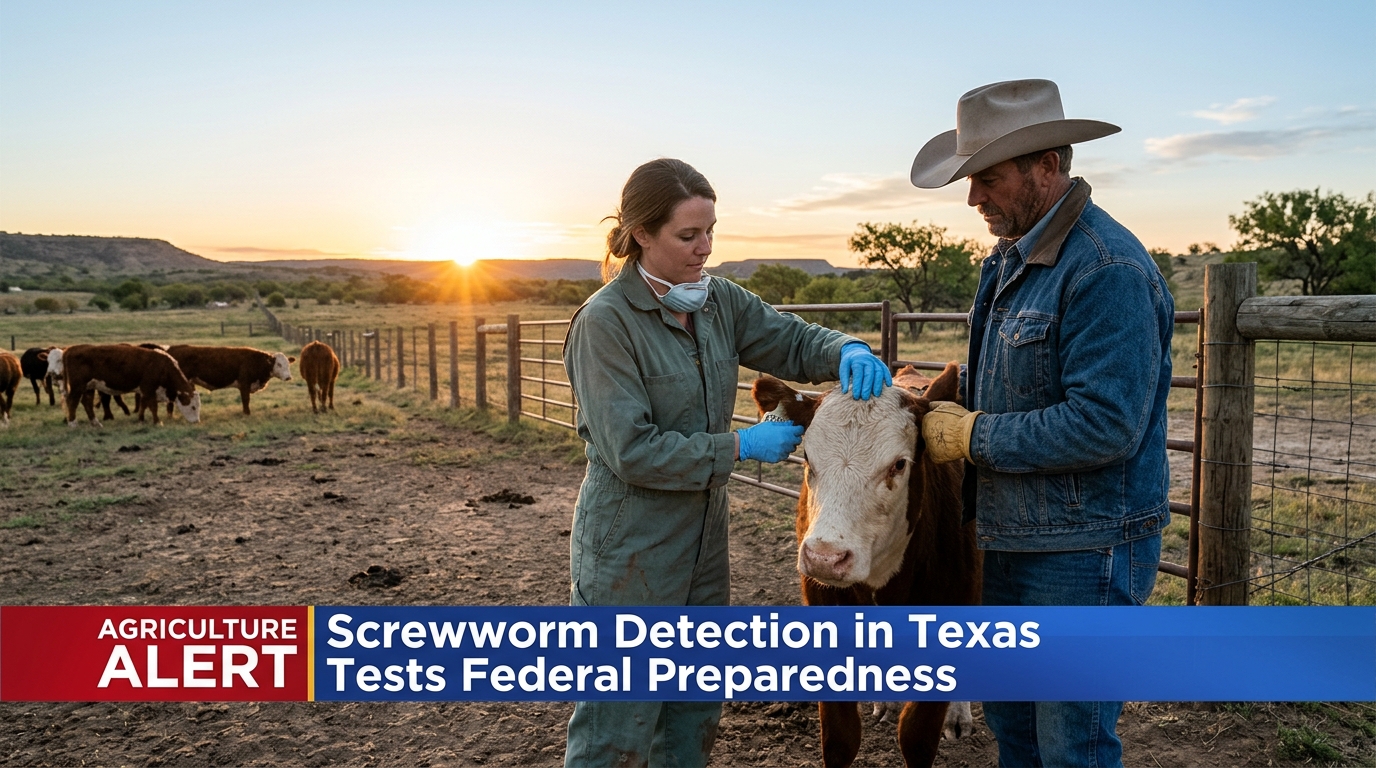


Federal and Texas officials have confirmed a detection of the New World screwworm parasite in U.S. wildlife, raising concerns about whether an outbreak that has affected animals in the region could spread further into the country. The discovery has placed agricultural preparedness, wildlife monitoring and coordination between federal and state authorities under renewed scrutiny.
The parasite's larvae can cause serious injury to animals by feeding on living tissue. Its spread can threaten livestock, wildlife and the agricultural businesses that depend on healthy herds. Officials now face the task of determining the extent of the detection and preventing further transmission.
Why a wildlife detection matters
A detection in wildlife does not automatically mean a widespread outbreak is underway. It does, however, provide a reason for authorities to intensify surveillance and ensure that farmers, veterinarians and wildlife officials know how to identify possible cases.
Early reporting is important because the parasite can cause severe damage if an infestation goes unnoticed. Monitoring may include inspecting animals, investigating suspicious wounds and coordinating laboratory testing to confirm whether the parasite is present.
The response also depends on timely communication. Ranchers and veterinary professionals need clear guidance on what to look for, how to report suspected cases and which agencies can provide assistance. Conflicting instructions or delays in reporting could make containment more difficult.
A federal responsibility with local consequences
The U.S. Department of Agriculture has a major role in animal-health surveillance and coordinating responses to agricultural threats. State agriculture departments, wildlife officials, veterinarians and producers are also essential to identifying cases and carrying out prevention measures.
That division of responsibilities can create practical challenges when an outbreak crosses jurisdictions. Federal agencies may set national strategies, but local officials often have the closest contact with farms, wildlife populations and affected communities.
Preparedness can also involve international cooperation, especially when an agricultural threat moves across borders. Authorities may need to coordinate monitoring, share scientific information and consider measures that reduce the risk of further spread.
The political and economic stakes
The issue has implications beyond animal health. Livestock losses, restrictions on animal movement and higher inspection costs can affect producers and food supply chains. Public officials may also face pressure to explain whether current surveillance systems are sufficient and whether additional resources are needed.
For Congress, the detection could prompt questions about funding for veterinary services, agricultural research and emergency response capacity. The immediate priority remains establishing the extent of the problem and responding based on scientific evidence rather than assuming the worst.
The effectiveness of the response will depend on early detection, transparent updates and cooperation between federal and state agencies. Clear guidance for producers and the public will be important as officials assess the risk.