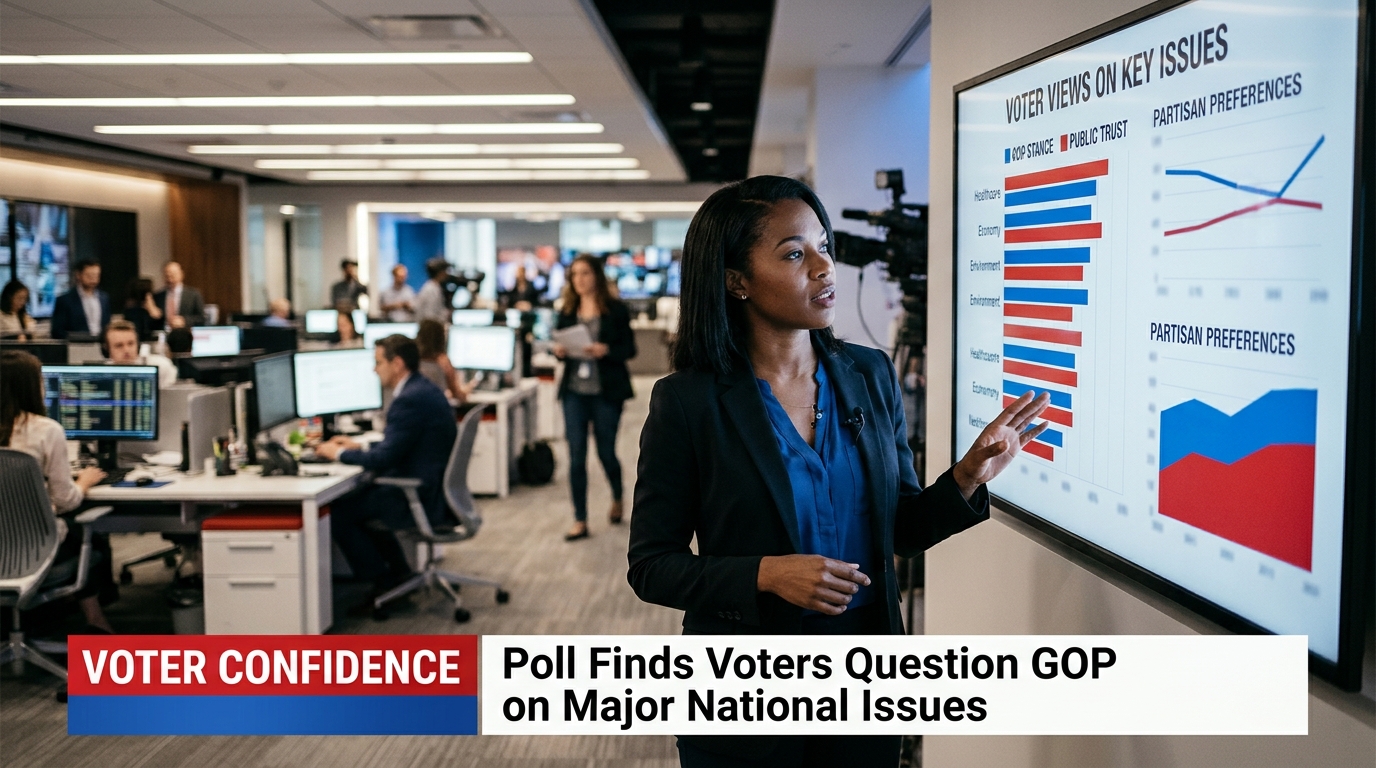


A new national poll suggests Republicans are facing a growing challenge in persuading voters that they are best equipped to handle the country's most pressing issues. The survey, conducted in mid-October, found that voters expressed greater confidence in Democrats on several major policy areas, including immigration and the economy.
The findings arrive at a politically consequential moment, with the midterm elections approaching and control of Congress at stake. The results point to a broader concern for Republican candidates: voters may distinguish between support for a political party and confidence in its ability to manage specific policy problems.
Trust is about more than party identity
Political parties often rely on their reputations for handling particular issues. Voters may traditionally associate one party with national security or border enforcement and the other with healthcare or social programs. Those associations can shift when voters believe the party in power has not delivered the results it promised.
The survey found that President Donald Trump's approval ratings were under pressure across multiple policy areas. Researchers involved in the poll said the administration's standing had weakened on issues ranging from jobs and trade to immigration and border security.
Those results do not necessarily mean every voter has changed party allegiance. Some respondents may remain committed to a party while expressing dissatisfaction with its current leadership or performance. Others may be weighing individual issues more heavily than party identity.
Why the findings matter to candidates
Candidates often try to frame elections as a choice between competing records and policy plans. When voters have doubts about a party's competence, campaign messages built around its traditional strengths may be less persuasive.
For Republicans, the challenge is to demonstrate that their policies are producing results and to explain why voters should trust the party with further responsibility. Democrats, meanwhile, must show that their own proposals are practical and that their candidates can translate criticism into credible alternatives.
Polling also has limits. It measures opinion at a particular time and cannot reliably predict every district's result. Local candidates, turnout, campaign events and changes in the news can all affect the final vote.
A warning sign rather than a final verdict
The survey offers a snapshot of how voters are evaluating political leadership as Election Day approaches. Its findings may influence campaign messaging and the way candidates discuss the economy, immigration and federal policy.
The more durable question will be whether trust changes after the election. If voters continue to express doubts about one party's ability to manage key issues, that could affect future policy debates and the parties' strategies beyond the current campaign cycle.