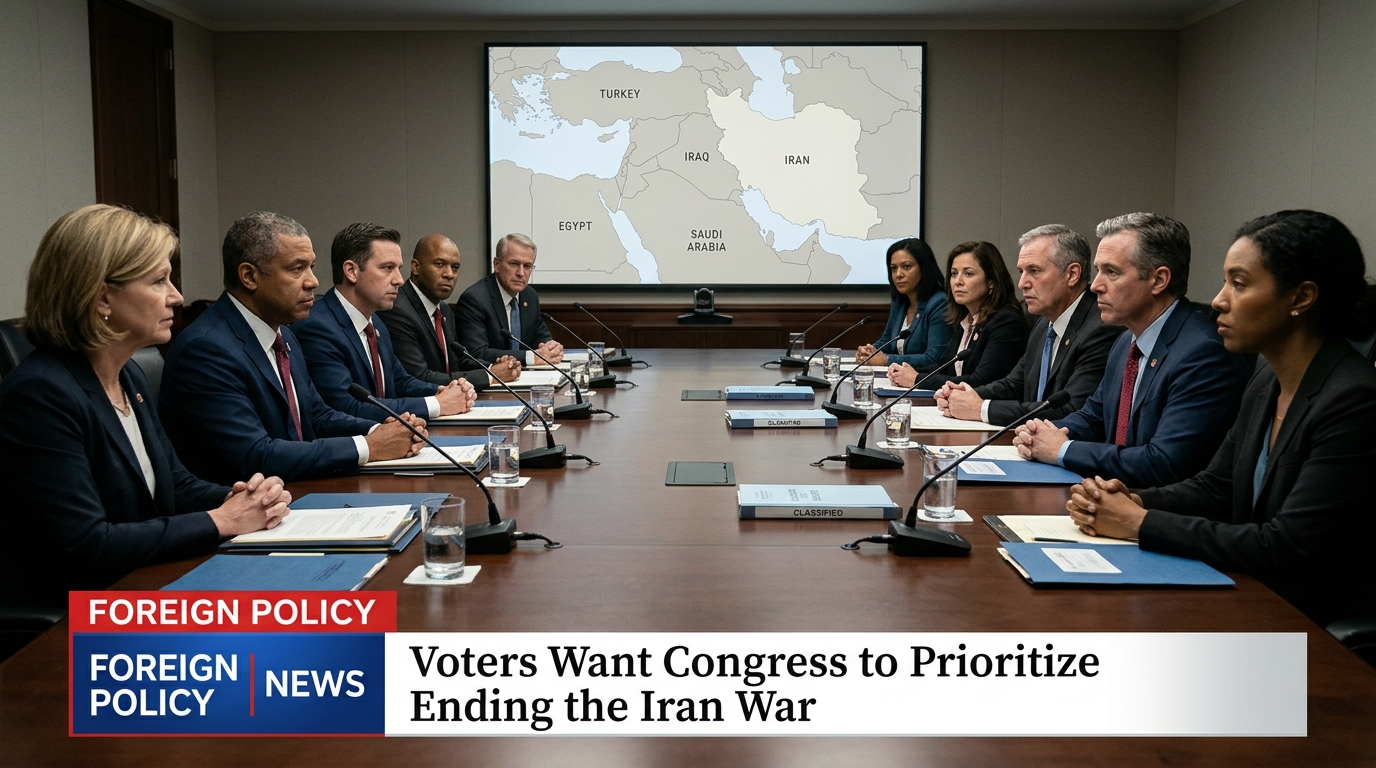


As the 2026 midterm elections approach, a new national survey suggests many Americans want the next Congress to focus on practical policy outcomes rather than devote most of its attention to partisan conflict. The poll found that ending the war with Iran is among the leading priorities voters want lawmakers to address, alongside reducing the cost of living.
The survey, conducted by The Associated Press-NORC Center for Public Affairs Research, found that roughly seven in ten registered voters considered ending the conflict a top priority for the next Congress. The finding points to a public that expects lawmakers to play an active role in foreign policy, even as the president retains substantial authority over military and diplomatic decisions.
Congressional authority and the war
Congress has constitutional responsibilities relating to war, military funding and oversight of the executive branch. The president, meanwhile, directs the armed forces and leads day-to-day diplomacy. That division of responsibilities can create tension when lawmakers disagree with the administration's strategy or believe the objectives and costs of a conflict have not been adequately explained.
The survey suggests that voters want Congress to examine the conflict's trajectory and consider how the United States can move toward an end to hostilities. It does not, by itself, establish that voters agree on a particular peace proposal, military timetable or negotiating strategy.
Ending a war can involve difficult questions about security guarantees, regional stability, allied commitments and the risk that a premature withdrawal could produce further conflict. Lawmakers may also differ over whether to condition funding, require additional reporting or pursue a formal vote on the administration's approach.
A public mandate with limits
Public opinion can influence the political environment surrounding a conflict, but polling does not automatically translate into a binding legislative mandate. Congressional leaders must still decide which measures to bring forward and whether they can attract enough votes to pass.
The survey also revealed differences within the major parties. Voters on the ideological left and right often have different views about the administration's priorities, while moderates in both parties tend to place greater emphasis on practical results and cooperation.
The coming Congress could face pressure to hold hearings, review the costs of military operations and clarify the goals the United States is pursuing. Whether lawmakers can agree on a course of action will depend on developments in the conflict, the administration's position and the balance of power in Washington.