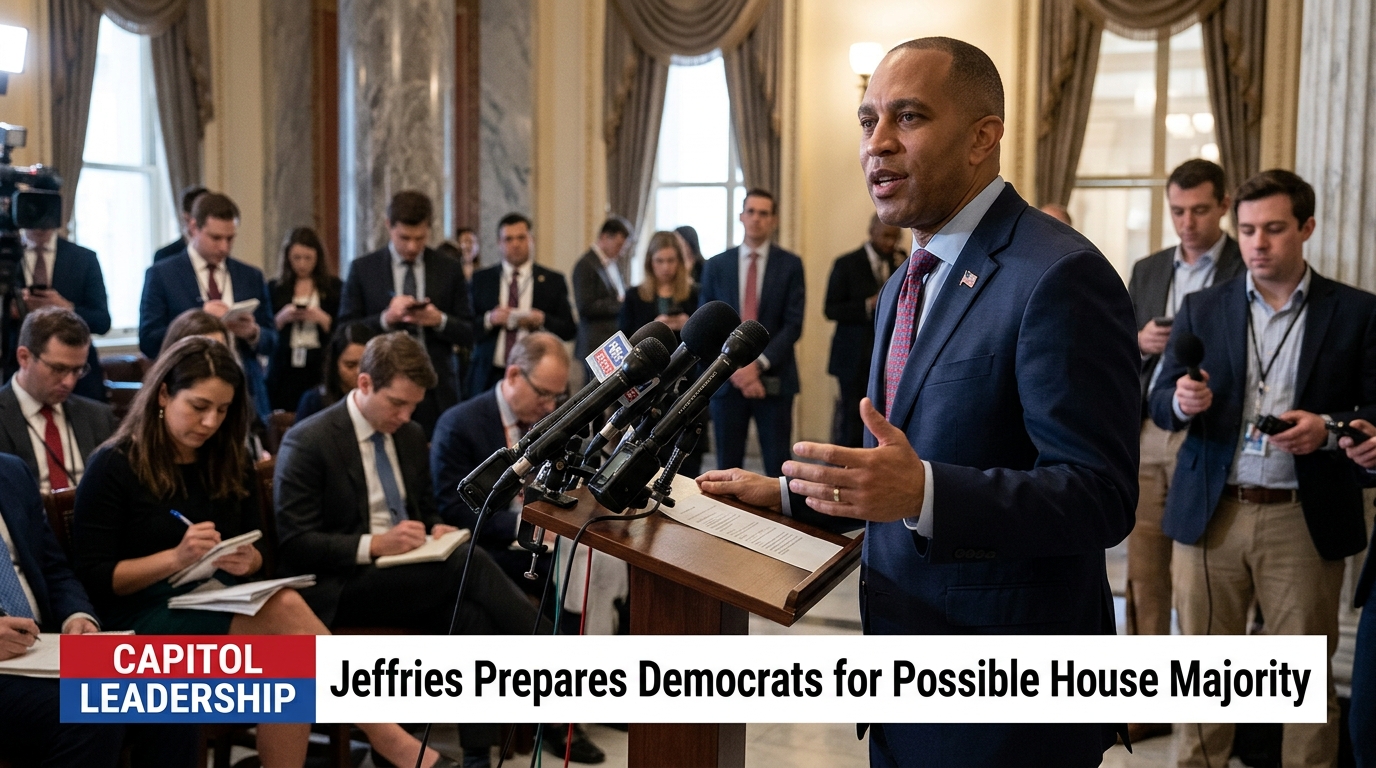


House Democratic Leader Hakeem Jeffries is making a final push to persuade voters that his party is prepared to govern if Democrats regain control of the House of Representatives in the November midterm elections. His campaign has combined a message of institutional oversight with a promise to pursue policy changes on healthcare, household finances and the conduct of the federal government.
Jeffries has campaigned across dozens of cities while helping Democratic candidates in competitive districts. If his party wins a majority and he secures the support of his caucus, he could become the first Black American to serve as speaker of the House.
A leadership style built around caucus unity
Jeffries has sought to present himself as a leader who can keep a diverse caucus focused on shared goals. House Democrats include moderates representing competitive districts as well as progressives pressing for more far-reaching policy changes. A speaker must manage those differences while ensuring the party can act collectively when votes are close.
His approach has emphasized listening to colleagues, coordinating priorities and avoiding distractions that could undermine the party's public message. That strategy has helped him maintain a relatively disciplined leadership profile, though it will face a more demanding test if Democrats win control and must convert campaign promises into legislation.
What Democrats say they would do first
The party has outlined an initial agenda that includes healthcare priorities, economic measures and stronger oversight of the Trump administration. Democratic leaders have also said they would seek votes on the war with Iran and revisit aspects of the administration's tariff policy.
The proposed agenda would face substantial procedural and political hurdles. Even if Democrats control the House, legislation would still need to pass the Senate and, in most cases, receive the president's signature. A Republican-controlled Senate could block many Democratic proposals, while presidential veto power would limit the effect of bills that did reach the White House.
Leadership would bring immediate tests
If Democrats win the majority, Jeffries would need to balance investigations and oversight with the responsibility to keep the House functioning. Hearings and subpoenas can bring information into public view, but they can also deepen partisan disputes and consume time that might otherwise be spent on legislation.
The House speaker also has to negotiate with the Senate, manage floor time and secure votes within the majority party. A narrow majority can make each of those tasks more difficult, especially when members represent districts with different political priorities.
Jeffries's leadership bid therefore rests on two questions: whether Democrats can win enough seats to take control, and whether he can turn a campaign coalition into a functioning governing majority. The election will determine whether he gets the opportunity to answer both.