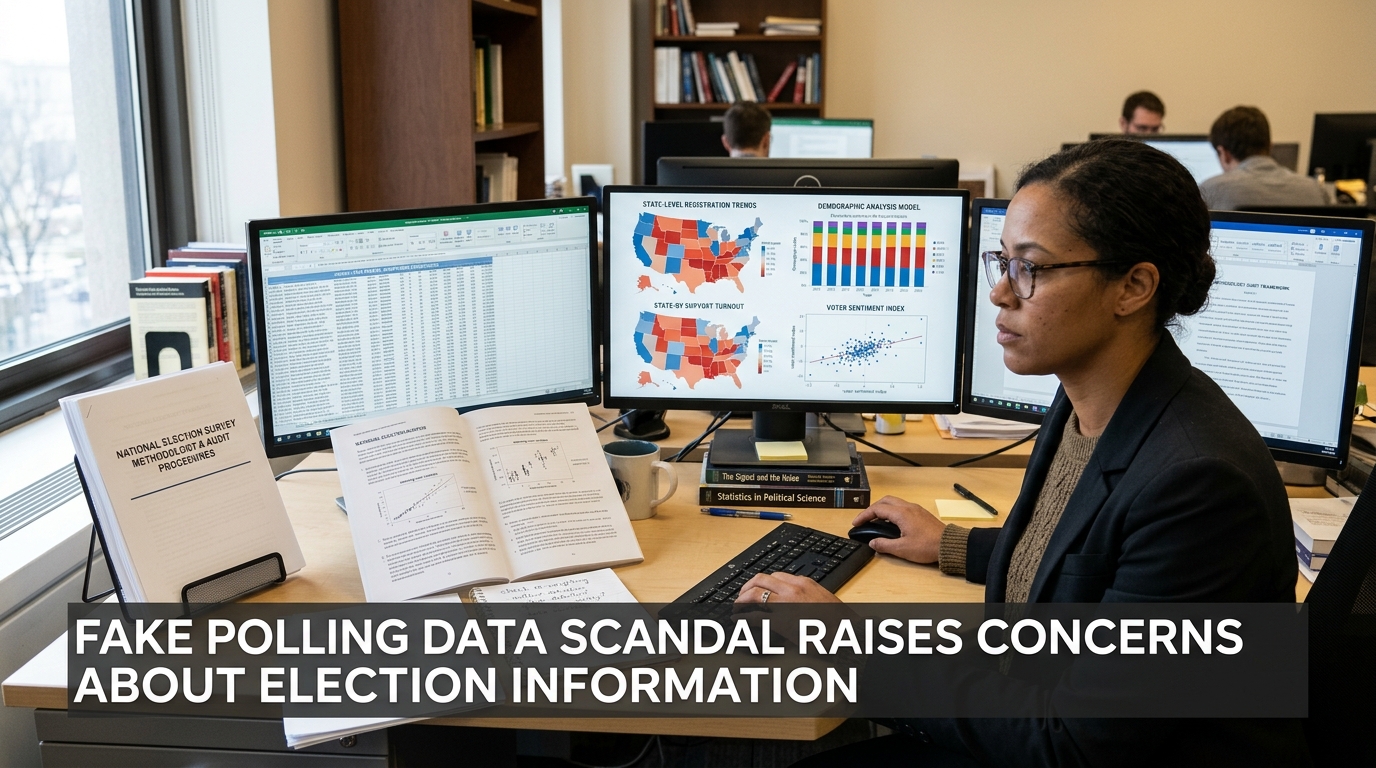


A polling operation's acknowledgment that most of its published surveys were fabricated has raised fresh questions about the reliability of political data circulating during the 2026 U.S. midterm campaign.
Axios reported on October 22 that a self-described polling firm acknowledged that all but one of its polls were fabricated. The report noted that this was at least the second instance during the election cycle in which a polling operation acknowledged publishing fabricated results.
The disclosure has drawn attention to the way polling data can spread through news coverage, campaign communications and social media before readers have verified the original source.
Why polling credibility matters
Political polls are estimates based on responses from a defined group of people. Their reliability depends on factors including sampling methods, questionnaire design, fieldwork procedures and transparent reporting.
A survey that has not actually been conducted cannot provide a legitimate estimate of voter opinion. Yet fabricated figures can appear convincing when presented in charts or attributed to an organization with a professional-sounding name.
Established polling organizations generally publish methodological information, including sample sizes, dates, populations surveyed and explanations of how results were weighted.
Readers can use those details to evaluate a poll rather than relying solely on a headline or percentage.
Campaigns and newsrooms face verification challenges
The growing availability of automated content-generation tools can make fabricated survey graphics and reports easier to produce. That creates additional work for journalists, researchers and election officials seeking to correct false information.
Campaigns also have incentives to publicize polling that supports their arguments, making independent verification particularly important.
The discovery does not mean that all political polling is unreliable. It demonstrates why individual surveys should be evaluated on their methodology and provenance.
With Election Day approaching, transparent sourcing and clear explanations of uncertainty remain essential to responsible coverage of voter opinion.