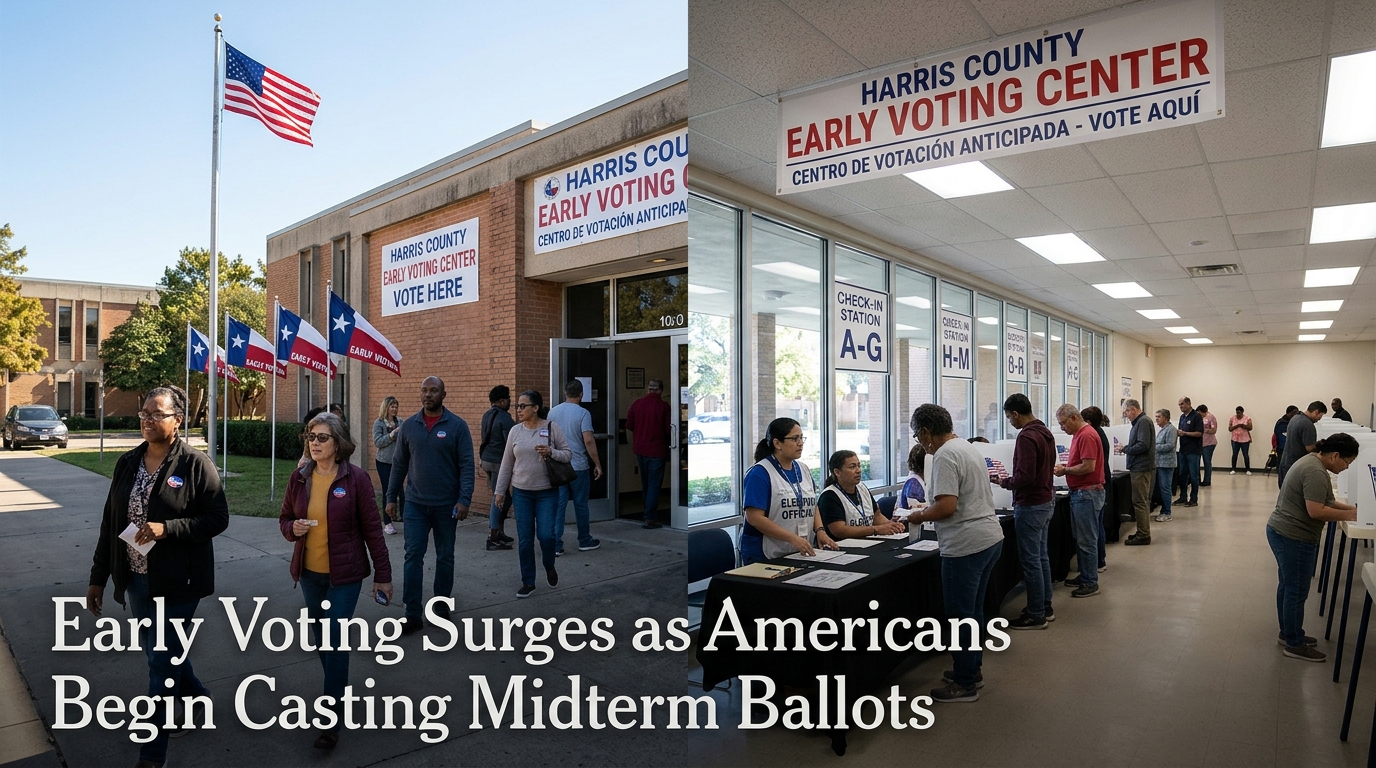


Early voting is gathering momentum across the United States as voters prepare to decide control of Congress and participate in a range of state and local contests on November 3.
Reporting published by El País on October 22 indicated that more than 16 million Americans had already cast ballots, with early voting underway in more than 30 states. Some jurisdictions reported unusually high participation for a midterm election cycle.
Texas has emerged as one notable example. Early voting began there on October 19, and Harris County recorded approximately 104,000 votes on its first day, according to the report.
Why early voting matters
Early voting allows eligible voters to participate before Election Day, reducing the need for everyone to visit polling places on the same date. States differ in their rules, including how ballots are submitted, when they can be counted and the deadlines for returning mail ballots.
High early-voting totals do not necessarily indicate which party is benefiting. Turnout figures alone do not reveal how individual voters have voted, and comparisons can be affected by changes in voting rules and campaign mobilization.
Both major parties have invested heavily in encouraging supporters to vote early. Campaigns are using field operations, digital outreach and local events to remind voters about deadlines and polling locations.
Attention shifts to election administration
As participation increases, election officials must manage ballot security, staffing, equipment and public communication. They must also explain how mail ballots and in-person votes will be processed under state law.
The closing days of the campaign will test whether election offices can maintain orderly operations while responding to questions about eligibility and ballot counting.
The final turnout picture will become clearer after Election Day and the completion of lawful counting procedures. Until then, early-voting numbers offer a measure of participation, not a prediction of the outcome.