

Government ethics and concerns about political influence have emerged as prominent subjects in the final stretch of the 2026 midterm campaign. Candidates are debating how public office should be used, what financial disclosures elected officials should provide and whether existing oversight systems are strong enough to identify conflicts of interest.
A recent national political analysis highlighted corruption concerns alongside healthcare, technology and household finances as issues shaping the election environment. The findings suggest that questions about integrity and accountability may influence how voters judge candidates, even when those candidates have different policy priorities.
Why ethics can become an election issue
Concerns about corruption often extend beyond whether a specific law has been broken. Voters may also question whether political decisions are being made in the public interest, whether officials are transparent about financial relationships and whether government contracts or policy choices create opportunities for private benefit.
Those questions can be difficult to resolve during a campaign. Allegations may be used in political advertising before investigations have established the relevant facts, and competing parties can interpret the same event differently. Responsible reporting must therefore distinguish documented evidence, formal allegations, ongoing investigations and proven violations.
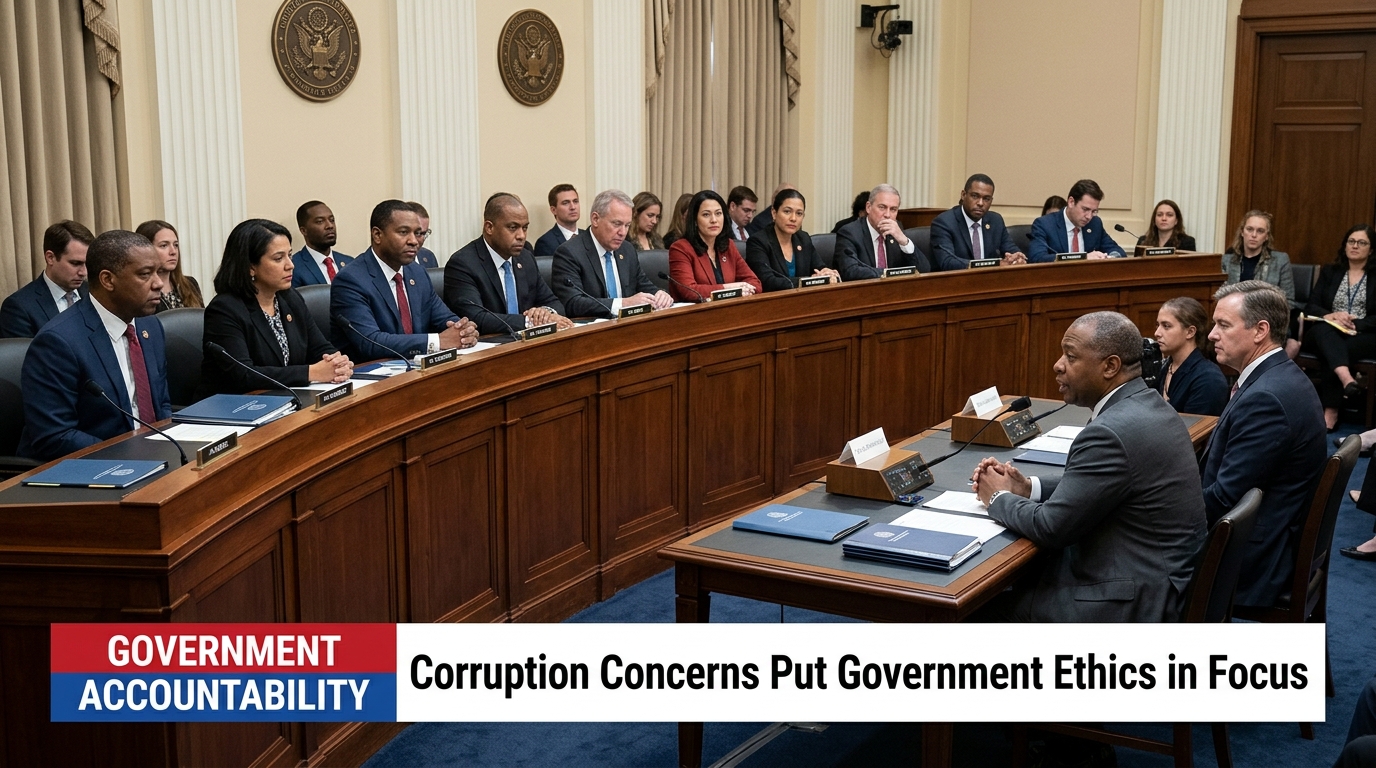
The role of congressional oversight
Congress has several mechanisms for examining the conduct of the executive branch, including committee hearings, document requests and subpoenas. Inspectors general, ethics offices, auditors and law-enforcement agencies have different responsibilities within the broader oversight system.
The effectiveness of those mechanisms depends on whether investigations are conducted transparently, whether evidence is handled properly and whether findings lead to meaningful consequences where violations are established. Oversight can be weakened if institutions lack resources or if investigations are viewed primarily as tools for partisan advantage.
At the same time, oversight does not automatically establish wrongdoing. A hearing may reveal new information, clarify a disputed policy or determine that an allegation is unsupported. The credibility of the process depends on allowing evidence to guide conclusions.
Competing parties face a credibility test
Candidates often accuse opponents of ethical failures while promising greater accountability if elected. Voters may assess those promises against the candidates' own records, their willingness to disclose information and the independence of the oversight measures they support.
The issue can affect congressional priorities after the election. A new majority may seek investigations, propose ethics reforms or change committee procedures. But any effort to strengthen accountability will have to address questions about due process, political neutrality and consistent standards.
Transparency as a longer-term challenge
Public confidence in government is shaped not only by individual scandals but also by the perceived fairness of institutions. Clear financial disclosures, accessible public records, consistent enforcement and credible independent investigations can help voters evaluate official conduct.
The election will determine which lawmakers oversee federal agencies and set congressional priorities. The longer-term test will be whether political leaders can establish processes that remain credible even when their own party is under scrutiny.