

.png)


The U.S. Department of Justice is confronting mounting scrutiny from lawmakers after it failed to fully meet the legal requirements for releasing records tied to the late financier Jeffrey Epstein, prompting questions about transparency, victim protections, and oversight. Members of Congress from both parties have expressed frustration with what they describe as an incomplete and heavily redacted release, and some are considering legal and legislative options to compel fuller disclosure.
The controversy centers on the Epstein Files Transparency Act, a law co‑authored by Representatives Ro Khanna (D‑Calif.) and Thomas Massie (R‑Ky.) and signed by President Trump in November 2025. The statute directed the Justice Department to make all unclassified records, documents, communications, and investigative materials related to Epstein publicly available within 30 days of its enactment. Congress’s intent was to lift the veil on years of investigations into Epstein’s criminal activities and offer victims and the public a clearer account of how federal authorities handled the case.
In mid‑December, the Justice Department released tens of thousands of pages of material — including documents and photographs from past investigations — but key elements were either heavily redacted or omitted entirely. At least 16 files, including photographs, were posted and then removed from the department’s public webpage within a day of their appearance. Among those files was an image that included a photograph of former President Donald Trump. The department later restored at least one of the removed items after determining it did not contain identifiable victim information.
Deputy Attorney General Todd Blanche has defended the approach, saying the department must balance its statutory obligation to disclose materials with its duty to protect the privacy and safety of victims whose identities—or those of their family members—might be revealed inadvertently in the records. He described the review as ongoing, with some items temporarily pulled for further examination and redaction before possible re‑release. The department has also maintained that it is complying with the law’s requirements, even as the process stretches beyond the initial deadline.
That explanation has done little to satisfy many lawmakers. Representative Khanna and his Republican co‑author Massie have threatened to pursue contempt proceedings or referrals for prosecution against Attorney General Pam Bondi if the department does not clarify why it has not fully complied with the law. Legal experts note, however, that enforcement poses challenges because any contempt action would ultimately be handled by the very department accused of noncompliance.
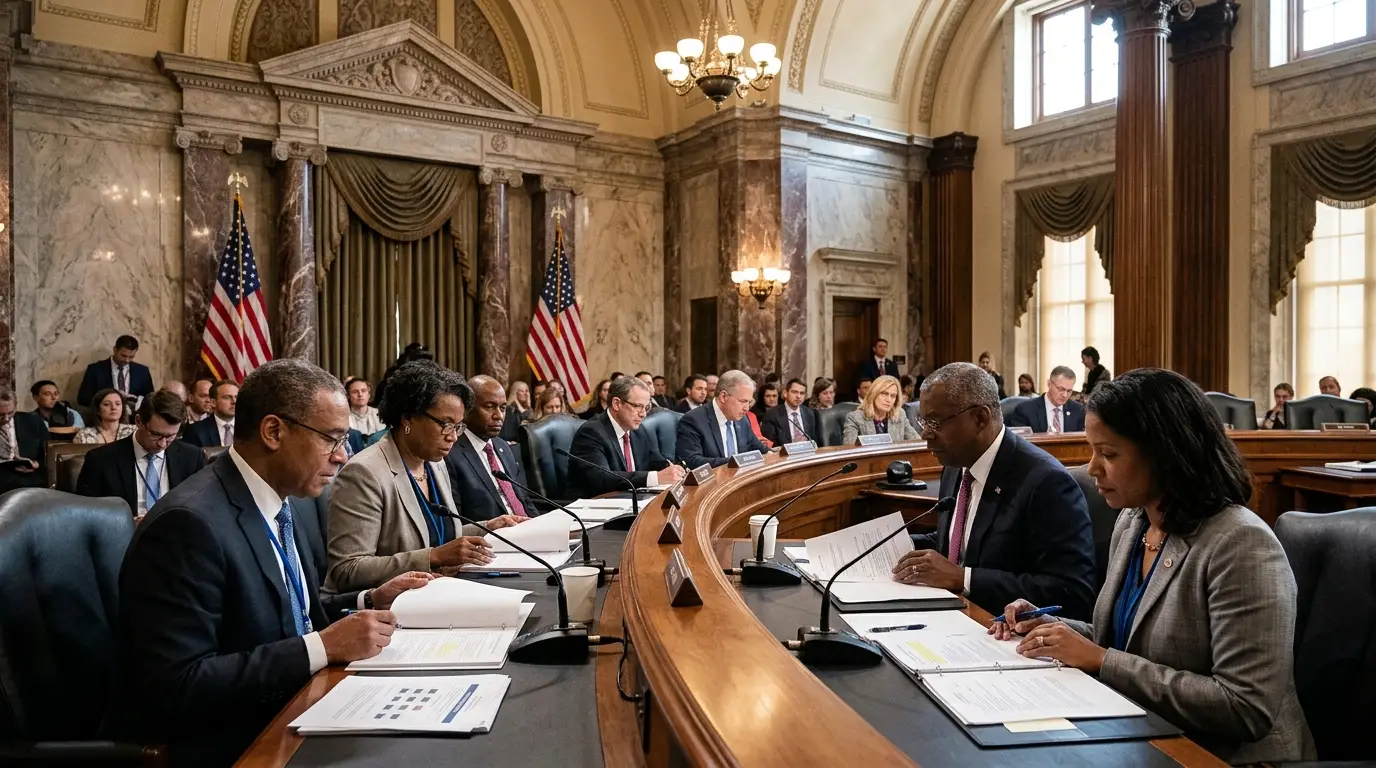
Some Democrats on the House Oversight Committee have warned that the department’s delay in releasing complete records and the subsequent removal of files raise concerns about accountability and transparency. They argue that the law’s clear deadline and language require release of unclassified materials, subject only to narrowly defined exceptions. Requests for the Justice Department to provide an account of withheld files — including a summary of redactions and the reasons behind them — have grown more insistent.
Republican lawmakers, while backing the principle of law enforcement authority, also emphasize the importance of protecting victims in any public disclosure. They have noted that the statute itself allows for redactions to safeguard privacy and that due process must be respected in handling sensitive materials. This tension between openness and confidentiality reflects broader debates about how the government should balance competing imperatives in high‑profile cases.
Advocates for victims have voiced frustration with both the pace and substance of the releases. Many survivors and their supporters contend that the files have not yielded the clarity or accountability they had hoped for. Some contend that redactions are overly broad, obscuring potentially important context about prosecutorial decisions and the extent of Epstein’s network. For them, the slow pace of disclosure and the piecemeal nature of releases compounds years of frustration over how Epstein’s crimes were originally investigated and prosecuted.
The dispute over the Epstein files illustrates enduring challenges in federal record disclosure policy. While statutes like the Transparency Act can compel agencies to release materials, the implementation often requires judgment calls about what information must be withheld for legal or ethical reasons. In this case, that judgement is being tested in public and in real time, with lawmakers asserting that the Justice Department has not struck the appropriate balance.
The broader political context also informs the debate. The controversy arises as public confidence in institutions remains strained and as high‑profile cases continue to attract media and civic attention. The Epstein case, with its mixture of criminal conduct, wealthy and famous associates, and long‑standing procedural questions, amplifies these dynamics. For some legislators, ensuring complete compliance with the law is part of reinforcing norms about institutional accountability. For others, protecting victims and respecting legal standards on privacy are equally central.
Congressional leaders from both sides have indicated they will continue oversight efforts, including hearings and demands for documentation explaining the Justice Department’s decisions regarding redactions, removals, and the timeline for further releases. Whether these efforts will yield a more comprehensive disclosure or result in tangible consequences for officials who oversaw the release remains uncertain.