

.jpg)


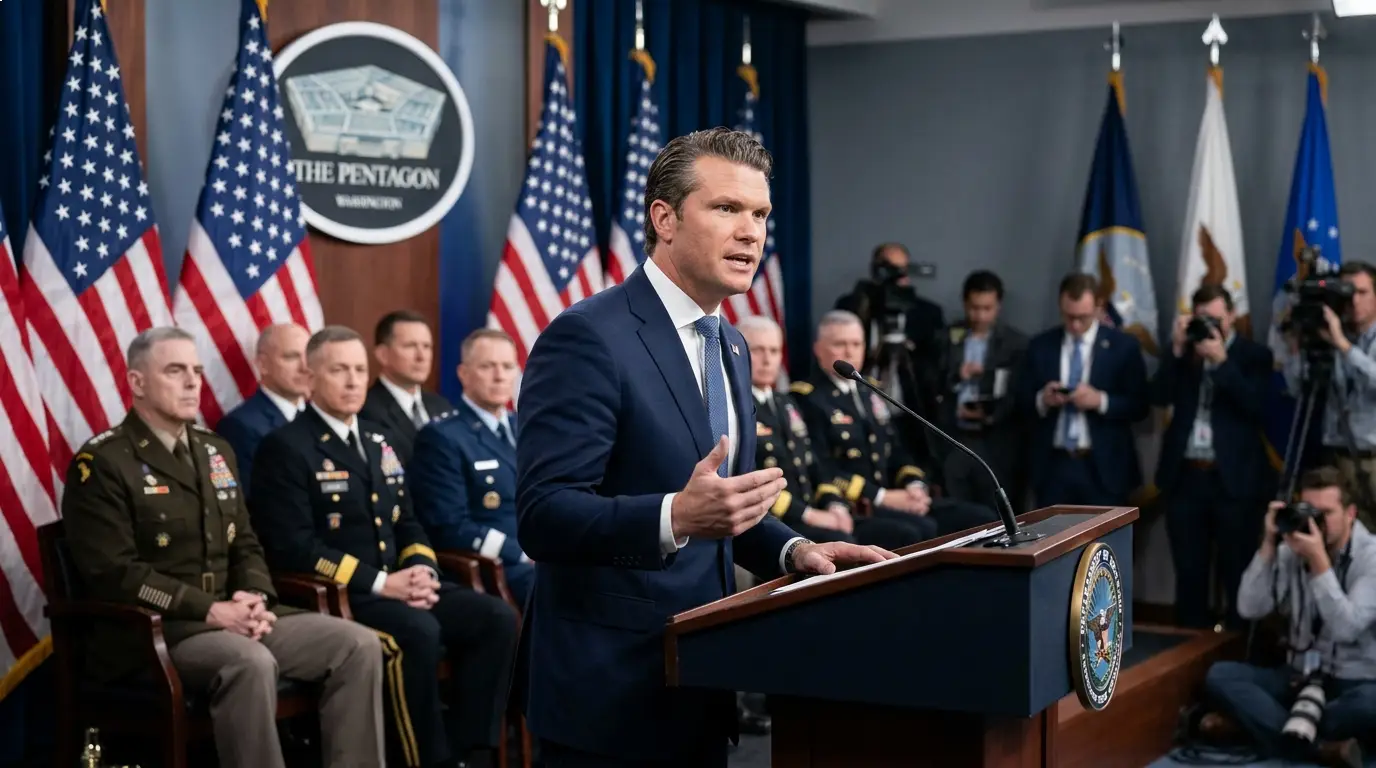
Washington — Former President Donald Trump has renewed public attention on Greenland, asserting that the Arctic territory holds significant strategic value for the United States. Speaking at a recent press event, Trump framed the island not as a potential real estate opportunity—as he famously floated during his 2019 tenure—but as a crucial element in America’s national security architecture. His comments have sparked discussion about the geopolitical significance of the Arctic, the role of natural resources, and the evolving threats that shape U.S. defense planning.
Trump characterized Greenland as “vital” due to its location and the presence of military infrastructure, including the Thule Air Base, which hosts early-warning radar systems and other defense assets. While he did not announce a specific plan to acquire or expand U.S. control over Greenland, he emphasized that the United States must maintain influence over the territory to ensure the country’s strategic posture in the Arctic remains secure.
The former president’s remarks come amid growing international interest in the Arctic region. Climate change has opened new shipping lanes, increased access to untapped natural resources, and heightened competition among nations such as Russia, China, and the United States. Greenland, an autonomous territory of Denmark, is situated in a location that is both geographically advantageous and sensitive from a defense standpoint, providing the United States with early-warning capabilities, monitoring of missile launches, and a strategic position to oversee northern maritime routes.
Trump linked the importance of Greenland to broader considerations of national defense, including the protection of the continental United States and the security of allies in North America and Europe. While Greenland is not part of NATO directly, the island’s security arrangements are tied closely to Denmark, a NATO member, which allows U.S. forces to operate from strategic points with allied coordination. Trump stressed that ensuring U.S. access and influence over Greenland aligns with long-term defense planning and global power projection.
Critics of Trump’s comments caution that emphasizing Greenland’s strategic importance should not be conflated with the idea of territorial acquisition. Greenland is politically and administratively autonomous, and the Danish government has repeatedly affirmed that it has no interest in selling or transferring control of the island. Analysts note that diplomacy and military cooperation, rather than transactional approaches, are the primary means of securing U.S. interests in the Arctic.
From a military standpoint, Greenland is a lynchpin in the United States’ early-warning system against potential missile threats. The Thule Air Base, located in the northwest of the island, houses radar and satellite communication systems critical for detecting incoming missile activity and tracking objects in space. U.S. officials have highlighted that continuity of operations at Thule is essential, not only for national defense but also for missile defense collaboration with allies.
In addition to military considerations, Greenland’s natural resources contribute to its strategic significance. The island contains deposits of rare earth minerals, uranium, and other elements critical to technology and defense industries. While exploitation of these resources is complex due to environmental and logistical challenges, their presence reinforces the importance of Greenland in planning for long-term technological and defense needs.
Trump’s remarks also touched on economic opportunities, albeit secondary to his national security rationale. He suggested that ensuring a presence in Greenland could open avenues for future resource development, energy exploration, and infrastructure investment, while making clear that defense imperatives remain the driving concern. His emphasis on national security aims to situate Greenland within a framework of strategic necessity rather than purely commercial ambition.
The Arctic region, including Greenland, is increasingly central to U.S. defense strategy. The Department of Defense and U.S. Northern Command have highlighted the challenges of operating in extreme climates, monitoring increased military activity by other nations, and maintaining readiness for potential conflicts in high-latitude regions. Trump’s public statements reinforce a broader bipartisan consensus that the Arctic cannot be overlooked in planning for twenty-first-century security challenges.
International observers have noted that the U.S.-Greenland relationship relies on diplomacy, mutual respect, and joint strategic planning. Denmark and Greenland have historically managed the balance between autonomy and security collaboration, providing the United States with access to bases while retaining political control. Trump’s comments, while assertive, do not signal a shift in these agreements but rather underscore the importance of continued engagement and vigilance.
In conclusion, Greenland’s strategic value for the United States is multifaceted, encompassing military, geopolitical, and resource-based considerations. Former President Trump’s statements highlight the need for sustained attention to Arctic security, ensuring that U.S. assets and influence remain aligned with both immediate defense needs and long-term strategic interests. While the conversation occasionally attracts headlines with speculative undertones, the core issue remains the practical necessity of maintaining security and readiness in a rapidly evolving global environment.