

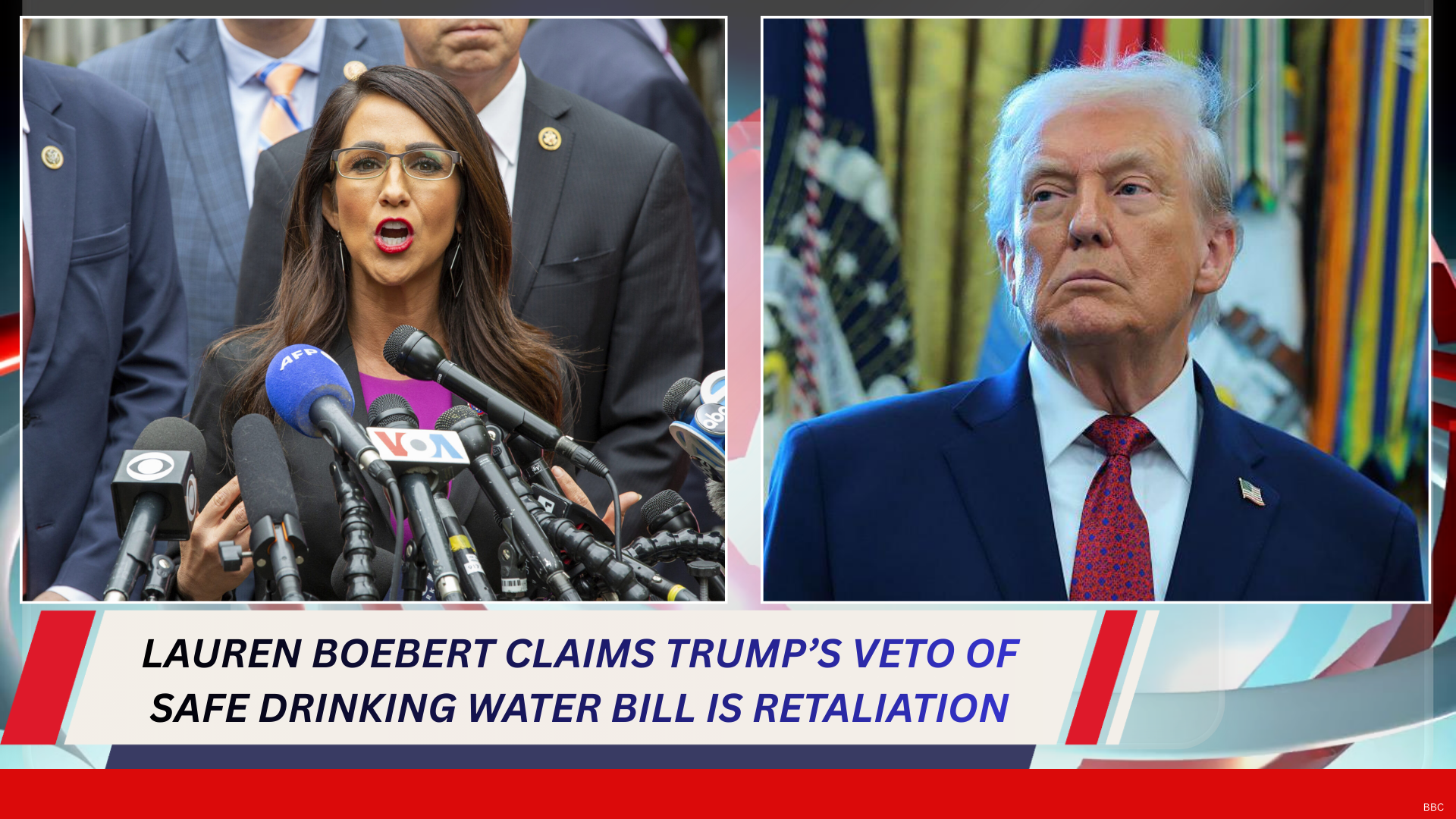


Congresswoman Lauren Boebert recently claimed that former President Donald Trump’s veto of a bill designed to secure safe drinking water constitutes a political act of retaliation. The bill, which had garnered bipartisan support, aimed to address critical infrastructure issues and ensure that communities across the United States have access to clean and safe water. Boebert’s accusations have sparked a heated debate about the motivations behind the veto and the potential implications for public health and legislative processes.
The legislation in question was introduced in response to ongoing challenges with water quality in various parts of the country. Aging pipelines, contamination from industrial sites, and insufficient federal oversight have left millions of Americans at risk. The bill sought to provide federal funding for infrastructure upgrades, stricter monitoring of water quality, and programs to assist municipalities in maintaining safe water systems. Lawmakers argued that passing the bill was a crucial step in protecting public health and preventing waterborne illnesses.
Boebert, a Republican representative known for her outspoken style and alignment with Trump’s political base, contended that the veto was not about policy disagreements but a retaliatory measure aimed at lawmakers who had opposed or criticized Trump during his presidency. In a statement, she claimed that the veto “undermines the safety of American families” and is indicative of a broader pattern of punitive political behavior. By framing the issue in terms of retaliation, Boebert highlighted the potential intersection of politics and public welfare, drawing attention to the stakes involved for ordinary citizens.
Critics of the veto argue that the decision threatens essential public services and jeopardizes long-term health outcomes. Safe drinking water is a fundamental necessity, and delays in addressing infrastructure issues can have severe consequences. Experts point out that lead contamination, bacterial outbreaks, and other waterborne hazards have historically affected vulnerable communities the most. The bill was designed to mitigate these risks, and its veto has left many questioning whether political considerations are taking precedence over public safety.
Supporters of Trump’s veto, however, have framed the decision differently. Some argue that the bill contained provisions they deemed fiscally irresponsible or overreaching in federal authority. They suggest that the veto was motivated by concerns over budget allocations, regulatory burdens, and the role of federal oversight in local infrastructure projects. This perspective emphasizes the complexity of the issue, noting that decisions about public health infrastructure often involve balancing immediate safety needs with long-term fiscal and administrative considerations.
The timing of the veto has also fueled political speculation. Coming after heightened scrutiny of Trump’s post-presidential influence and ongoing legal and political controversies, some observers see the move as part of a broader pattern of using executive powers to reward allies and punish critics. Boebert’s statement reinforces this narrative, framing the veto not as a neutral policy decision but as a calculated political maneuver with direct consequences for public health.
The public response has been mixed. Advocacy groups focused on environmental and public health issues have expressed concern, emphasizing that access to safe drinking water is a nonpartisan issue that affects millions of people. They argue that political disputes should not interfere with the implementation of policies designed to protect communities from preventable health risks. Local governments and municipal leaders in areas most affected by water quality concerns have also voiced frustration, highlighting the urgency of federal support and the impact of delayed funding.
Meanwhile, political analysts point out that Boebert’s claims could influence legislative strategy going forward. By framing the veto as retaliatory, she draws attention to the potential consequences for lawmakers who may be seen as out of step with Trump’s agenda. This dynamic can affect negotiations on future legislation, the willingness of members to challenge executive decisions, and the broader political climate in Congress.
The issue also underscores the challenges of managing infrastructure policy in a polarized environment. Infrastructure funding, especially for essential services like drinking water, requires cooperation across party lines, careful planning, and long-term commitment. When political disputes enter the equation, they can complicate implementation, delay critical projects, and create uncertainty for communities dependent on government support.
In her statement, Boebert urged fellow lawmakers to recognize the stakes and act decisively to ensure that Americans have access to safe water regardless of political considerations. She emphasized that public health should not be compromised by partisan conflicts and called for renewed efforts to override the veto or introduce alternative measures that address the same critical infrastructure needs.
The debate over the veto has sparked broader discussions about the role of politics in public service delivery. Citizens, advocacy groups, and local officials are closely monitoring the situation, emphasizing the importance of transparency, accountability, and prioritizing the health and well-being of communities. The clash between executive authority and legislative intent highlights the delicate balance in U.S. governance, where political motives and public policy can intersect in ways with tangible consequences for everyday life.
Ultimately, Boebert’s allegations reflect the ongoing tension between political loyalty, executive power, and public welfare. The controversy surrounding Trump’s veto of the safe drinking water bill illustrates how decisions at the highest levels of government can resonate across communities, affecting health, safety, and trust in public institutions. As lawmakers and advocates respond, the outcome will shape both policy and political discourse in the months ahead.