

.png)


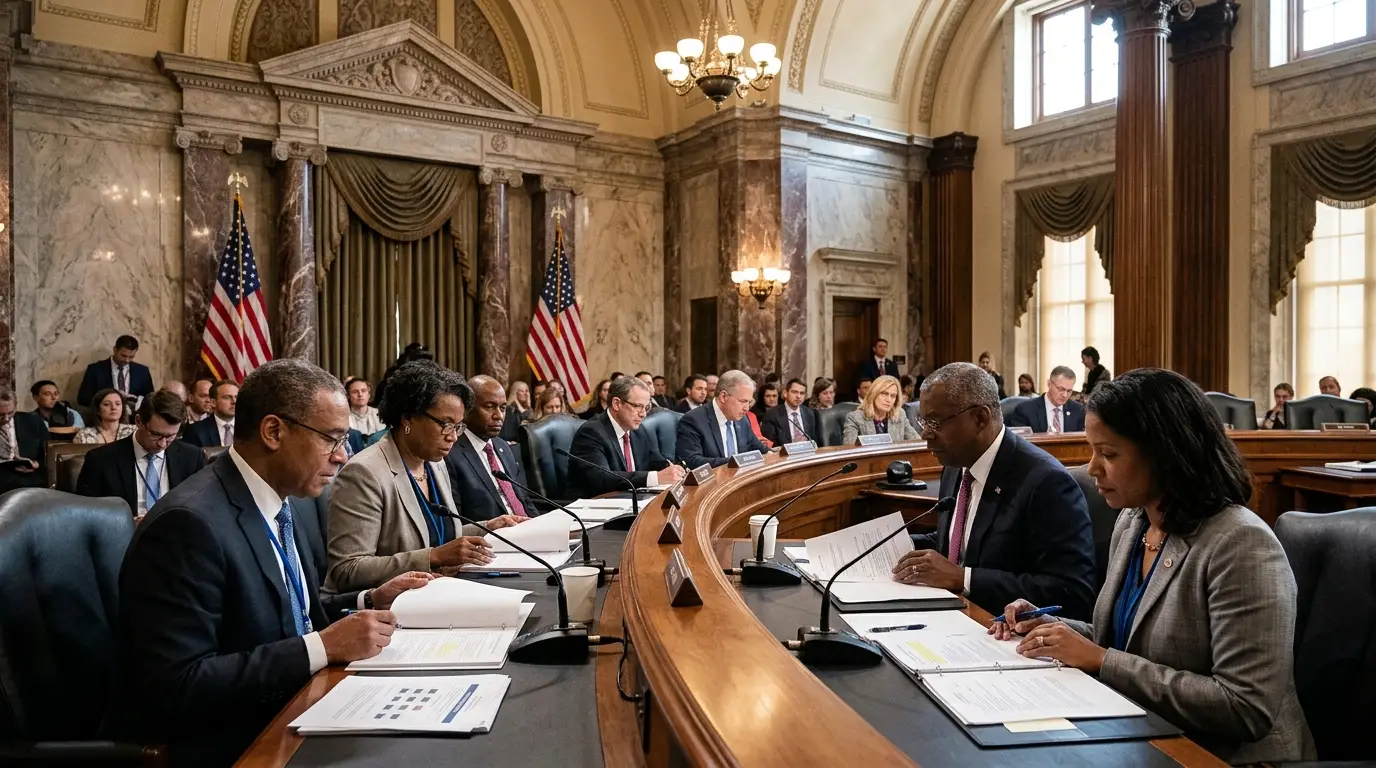
In the closing weeks of 2025, observers and lawmakers reflected on a session of the U.S. Congress that broke records in unexpected ways. Rather than passing a sweeping slate of new laws, the Republican-led chamber produced one of the least productive legislative years in modern history, even as it logged unusually high levels of procedural activity and ceded much policymaking to the executive branch.
In terms of finished legislation, Congress’s output was notably sparse. By year’s end, fewer than 40 bills had been enacted, placing 2025 near the bottom of legislative productivity for a first year under a new president. This stood in stark contrast to earlier moments in U.S. history when Congress and the White House collaborated to pass significant policy changes in the first months of an administration.
Yet, for all its limited legislative accomplishments, Congress set another kind of record: the Senate held more than 650 roll-call votes, the most for any odd-numbered year this century. That metric underscored an institution kept constantly in session but often focused more on confirmations and procedural motions than substantive lawmaking.
The House of Representatives told a related story, though from a different angle. Members there cast the fewest votes recorded in decades, reflecting internal disputes and repeated brinkmanship over key issues. At times, these standoffs contributed to government shutdowns and near-shutdown scenarios as Republicans struggled to unify around funding measures and policy priorities.
Amid these statistics, one of the most consequential legislative actions was a sprawling budget and policy package that combined tax cuts, immigration enforcement changes, and other Republican priorities into a single, nearly 900-page measure. Its passage was hailed by allies as a major achievement for conservative governance, though many lawmakers acknowledged that little else of comparable significance reached the finish line.
The numbers reveal a Congress in which discord undercut conventional legislative business. Internal divisions — particularly among competing factions within the Republican majority — made broad consensus difficult to achieve. On issues ranging from healthcare subsidies to long-term budget planning, disagreements delayed or derailed measures that might otherwise have commanded broader support.
At the same time, Congress’s inability to act decisively on a range of pressing issues heightened reliance on executive power. President Donald Trump issued a large number of executive orders this year, surpassing his previous first-term totals in just 11 months. These orders advanced policy goals that the legislative branch either could not or chose not to address directly, particularly in areas such as immigration and economic regulation.
Another notable feature of the year was the frequent use of the Congressional Review Act, which allows lawmakers to overturn recently finalized federal regulations with limited deliberation. While useful for rolling back prior policies, its repeated application demonstrated that much of Congress’s activity centered on reversing existing rules rather than crafting new ones.
These patterns unfolded amid persistent policy challenges. Debates over healthcare subsidies, infrastructure spending, and the federal budget remained unresolved, while election-season dynamics began to shape legislative strategy. Unresolved priorities entering 2026 are likely to become central issues in campaign rhetoric and voters’ evaluations of congressional leadership.
The shift in power from legislature to executive drew commentary from across the political spectrum. Some conservative lawmakers expressed frustration with the slow pace of congressional action and the reliance on executive orders, while others argued that the legislative body’s struggles reflect deeper structural challenges in a polarized environment, where even members of the same party struggle to agree on fundamentals.
For many Democratic lawmakers, the 2025 congressional record has been framed as evidence of ineffective majority governance. Critics contend that a legislative agenda should deliver tangible results for constituents, and record low passage rates suggest a governing body more consumed by internal strife than public service.
Supporters of the Republican agenda highlight the major tax, border security, and regulatory changes that did clear the legislative hurdle, framing these as enduring policy shifts. They argue that where Congress did act, the outcomes aligned with the priorities of the electorate that returned Republicans to majority control.
Measured against the historical role of the U.S. Congress, 2025 stands out as a year of contrasts: extensive activity in votes and confirmations, yet limited accomplishment in enacted laws that directly affect Americans’ daily lives. As the institution moves into the next session, lawmakers and citizens alike will assess whether the lessons of this year’s record — both dubious and substantive — can inform a more productive approach to governance in the year ahead.