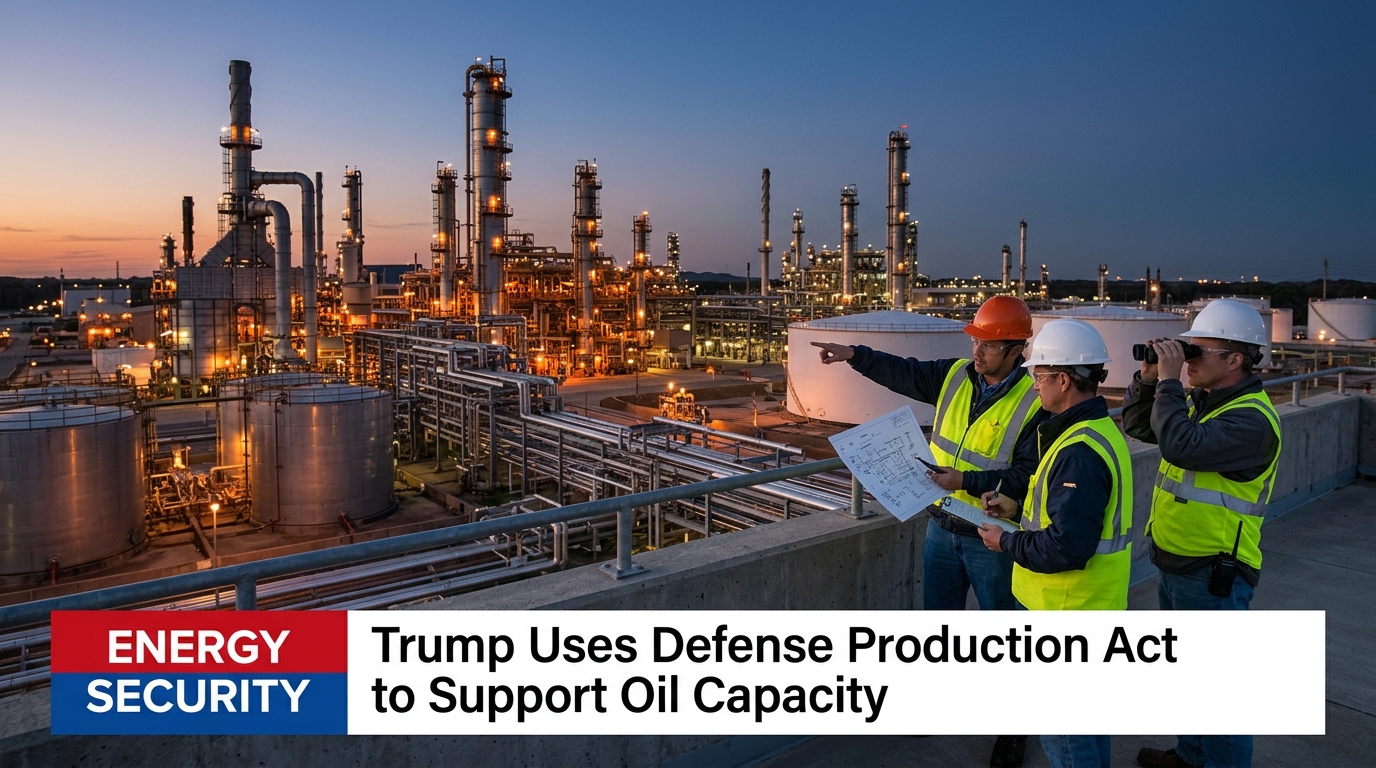


President Donald Trump has invoked the Cold War-era Defense Production Act to support domestic petroleum production, refining and logistics capacity, describing the sector as essential to national defense. The decision gives the administration additional tools to support projects that it considers important to maintaining the country's energy supply.
The law allows the federal government, under defined conditions, to encourage or support industrial capacity tied to national security. Depending on the legal authority and program used, the government can provide financial support through measures such as loans, purchase commitments and direct investment.
Energy infrastructure becomes a national security priority
Oil production and refining depend on a complex network of wells, processing facilities, pipelines, storage terminals and transportation systems. Disruptions at one stage can affect the availability of fuel even when crude oil remains available elsewhere.
The administration argues that maintaining sufficient domestic capacity is important for military readiness, transportation and the broader economy. By invoking the law, it is signaling that certain petroleum infrastructure projects may be considered strategic rather than purely commercial.
However, the announcement does not automatically mean that every oil company or proposed project will receive federal assistance. Agencies must determine which projects qualify, how support will be structured and whether the proposed investment meets the government's stated objectives.
Economic and environmental questions remain
Supporters of the move say additional domestic capacity could make the United States less vulnerable to supply disruptions and strengthen its ability to respond to emergencies. They also argue that reliable fuel supplies are important for freight, aviation, agriculture and defense operations.
Critics may question whether federal support will produce additional capacity quickly enough to justify its cost. Oil projects often require substantial investment, regulatory approvals and time to build. The ultimate effect on consumer prices will also depend on global demand, refining margins, transportation costs and conditions in international markets.
The policy raises environmental questions as well. Public support for fossil-fuel infrastructure can influence investment decisions for years, while debates over climate policy continue at federal and state levels.
Oversight will matter
Congress has a role in authorizing and funding federal programs and can examine how the administration uses its authority. Lawmakers may ask which projects receive support, how the government measures strategic need and whether the spending delivers the intended national-security benefits.
The decision illustrates how energy policy and national defense can overlap. Its practical significance will depend on the projects selected, the terms of federal assistance and whether added capacity improves resilience during a future supply disruption.