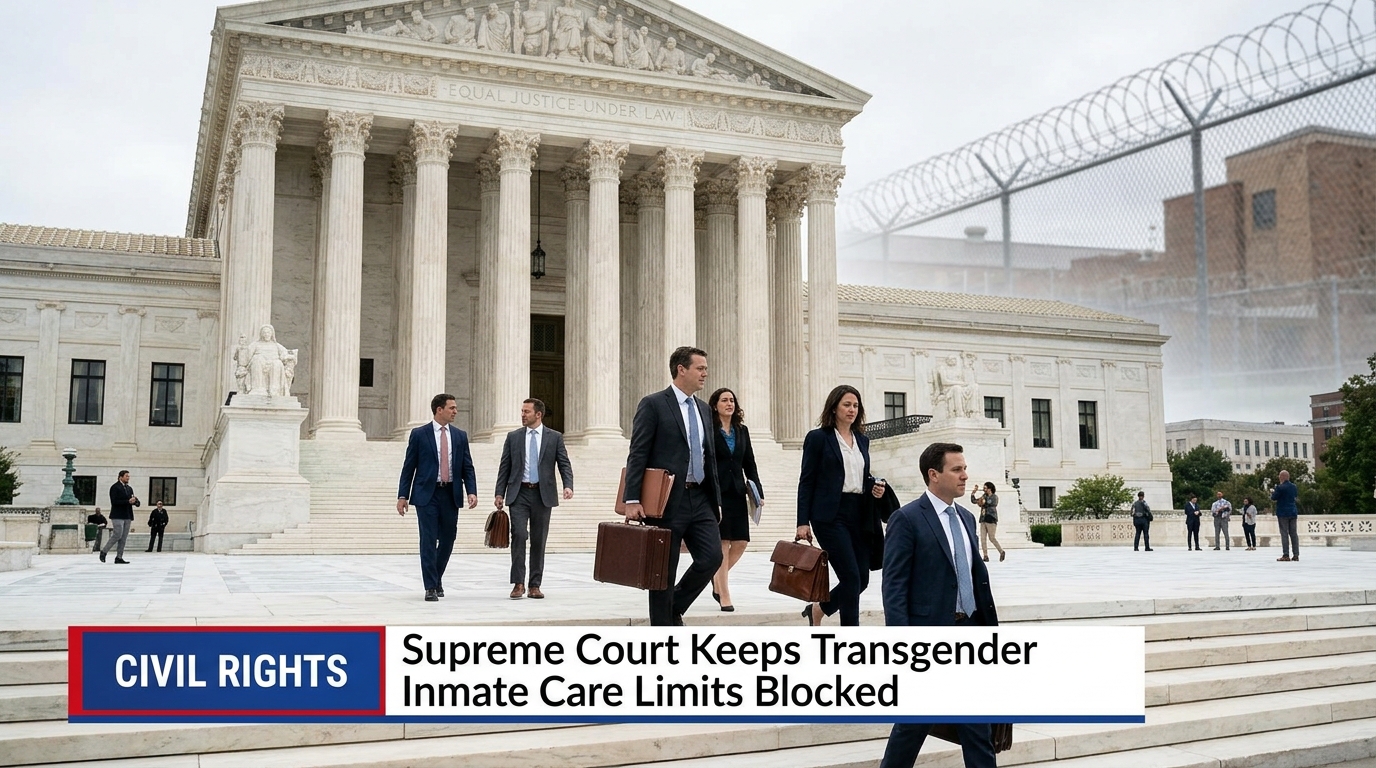


The U.S. Supreme Court has declined to let the Trump administration immediately enforce a policy restricting certain medical treatments and social accommodations for transgender people in federal prisons. The decision leaves a lower court's order in place while the legal challenge continues.
The administration's policy stemmed from a presidential executive order and would limit federal prison funding for specified treatments, including gender-affirming surgeries and hormone therapy. It also sought to restrict certain social accommodations, while continuing mental-health services.
A dispute over prison policy and medical care
The administration has argued that its restrictions are justified by its approach to federal prison management and security. Opponents, including advocates representing transgender inmates, have challenged the policy in court, arguing that cutting off established medical care could cause serious harm.
A federal district judge blocked the restrictions after considering the evidence presented in the case. The administration appealed and asked the Supreme Court to allow the policy to take effect before the full legal dispute was resolved.
The Supreme Court's refusal to grant that immediate relief does not necessarily settle the case on its merits. It means the lower court's order remains operative while further proceedings continue.
The legal questions remain significant
The case raises questions about the government's authority to determine medical care in federal custody, the constitutional protections afforded to incarcerated people and the standards courts should apply when assessing a policy that may affect health and safety.
Federal prisons have a responsibility to maintain secure facilities, but incarcerated people retain legal protections and may challenge government decisions that they believe violate those rights. Courts must evaluate the legal claims and evidence rather than assume that either a policy's stated purpose or its opponents' concerns settle the matter.
The administration's position also sits within a broader national debate over transgender rights and the role of federal agencies in determining access to medical treatment. That debate has produced litigation involving prisons, military service, identity documents and other government policies.
What happens next
The legal challenge will continue in the lower courts, where judges may examine the policy's implementation, the evidence concerning medical care and the administration's legal arguments. Further appeals remain possible.
For prison officials, the immediate task is to comply with the court order while the case remains unresolved. For policymakers, the dispute highlights the importance of clearly defined rules, evidence-based decisions and legal oversight when federal policy affects a vulnerable population.