


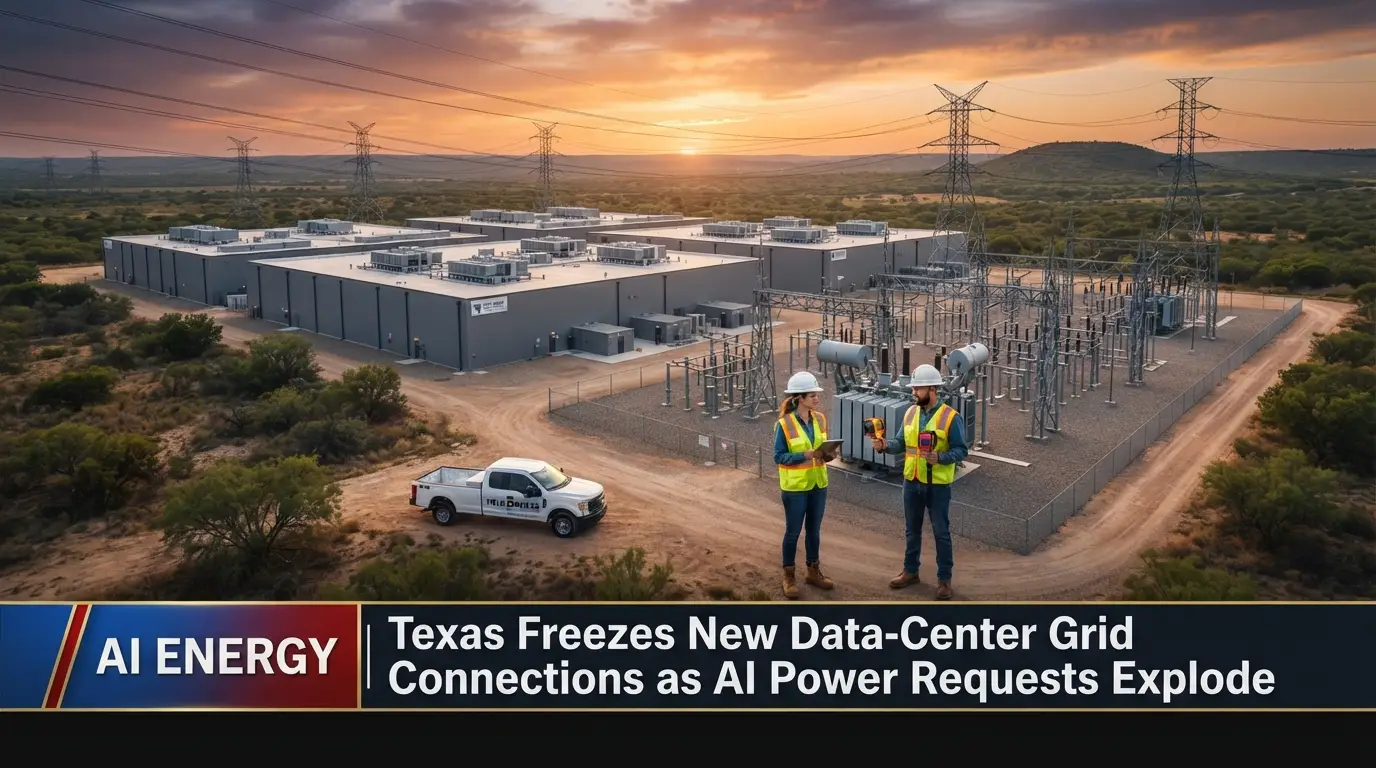


AUSTIN, TEXAS — Texas has temporarily halted new electricity connections for large data centers while officials review the enormous amount of power being requested by companies building artificial-intelligence infrastructure.
A Reuters investigation found that electricity requests from large users across parts of the United States have exceeded 700 gigawatts, far above current data-center demand estimates.
The AI Boom Creates a New Energy Problem
Artificial intelligence requires enormous computing power.
That computing power requires electricity.
The rapid expansion of AI data centers has therefore created a difficult challenge for utilities and state governments.
Texas has become one of the country's biggest data-center markets.
Companies are attracted by available land, energy resources and business-friendly policies.
But the speed of expansion has created uncertainty over how much electricity will actually be needed.
Some proposed projects may never be built.
Others could be delayed by financing, permitting or technology changes.
That makes it difficult for utilities to determine how much generation capacity they need to construct.
Texas is now requiring greater transparency around data-center projects and electricity requests.
Other states, including Pennsylvania and Ohio, are also taking steps to improve planning.
The issue matters to ordinary consumers as well.
If utilities build expensive infrastructure based on speculative demand, those costs could eventually affect electricity customers.
If they build too little, power shortages could limit economic growth.
The AI industry therefore faces an infrastructure question that cannot be solved simply by purchasing more chips.
The United States must also build the electricity system needed to operate those chips.
Texas may become an important testing ground for how America manages the next stage of the AI boom.