

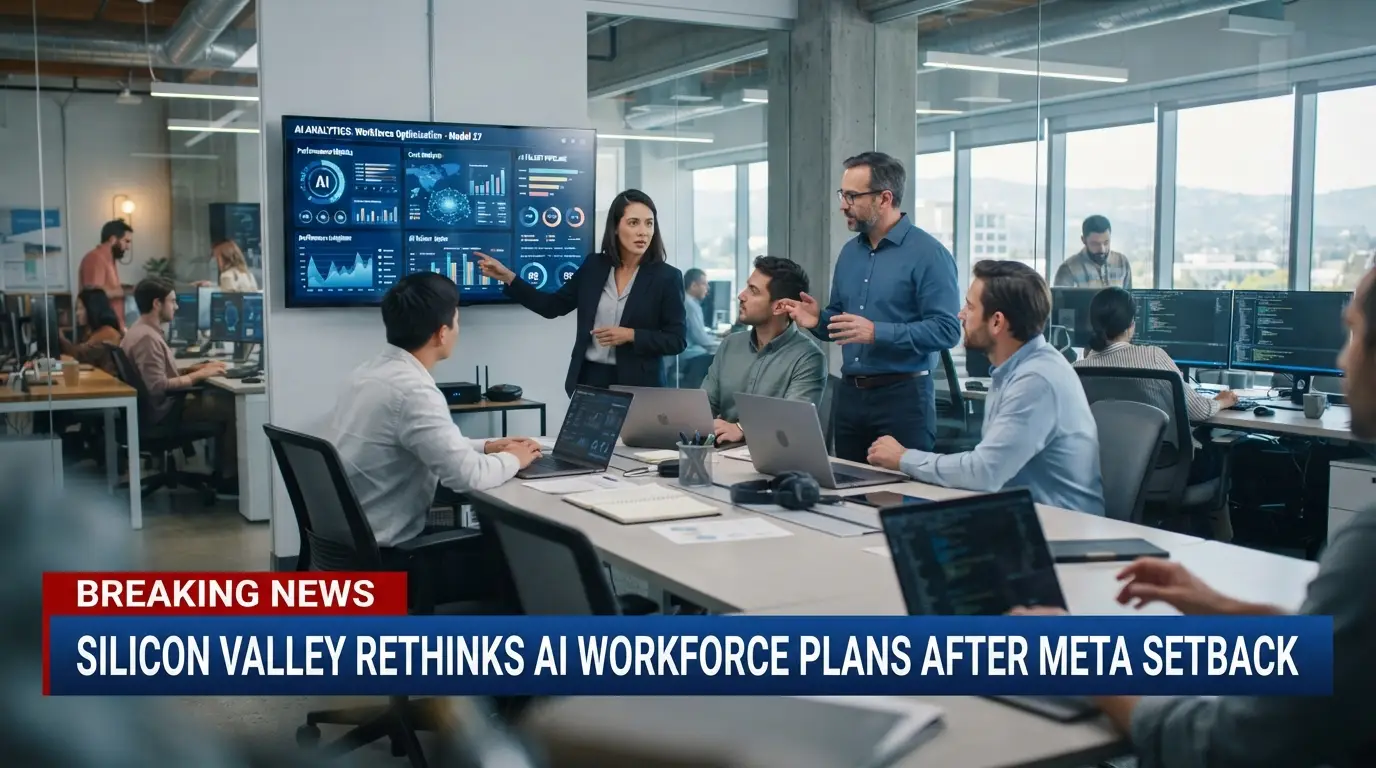


SAN FRANCISCO BAY AREA — Silicon Valley companies are taking a closer look at the practical challenges of building AI-driven workplaces after Meta scaled back an ambitious internal plan to restructure parts of its workforce around artificial intelligence.
The project was designed to create smaller teams supported heavily by AI tools, but employee resistance, reliability concerns and security issues complicated the effort.
AI Adoption Proves More Complicated Than Expected
The setback does not signal the end of AI investment.
Meta still expects to spend more than $130 billion this year on AI infrastructure and chips.
Instead, the experience illustrates the difference between building AI technology and integrating it successfully into a large organization.
Companies have increasingly experimented with AI assistants, coding systems and automated business processes.
But replacing established workflows can create unexpected problems.
Employees may need additional training.
AI systems can produce inaccurate information.
Security teams must also ensure that confidential corporate data is protected.
Those challenges can slow down adoption.
Silicon Valley executives are therefore beginning to distinguish between AI experimentation and large-scale organizational transformation.
Some companies may choose to use AI as a productivity tool rather than immediately restructure entire departments.
That could mean fewer dramatic workforce changes but broader adoption of AI across existing teams.
The approach may also reduce resistance among employees.
At the same time, investors continue demanding productivity improvements from technology companies.
The pressure to show financial benefits from AI investment remains high.
Silicon Valley is therefore entering a more mature stage of the AI boom.
The question is no longer simply whether companies can build powerful AI systems.
It is whether those systems can deliver measurable benefits inside real organizations.
The answer could shape hiring, management and workplace technology across the industry.