

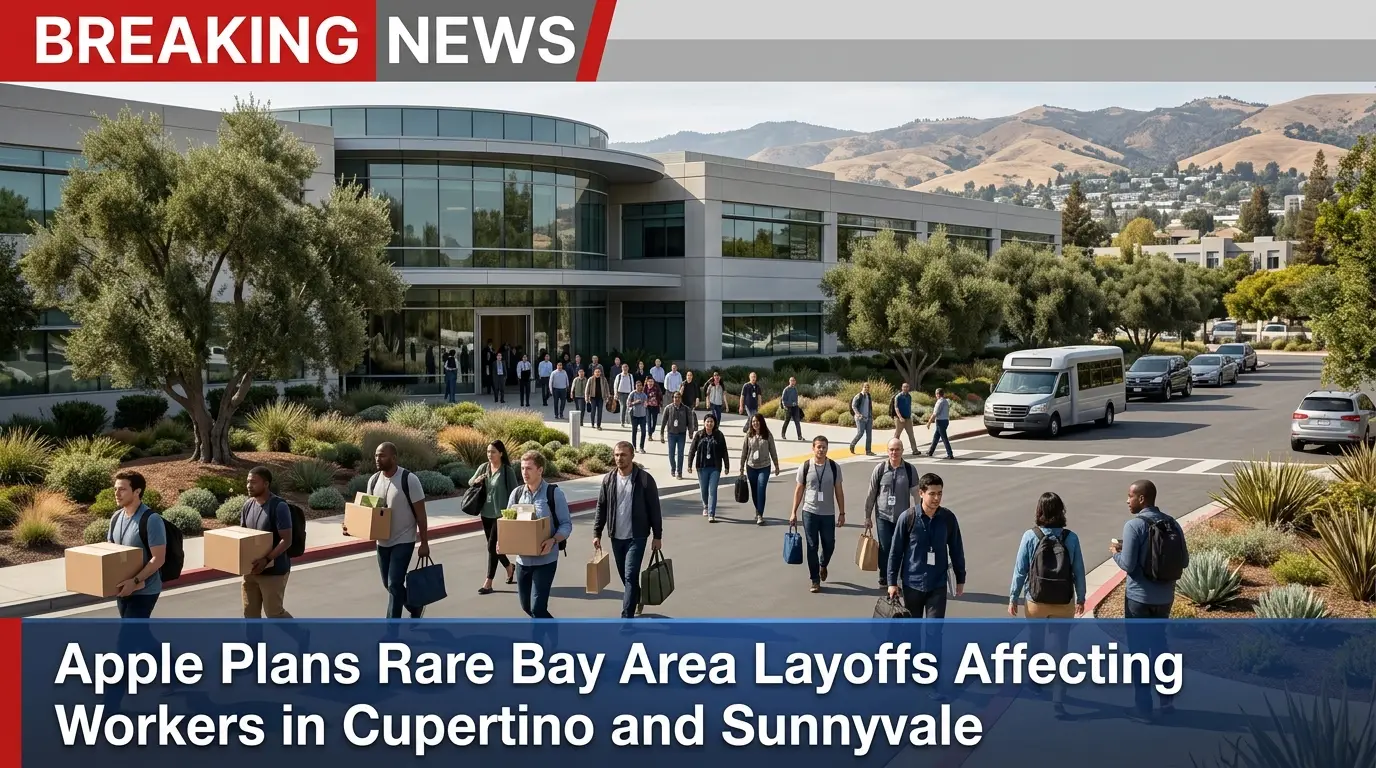


CUPERTINO — Apple is preparing to cut 147 jobs across three Bay Area locations, including its headquarters in Cupertino and offices in Sunnyvale, in one of the company's more notable rounds of local layoffs.
The cuts are expected to affect employees working in areas including software engineering, security, machine learning and other technology functions.
Apple Restructures Parts of Its Workforce
The layoffs represent a relatively unusual move for Apple, which maintained a comparatively conservative approach to workforce reductions during much of the technology industry's post-pandemic restructuring.
The affected positions include dozens of workers at Apple's Cupertino headquarters and additional employees in Sunnyvale.
Some of the jobs are connected to Apple's Vision Pro and software operations.
The cuts come as Apple continues making major investments in artificial intelligence and other emerging technologies.
The company is simultaneously preparing for a leadership transition, with CEO Tim Cook expected to step down after more than a decade at the helm.
The layoffs highlight the changing priorities within the technology industry.
Even companies that avoided large-scale reductions in previous years are now reassessing staffing needs as AI changes software development and product strategies.
For Silicon Valley workers, the development is another indication that job security in the technology industry is becoming less predictable.
Apple remains one of the region's most important employers.
Its workforce supports a large ecosystem of engineers, contractors, suppliers and service businesses throughout the Bay Area.
Employment changes at major technology companies can therefore have broader effects on the regional economy.
The Apple layoffs also come against a wider backdrop of Silicon Valley restructuring.
Thousands of technology workers have lost their jobs across the region this year.
At the same time, companies continue hiring for highly specialized AI positions.
The result is a technology labor market where demand remains strong in some areas while traditional roles face increasing pressure.