


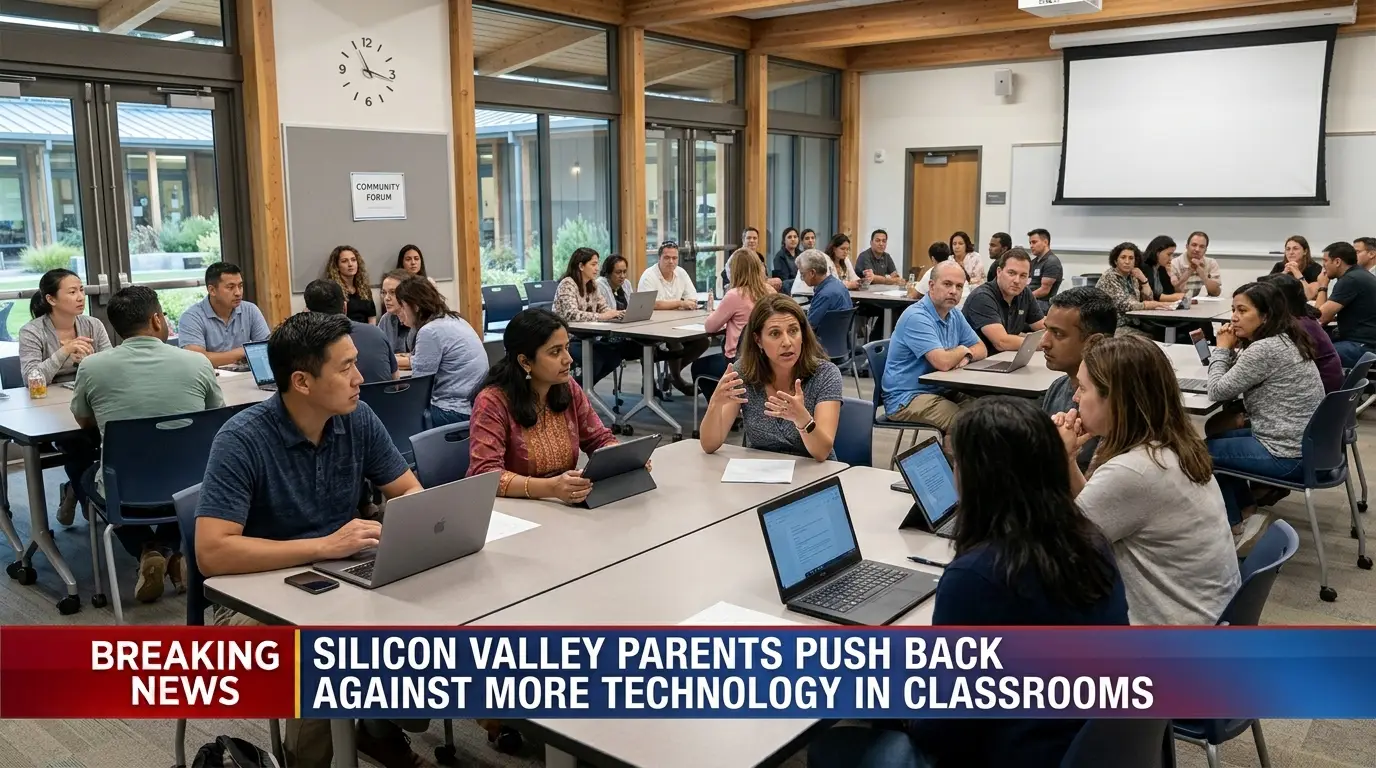


PALO ALTO, CALIFORNIA — A growing group of Silicon Valley parents is questioning whether schools should be using as much technology as they once demanded.
Parents working in the technology industry are increasingly pushing for limits on artificial intelligence, YouTube, digital games and other screen-based tools in classrooms. A petition presented in Palo Alto Unified School District received more than 200 signatures.
Tech Families Question Digital Dependence
The debate represents an unusual development in the heart of America's technology industry.
Many Silicon Valley parents work for companies whose products have transformed education and communication.
Yet some are now concerned that children are spending too much time in front of screens.
Parents cite concerns involving distraction, online bullying, mental health and excessive exposure to digital technology.
Artificial intelligence has added another layer to the debate.
Schools are increasingly experimenting with AI-powered tools while educators attempt to determine how the technology should be used responsibly.
Some parents believe students need stronger limits.
Others argue that children must learn how to use technology because digital skills are increasingly important in higher education and employment.
School districts are therefore attempting to balance two competing priorities.
One is protecting students from excessive technology use.
The other is preparing them for a workforce increasingly shaped by artificial intelligence and digital tools.
California has also introduced stronger policies regarding student cellphone use.
Those statewide efforts have increased attention on how technology affects classroom learning.
In Palo Alto and other Silicon Valley communities, the discussion has particular significance because many parents are technology professionals themselves.
Their concerns suggest that skepticism about digital education is no longer limited to parents who oppose technology generally.
Instead, some of the industry's own workforce is asking whether schools have moved too quickly toward digital classrooms.
The debate is likely to continue as districts develop policies for AI and other emerging technologies.