

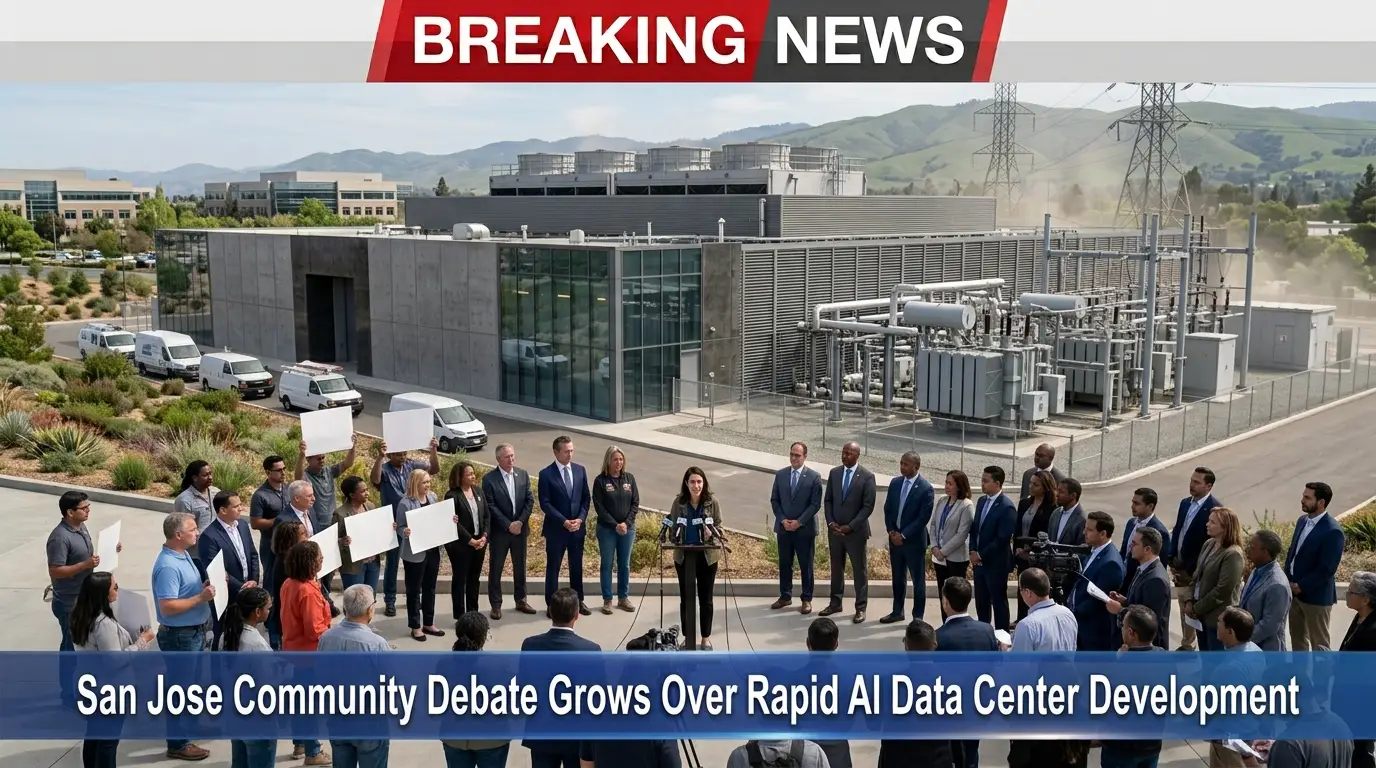


SAN JOSE — San Jose residents and community advocates are pushing for greater scrutiny of artificial-intelligence data centers as developers seek to expand computing infrastructure throughout Silicon Valley.
The debate centers on electricity demand, water use, environmental effects and the potential impact on local utility costs.
AI Infrastructure Creates New Local Concerns
Artificial intelligence requires enormous amounts of computing power.
That demand has encouraged technology companies and data-center developers to pursue new facilities across the country.
Silicon Valley is one of the most important locations for that expansion because it remains close to major technology companies and AI developers.
But residents are questioning whether the economic benefits outweigh the local costs.
Large data centers can require significant quantities of electricity.
They can also require cooling systems that use water or other resources.
Community advocates are calling for greater transparency around the environmental impact of proposed projects.
San Jose officials are considering ways to ensure that local communities receive benefits from new development.
Possible approaches include community investments and infrastructure contributions.
The debate reflects a larger tension inside Silicon Valley.
The region wants to remain a global center for artificial intelligence, but residents do not necessarily want every available parcel of land converted into technology infrastructure.
The issue is becoming increasingly important as AI investment accelerates.
Data centers are likely to become a major component of the next generation of technology infrastructure.
San Jose's decisions could influence how other communities approach similar proposals.
The city therefore faces a delicate balancing act.
Officials must weigh economic development and technological leadership against environmental concerns and neighborhood impacts.