


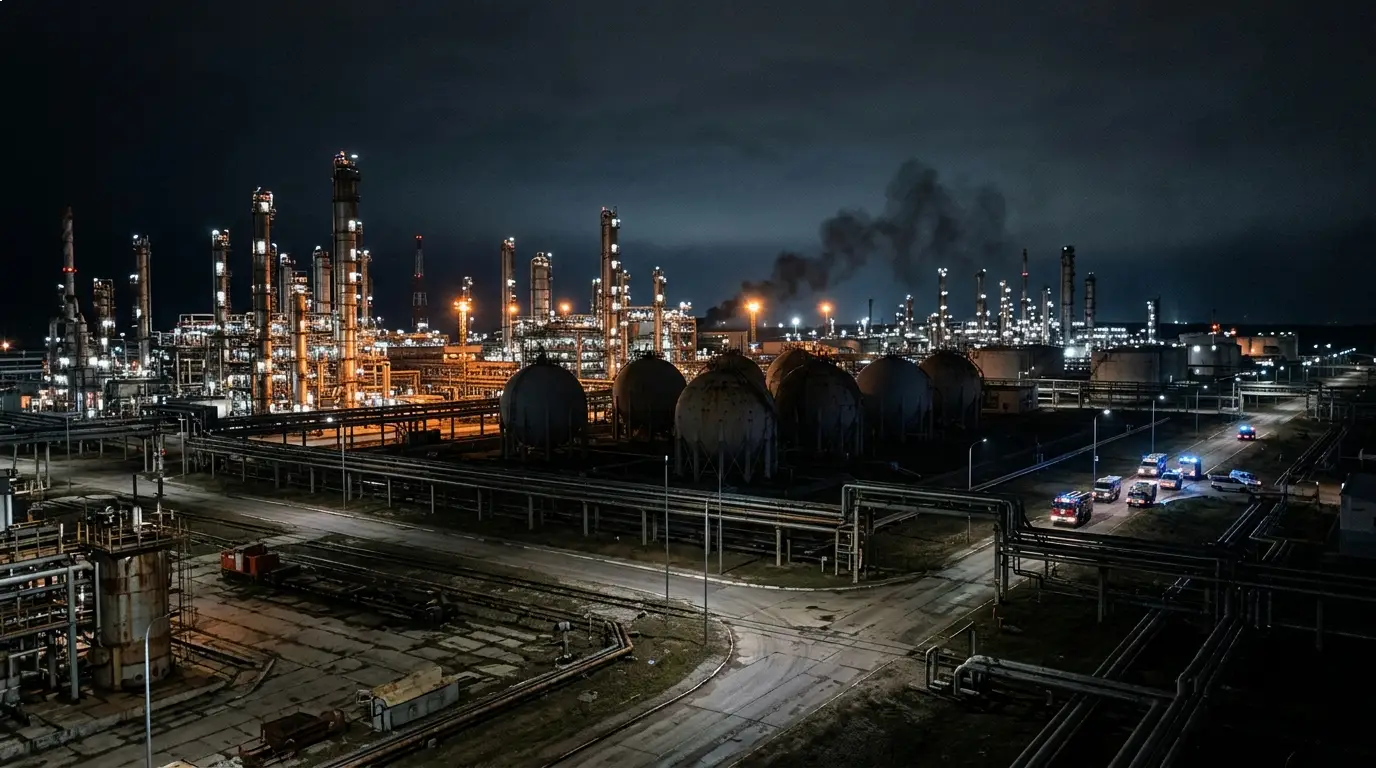


MOSCOW — Russia's oil-refining industry is facing another disruption after a major refinery suspended crude processing following a drone attack, adding uncertainty to global fuel supplies.
The NORSI refinery, one of Russia's largest, halted oil processing after the attack, according to sources cited by Reuters.
Refinery Attacks Affect Fuel Supply
The refinery is a major producer of gasoline and other refined petroleum products.
Damage or shutdowns at Russian refineries can have a different effect from disruptions to crude production because refined fuels are needed directly by transportation networks and industrial consumers.
Russia has already extended restrictions on diesel exports through September 30 as the government attempts to protect domestic supplies.
The country's fuel market has come under pressure following repeated attacks on energy infrastructure.
Russia remains one of the world's largest oil producers and refined-fuel exporters, meaning prolonged disruptions can affect international markets.
The situation also creates a difficult balance for Moscow.
Russia wants to maintain energy revenues while ensuring that domestic consumers have access to affordable fuel.
Export restrictions can help stabilize domestic markets but reduce the amount of Russian fuel available internationally.
For global buyers, the disruptions could increase competition for alternative supplies from the Middle East, Europe and other major producing regions.
The market impact will depend on how quickly Russian refineries return to normal operations.
If multiple facilities remain offline, fuel prices could become more sensitive to further supply disruptions.
The latest refinery problems therefore add another layer of uncertainty to an already volatile global energy market.
Investors and fuel traders will be watching both Russian refinery operations and developments surrounding the wider war in Ukraine.