

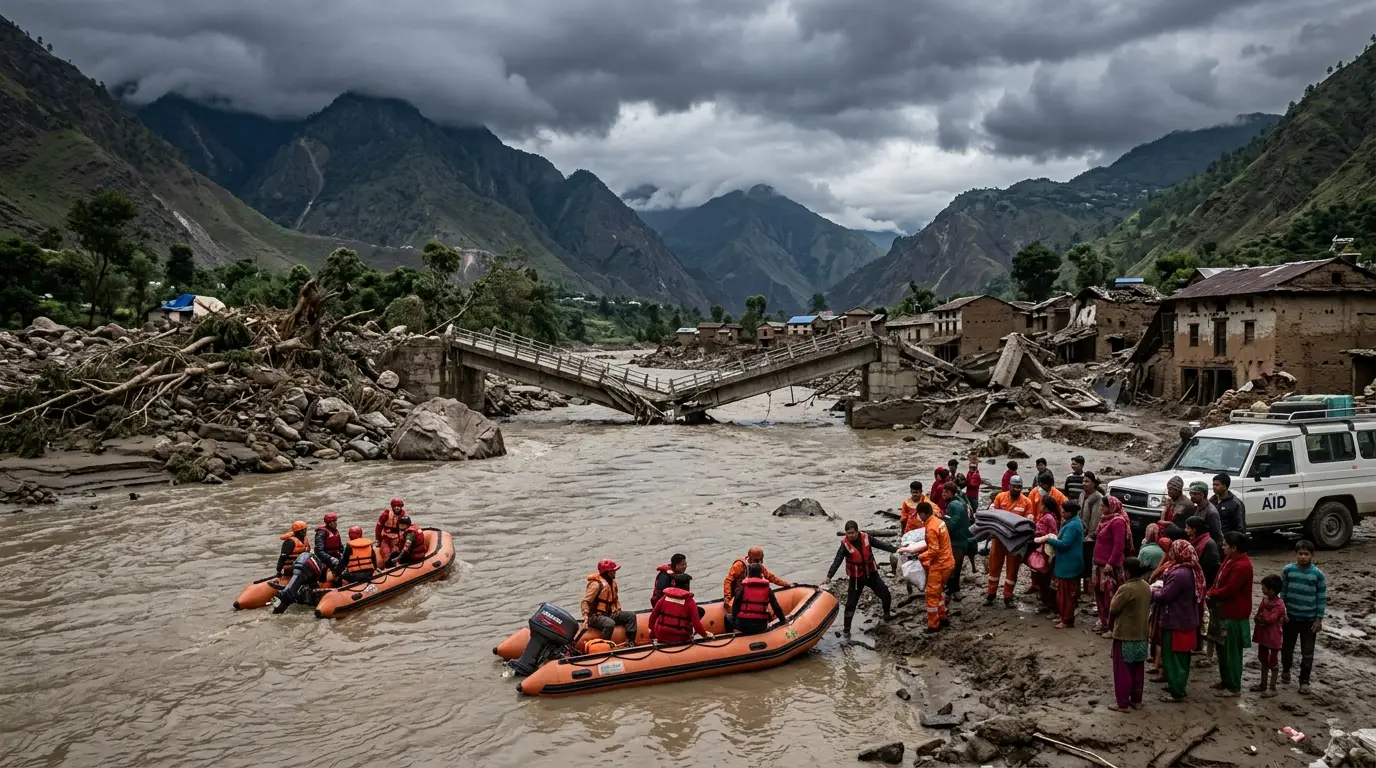


KATHMANDU — Nepal has resumed search-and-rescue operations after severe flooding and landslides devastated communities along the country's border with Tibet, while officials warn that rebuilding damaged infrastructure could cost billions of dollars.
Authorities are searching for thousands of people reported missing following the disaster.
Humanitarian Response Enters Critical Phase
Rescue operations were temporarily suspended because of dangerous weather before restarting.
Officials are now focusing on locating missing residents, delivering emergency supplies and restoring access to isolated communities.
The disaster has killed hundreds of people and destroyed roads, bridges and other infrastructure.
Nepal's government has requested specialist international assistance, particularly in technical areas related to reconstruction and disaster response.
Finance Minister Rameshore Khanal told Reuters that rebuilding could cost between $4 billion and $5 billion.
For Nepal, that represents an enormous economic burden.
The country has a population of roughly 30 million and limited financial resources for major infrastructure reconstruction.
The floods have damaged areas that are already difficult to access because of mountainous terrain.
Roads and bridges are particularly important because many communities depend on them for food, medicine and economic activity.
The disaster has also raised questions about early-warning systems and the ability of authorities to respond to sudden floods and landslides.
Scientists and disaster experts have increasingly warned that mountainous regions can be especially vulnerable to extreme weather and rapid changes in water and ice conditions.
For Nepal, the immediate priority remains saving lives.
But once rescue operations conclude, the country will face a much larger challenge: rebuilding damaged infrastructure while reducing the risk of another disaster.
International assistance could therefore become critical.
The reconstruction effort is likely to require years of investment and coordination between Nepal's government, foreign donors and international development organizations.
The scale of the disaster means its economic consequences could extend well beyond the communities directly affected.