

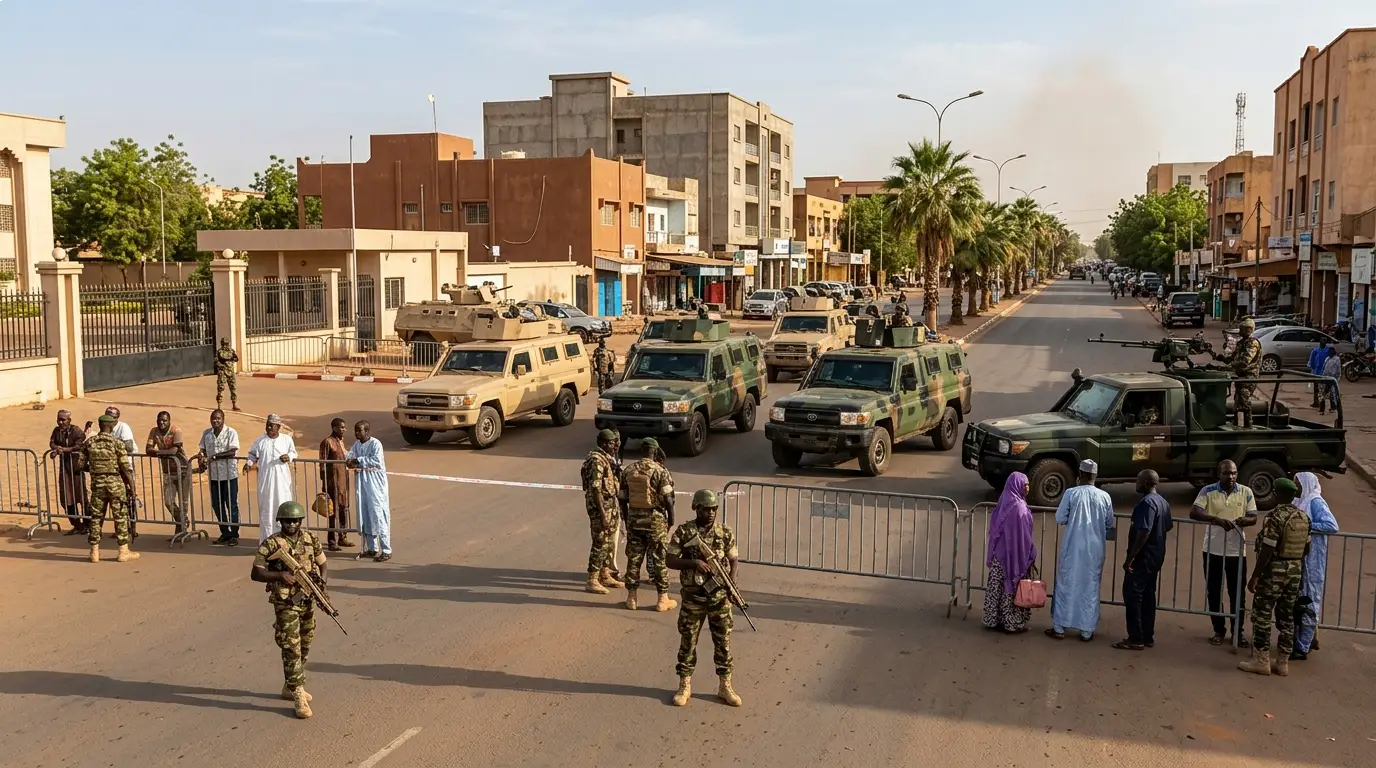


NIAMEY — Niger's military government is facing a major test after mutinous soldiers attacked strategic locations in the capital, including the airport and presidential complex.
Gunfire and explosions were reported across Niamey as government forces attempted to regain control.
Internal Military Divisions Raise Concerns
The incident is particularly significant because Niger has been governed by a military administration since a 2023 coup.
The government said its forces were gradually regaining control after the attack.
However, the situation remained fluid, with security sources indicating that some locations were still contested.
The mutiny raises questions about the cohesion of Niger's military establishment.
The government has sought to strengthen its position by reducing reliance on Western security partners and increasing cooperation with Russia.
But Niger continues to face threats from Islamist militant groups operating throughout the Sahel.
An internal military confrontation could therefore weaken the government's ability to respond to those external security threats.
Niger is also strategically important because of its geographic position and natural resources.
The country has historically been an important uranium producer and occupies a key location between North and West Africa.
Political instability could therefore have consequences beyond the capital.
Neighboring countries will be watching closely for signs that the mutiny remains contained or develops into a broader challenge to the military government.
The government will now need to demonstrate that it retains control over the armed forces.
The crisis also raises broader questions about the durability of military governments that have taken power across parts of the Sahel in recent years.
For Niger, restoring stability will be critical not only for political reasons but also for national security and economic development.