

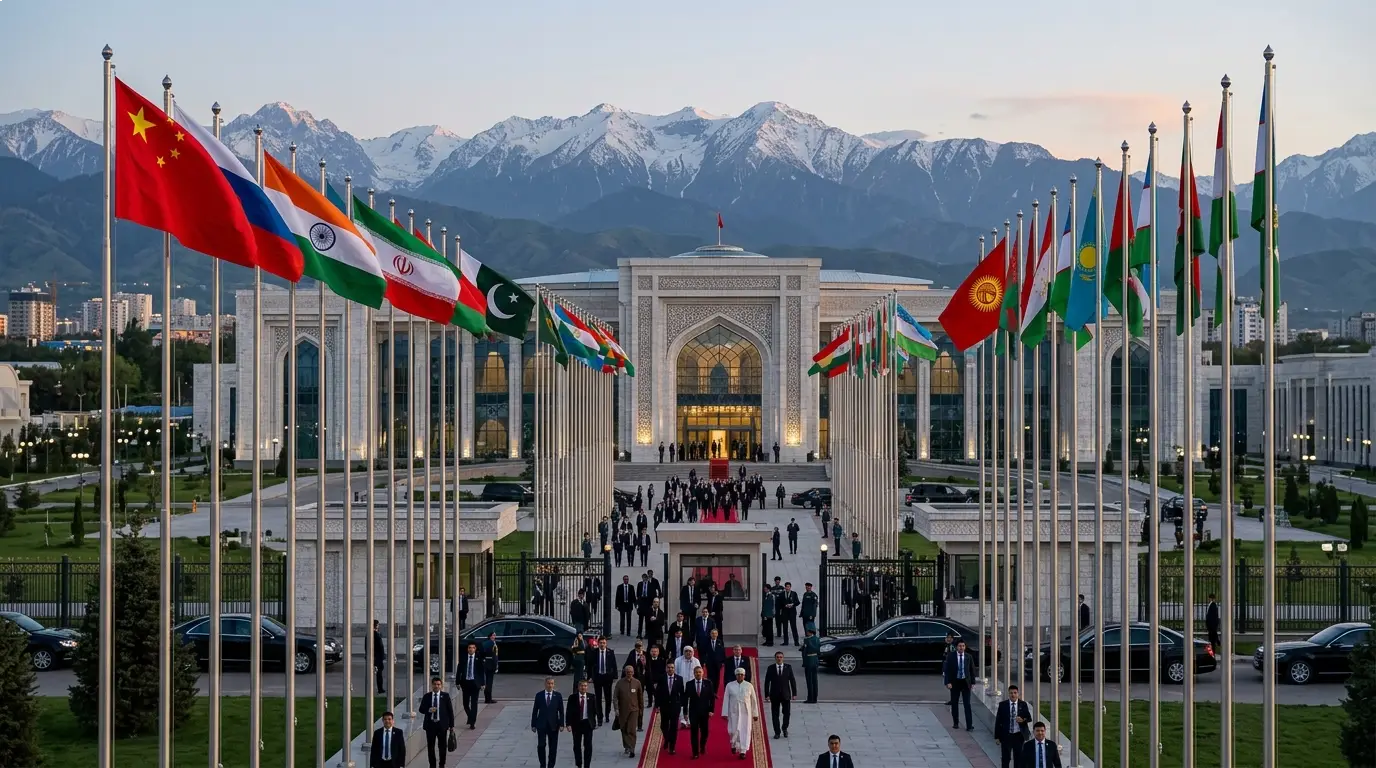


BEIJING — Chinese President Xi Jinping is preparing to travel to Kyrgyzstan for a major Shanghai Cooperation Organization summit, highlighting Beijing's expanding diplomatic engagement across Central Asia and the wider Eurasian region.
Xi is scheduled to participate in the summit from August 30 through September 3.
Central Asia Gains Strategic Importance
The Shanghai Cooperation Organization has become an increasingly important diplomatic platform involving China, Russia, India, Iran, Pakistan and several Central Asian countries.
The group focuses on security, economic cooperation and regional political coordination.
Xi's participation comes at a time when Central Asia is attracting greater attention from major powers because of its strategic location, energy resources and transportation links between Europe and Asia.
China has invested heavily in infrastructure and trade relationships across the region.
The summit also provides Beijing with an opportunity to strengthen diplomatic ties at a time of increasing competition between China and Western countries.
Xi is expected to hold bilateral discussions with Kyrgyz President Sadyr Japarov during his visit.
He will then travel to Egypt for a state visit, according to China's Foreign Ministry.
The trip demonstrates the breadth of China's diplomatic outreach.
Central Asia has become particularly important to Beijing because it provides access to energy supplies and overland trade routes while also serving as a buffer near China's western borders.
For Russia, the region remains strategically significant as Moscow attempts to maintain influence across former Soviet republics.
India also sees Central Asia as an important area for economic and security cooperation.
The summit will therefore be closely watched for signs of deeper regional coordination.
China's growing role in Central Asia is likely to remain an important element of the wider geopolitical competition shaping Eurasia.