

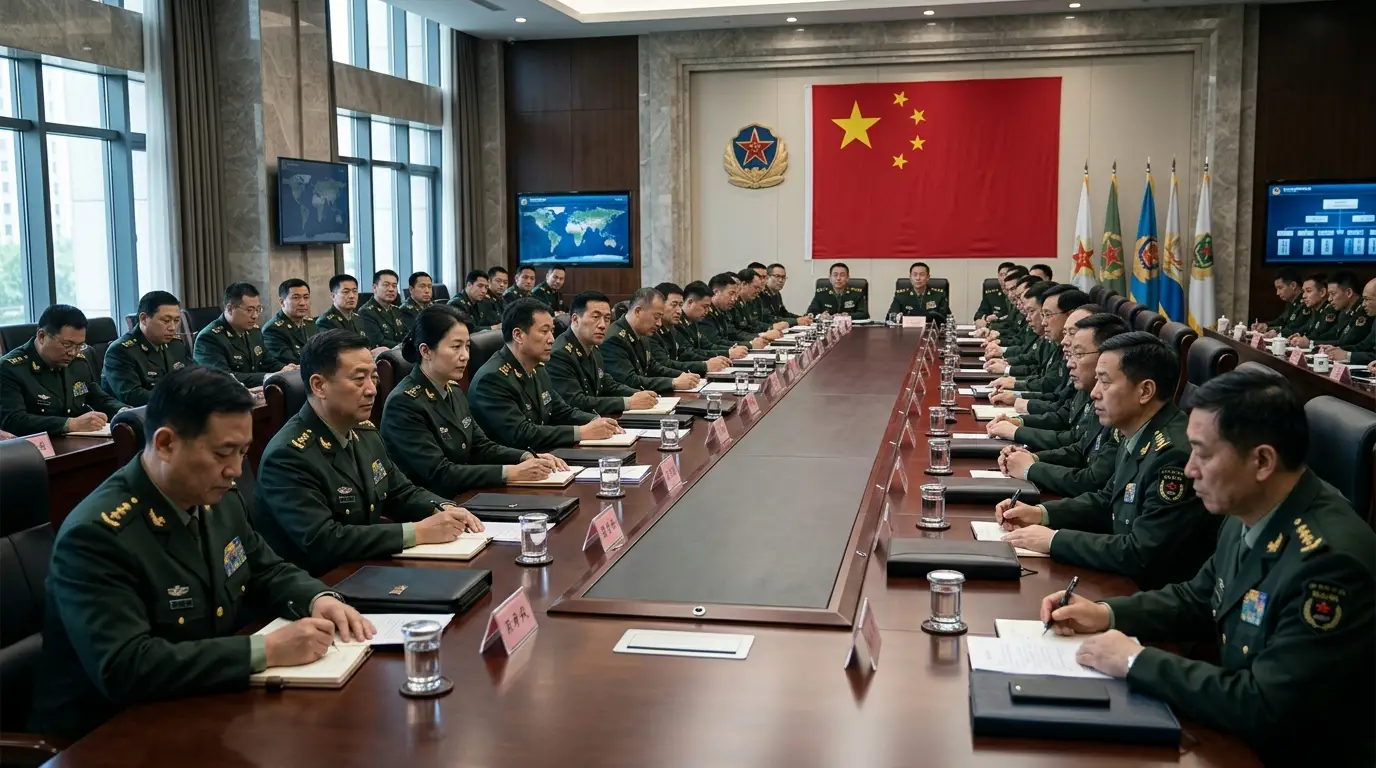


BEIJING — China has removed two senior military officers from the country's highest military command body following investigations into alleged serious violations of discipline and law.
The move represents another significant leadership shake-up within the People's Liberation Army.
Military Leadership Faces Continuing Scrutiny
China's state news agency announced that the two officers had been removed from the Central Military Commission.
The body oversees China's armed forces and is chaired by President Xi Jinping.
The latest removals add to a broader campaign against corruption and misconduct within the Chinese military.
Beijing has previously investigated senior officers over allegations involving corruption, procurement and other forms of misconduct.
The latest action is significant because senior military personnel occupy powerful positions within China's national-security system.
Leadership changes can also create uncertainty over military planning and command structures.
Xi has made strengthening the People's Liberation Army a major priority.
China has invested heavily in advanced aircraft, missiles, naval forces, cyber capabilities and space technology.
At the same time, the leadership has repeatedly emphasized discipline and political loyalty within the armed forces.
The latest removals suggest that the anti-corruption campaign remains active even at the highest levels.
For foreign governments, the developments are being closely watched because China's military capabilities are increasingly important to security issues involving Taiwan and the broader Indo-Pacific.
The removals do not necessarily indicate a change in China's strategic objectives.
Instead, they may reflect the leadership's continuing effort to ensure tighter control over the military establishment.
The changes also highlight the importance of personnel decisions within China's highly centralized political system.
Xi's control over the military remains one of the central pillars of his leadership.
Further appointments or investigations could provide additional clues about how the leadership intends to reorganize the armed forces.