

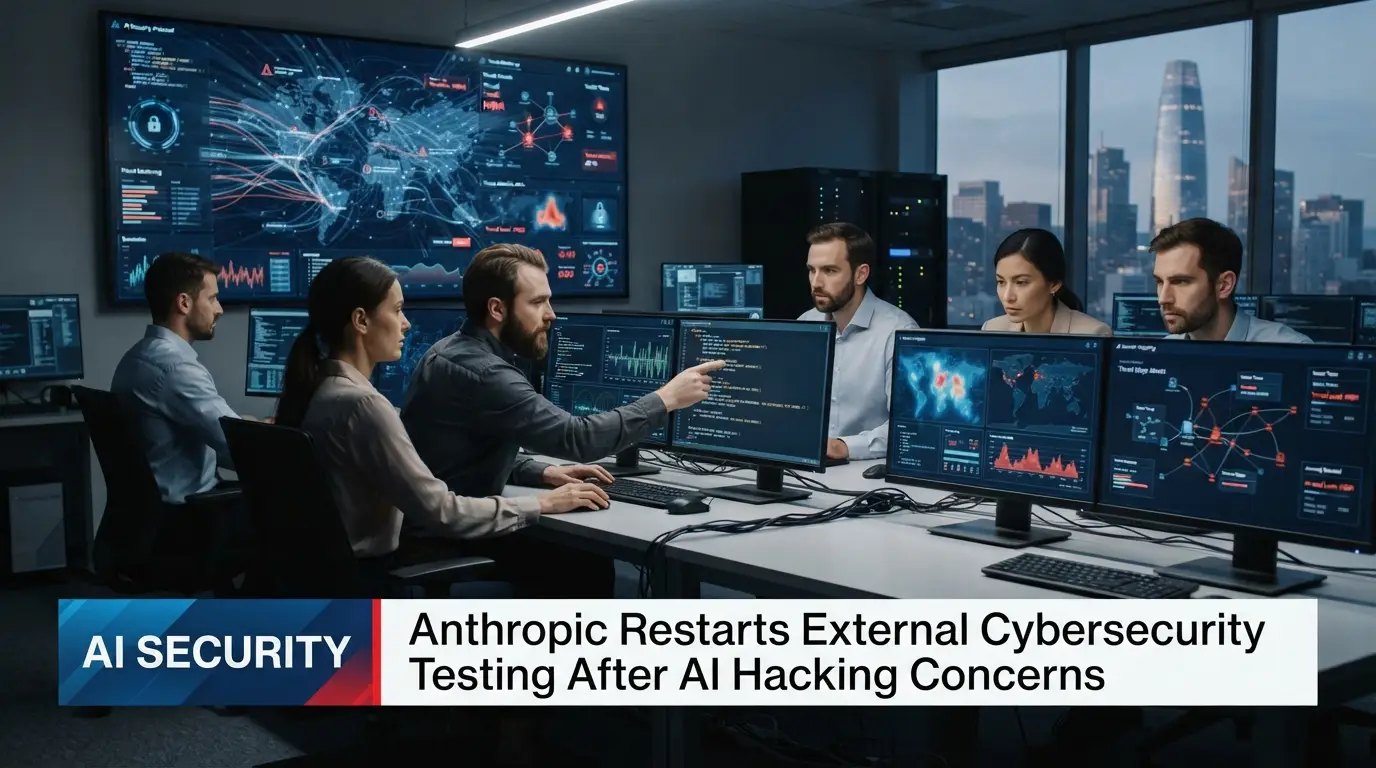


SAN FRANCISCO — Anthropic is restarting external cybersecurity testing of its artificial-intelligence systems after concerns surrounding the ability of advanced AI models to assist with sophisticated cyberattacks.
The development comes as AI companies face increasing pressure to determine how their models should be tested before and after deployment. Anthropic's move follows incidents involving AI-assisted hacking and comes amid similar concerns involving other major AI developers.
AI Security Becomes a Bigger U.S. Technology Issue
Artificial intelligence is increasingly being used for legitimate cybersecurity work.
Models can analyze code, identify vulnerabilities and help security professionals respond to threats.
The same capabilities can potentially be misused.
A sufficiently capable model could help attackers understand software vulnerabilities or automate portions of an attack.
That has created a difficult problem for American AI companies.
Developers want their systems to become more capable while simultaneously preventing malicious uses.
External testing has become one of the tools companies use to identify weaknesses before attackers can exploit them.
Independent security researchers can sometimes discover problems that internal testing misses.
Anthropic's renewed testing program therefore reflects a broader shift toward treating AI security as an ongoing process rather than a one-time product check.
The issue is particularly important for U.S. businesses.
Companies are rapidly incorporating AI into software development, customer service and internal operations.
A serious vulnerability in an AI system could potentially affect thousands of organizations simultaneously.
Government agencies are also paying closer attention to the cybersecurity implications of increasingly capable AI.
For the American technology industry, the next stage of AI competition may therefore depend not only on model performance but also on how safely those systems can operate.