

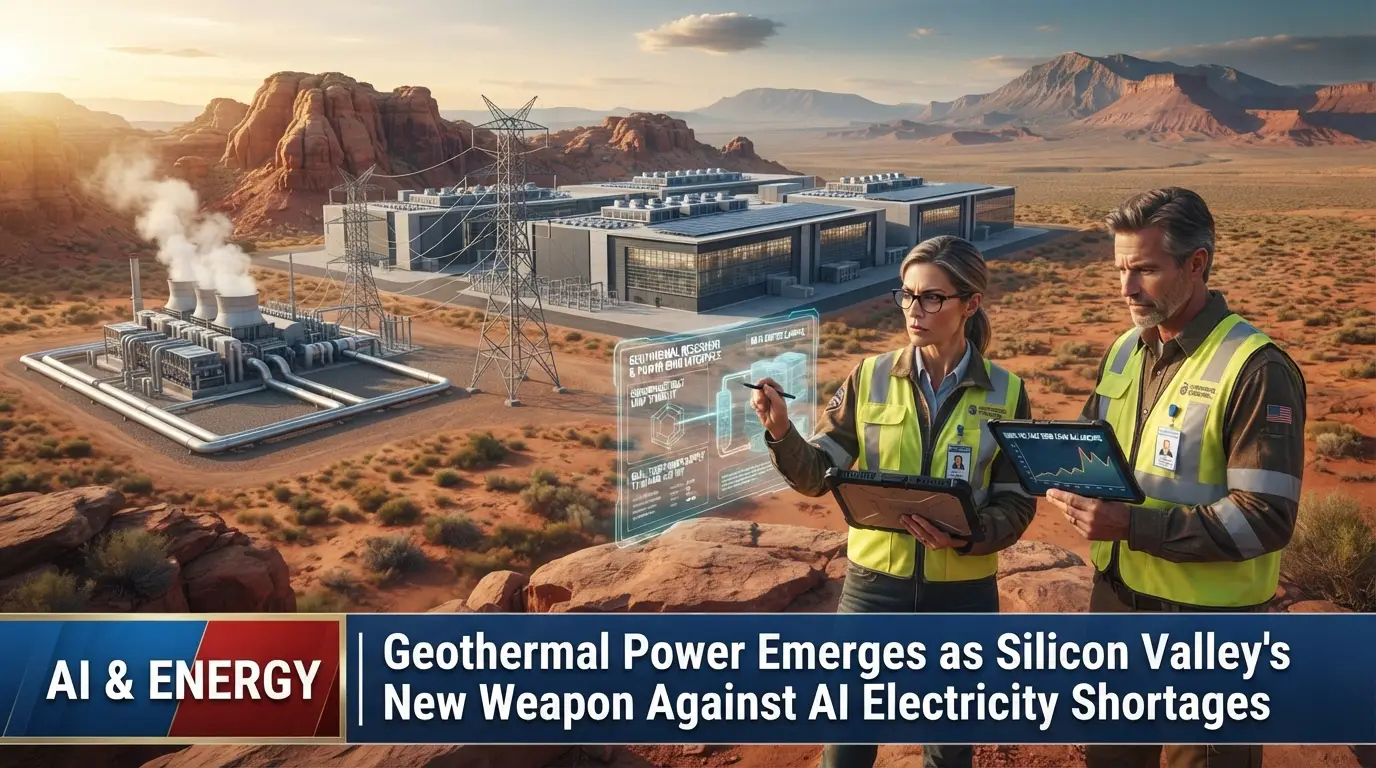


SALT LAKE CITY — Silicon Valley's artificial-intelligence boom is creating new demand for reliable electricity, and geothermal energy is emerging as one potential answer.
A major agreement involving Google and geothermal developer Fervo Energy highlights the growing connection between computing and alternative power generation.
AI Needs Electricity Around the Clock
Wind and solar energy can provide large amounts of electricity, but their output varies depending on weather conditions.
Data centers, by contrast, require continuous power.
That makes reliable energy particularly valuable to technology companies building large AI facilities.
Geothermal power uses heat from beneath the Earth's surface to generate electricity.
It can provide consistent output while producing relatively low operational carbon emissions.
Fervo's Utah project is becoming an important example.
The company announced an agreement to supply Google with hundreds of megawatts of geothermal power.
The deal demonstrates how technology companies are looking beyond traditional electricity sources.
Natural gas, nuclear power, solar, wind and geothermal energy could all play roles in supporting the next generation of data centers.
The competition for electricity is becoming so intense that energy availability can determine where computing facilities are built.
That changes the economics of technology development.
A company may have access to the world's best processors but still be unable to operate a data center without sufficient power.
For energy developers, AI therefore represents a huge new customer market.
For technology companies, it represents a constraint that cannot be solved through software alone.
Geothermal has limitations.
Projects can take years to develop, and suitable underground resources are not available everywhere.
But the industry is attracting new investment because of the enormous electricity requirements of AI.
The next generation of computing may therefore depend partly on technologies that have little connection to traditional Silicon Valley.