


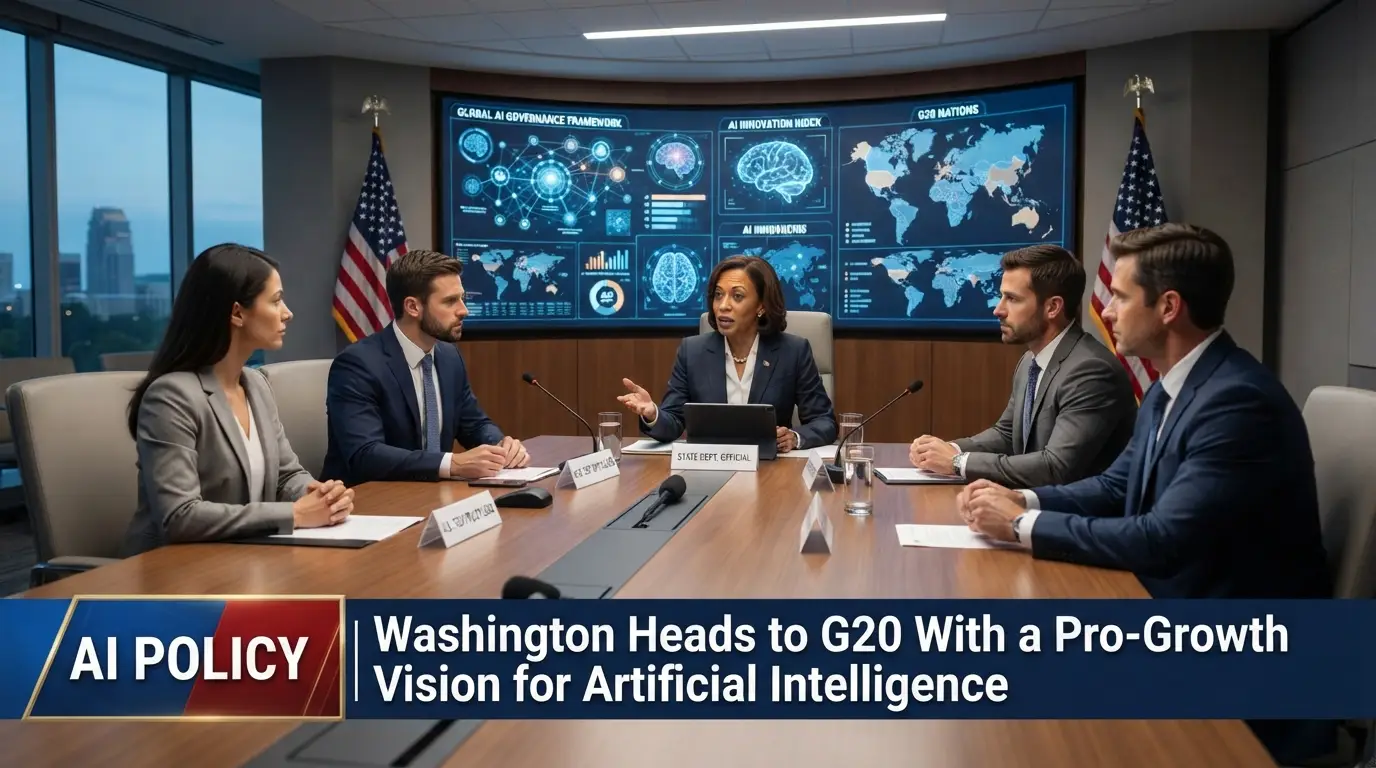


WASHINGTON — The United States is preparing to argue for a relatively hands-off approach to artificial-intelligence regulation at an upcoming G20 gathering in North Carolina.
The Trump administration plans to promote what officials describe as a pro-growth vision for emerging technology while opposing the creation of new international regulatory bodies focused specifically on AI.
America Wants to Shape the Global AI Rules
The policy position reflects a broader U.S. strategy of maintaining its technological advantage over China.
American officials argue that excessive regulation could slow innovation at a moment when AI development is moving rapidly.
The administration instead wants international partners to cooperate around technology while allowing companies greater freedom to develop new systems.
The debate is becoming increasingly important.
Governments around the world are considering rules covering AI safety, privacy, copyright and autonomous systems.
The United States is taking a different approach from some jurisdictions that have pursued detailed regulatory frameworks.
American technology companies have significant economic interests at stake.
The world's largest AI developers are headquartered in the United States, and their products are being deployed across multiple industries.
Strict global rules could create additional compliance costs.
Supporters of lighter regulation argue that American companies need room to experiment.
Critics counter that AI systems are becoming sufficiently powerful that governments need stronger safeguards.
The G20 meeting therefore provides Washington with an opportunity to influence how other major economies approach the technology.
Industry leaders, including executives from major American AI and technology companies, are expected to participate in discussions.
For the United States, the central challenge is balancing innovation with public confidence.
If Washington succeeds in persuading other countries to adopt a more flexible approach, American technology companies could gain additional room to expand internationally