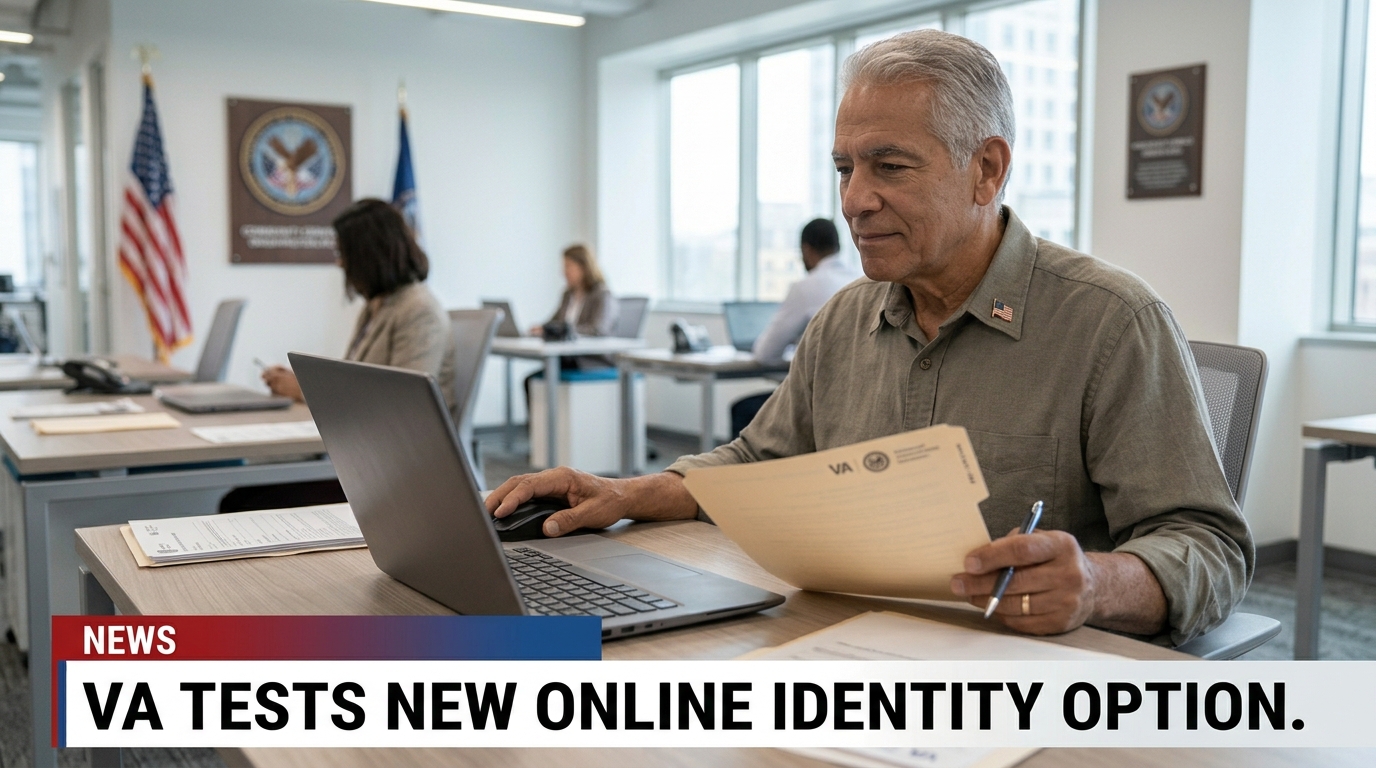


The Department of Veterans Affairs has begun a pilot offering an additional identity-verification option for people accessing its online services, part of a broader effort to make digital government systems easier to use while maintaining protections against impersonation.
The pilot reportedly allows participating veterans to use a facial-recognition-based identity service known as CLEAR to verify their identity when accessing VA.gov. The initiative introduces another option alongside existing methods, rather than establishing that every veteran must use facial recognition.
Identity verification is a practical challenge for agencies that deliver benefits and services online. Strong checks can help prevent unauthorized access to personal information, but complicated authentication procedures can also make it harder for legitimate users to complete tasks. Veterans may need to access health, benefits or account information without visiting a physical office.
Biometric verification can make some processes more convenient, but it raises questions about privacy, consent, data retention and alternative access. Users should understand what information is collected, which organization processes it, how long it is retained and whether they can choose a different method if they do not want to use facial recognition.
The pilot’s existence does not establish that the system is mandatory, nor does it by itself answer how the department will assess its accuracy or accessibility. Those questions will be important as the VA evaluates whether the option should be expanded.
Digital identity programs also require contingency plans for people whose devices do not support the service, whose biometric checks fail or who have concerns about providing facial data. Agencies need clear procedures to ensure that identity verification does not unnecessarily prevent eligible users from accessing government services.
The VA’s test reflects the continuing balance between convenience and security in public-sector technology. Its longer-term value will depend on whether it improves access, protects sensitive information and gives veterans understandable choices about how their identities are verified.