


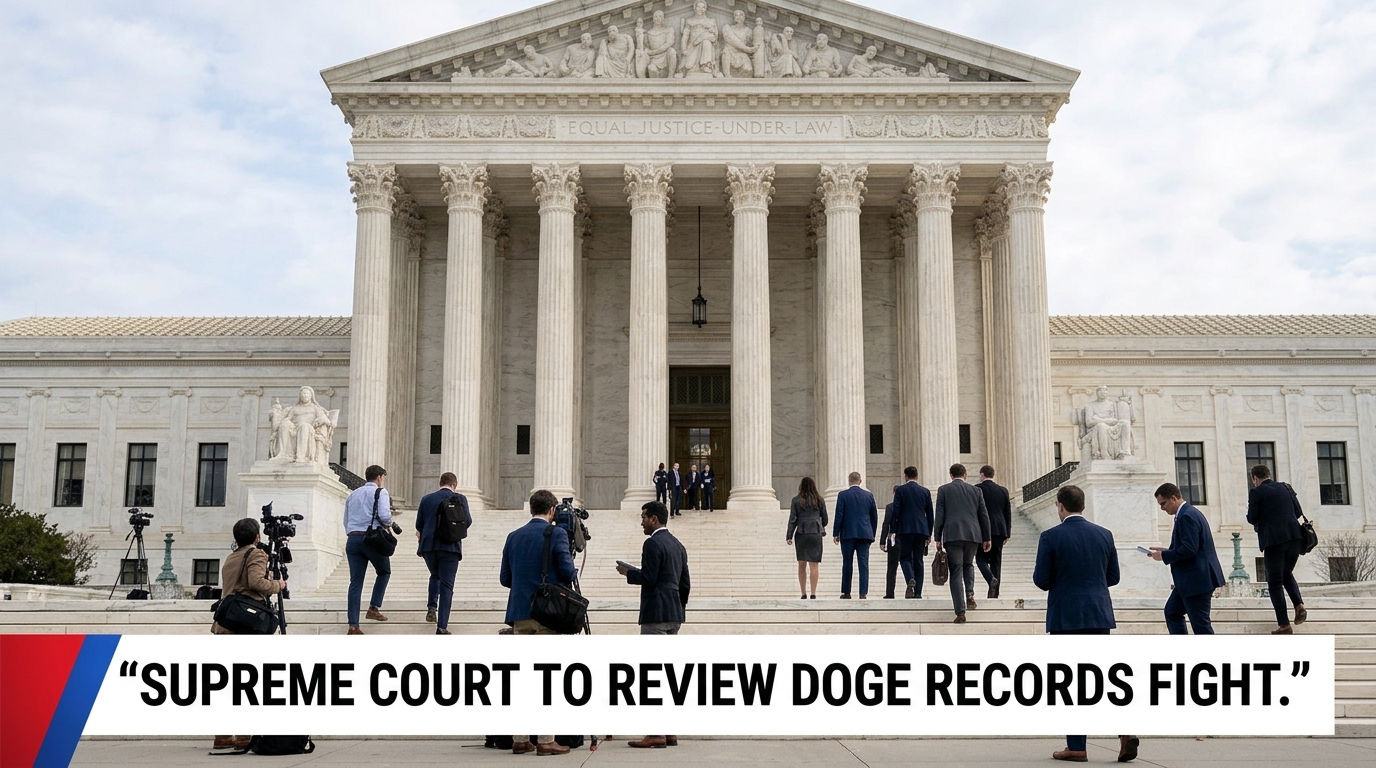


The Supreme Court has agreed to hear a dispute over whether records connected to the Department of Government Efficiency, known as DOGE, must be disclosed under federal public-records law. The case could clarify how far transparency requirements extend to groups advising the president and influencing government operations.
The lawsuit was brought by Citizens for Responsibility and Ethics in Washington, a watchdog organization seeking records about DOGE’s work during the early period of President Donald Trump’s second term. The group argues that DOGE exercised enough independent authority to qualify as a federal agency subject to the Freedom of Information Act.
The administration disputes that interpretation. Its lawyers argue that DOGE operated as a presidential advisory body and should benefit from exemptions designed to protect confidential advice to the president. The government has also challenged lower-court proceedings involving records requests and a proposed sworn deposition of DOGE’s acting administrator.
The dispute has already moved through lower courts, with rulings favoring the watchdog group. The Supreme Court’s decision to take up the matter means the legal question will receive further review; it does not itself determine whether the requested records must ultimately be released.
At stake is a recurring tension in the American system of government. Presidents need space to receive candid advice, while the public and Congress rely on disclosure laws to understand how federal authority is exercised. The issue is particularly consequential when an advisory organization is involved in decisions affecting multiple agencies.
A ruling could influence future disputes involving temporary task forces, presidential advisers and government restructuring initiatives. It may also help define how courts should evaluate the practical authority of a body whose formal title or organizational status is contested.
For now, the case remains a legal dispute over the reach of FOIA and the separation of powers. The final outcome will depend on the Court’s reasoning and the legal standards it adopts.


