

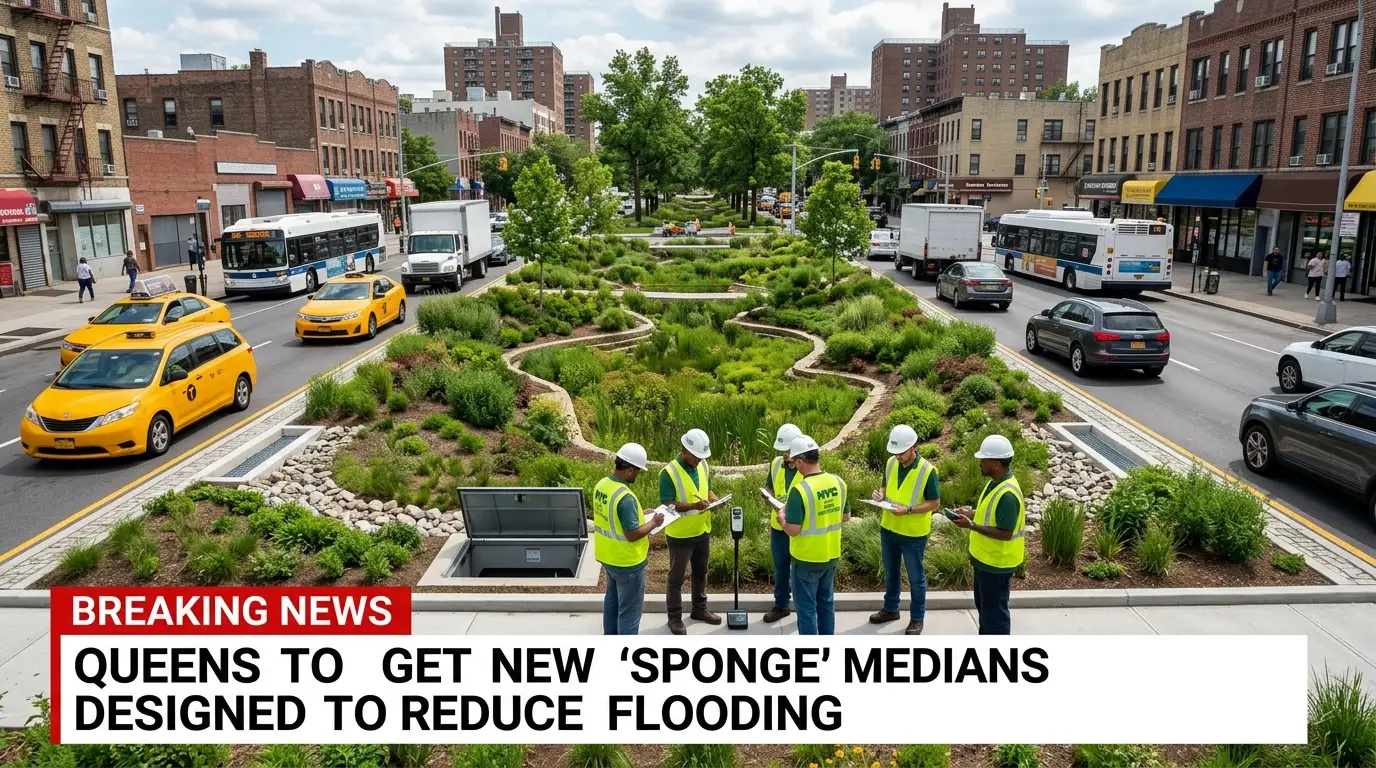


NEW YORK CITY — New York City is moving forward with a new stormwater project in Queens designed to capture millions of gallons of rainwater and reduce pressure on the city's sewer system.
The city plans to spend approximately $8.4 million transforming three roadway medians into green infrastructure designed to absorb stormwater. Officials estimate the project could capture about five million gallons annually.
Green Infrastructure Targets Flooding
Flooding has become a major concern for New York as intense rainfall events become more common.
Traditional sewer systems can become overwhelmed when large amounts of rain fall in a short period.
Green infrastructure provides another way to manage stormwater.
Instead of allowing rain to immediately enter the sewer system, specially designed landscaped areas can capture and absorb water.
The Queens project will turn existing medians into what officials describe as "sponges."
The approach combines landscaping with infrastructure designed to temporarily hold and absorb rainwater.
Reducing runoff can help protect streets and lower pressure on underground sewer networks.
Queens is particularly important because the borough contains many low-lying areas and neighborhoods vulnerable to flooding.
The city has increasingly invested in stormwater management as part of its climate-resilience strategy.
Similar projects are being developed in other parts of New York.
Officials say green infrastructure can provide multiple benefits.
In addition to stormwater management, trees and plants can provide shade and improve neighborhood appearance.
They can also help reduce urban heat.
The challenge is maintaining the infrastructure over time.
Plants must be maintained and drainage systems must remain functional.
The Queens project will therefore serve as a test of how effectively green infrastructure can be integrated into heavily developed urban neighborhoods.
If successful, similar projects could be expanded.
For residents, the goal is straightforward: reduce the amount of rainwater flowing into streets and sewer systems during major storms.