


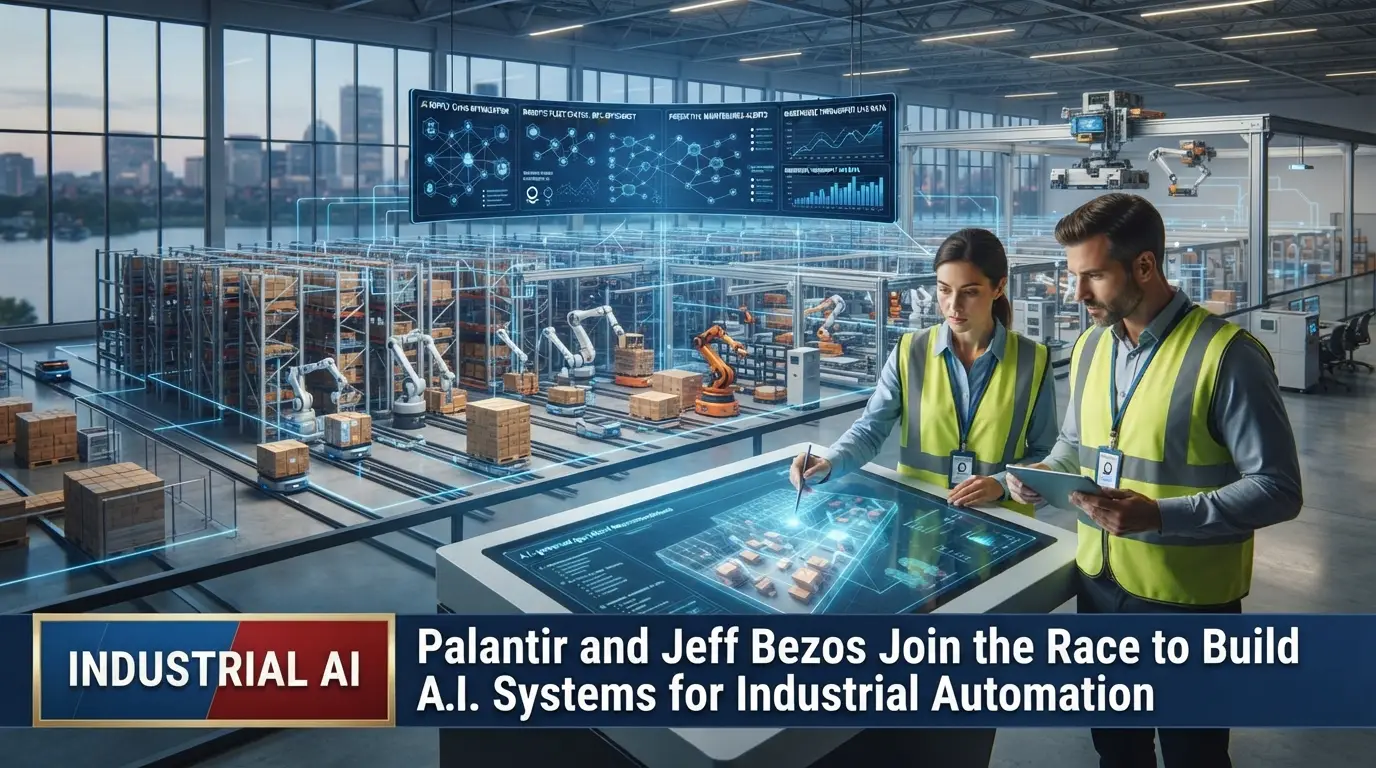


BOSTON — Industrial companies are turning to artificial intelligence to automate factories, warehouses and logistics networks, creating a new competitive field involving Palantir, Jeff Bezos-backed ventures and major cloud providers.
The market is moving beyond chatbots toward systems that can make decisions in physical environments.
A.I. Moves Into the Real Economy
Industrial A.I. platforms can analyze equipment data, predict maintenance needs and coordinate production schedules.
They can also help warehouses manage inventory and route shipments.
Palantir is targeting this market through software that connects operational data with decision-making tools.
Bezos-backed companies are pursuing related opportunities in robotics, logistics and cloud infrastructure.
The combination of software and machines could significantly improve productivity.
Factories may reduce downtime.
Warehouses may process orders faster.
Transportation companies may optimize routes and fuel use.
But implementation is difficult.
Industrial systems must operate safely and reliably.
A software error in a warehouse may delay shipments, while an error in a factory could damage equipment or injure workers.
Companies therefore require extensive testing and human supervision.
The market is also fragmented.
Different industries use different machines, databases and safety standards.
A.I. providers must build systems capable of connecting with older equipment as well as new technology.
Investors are watching whether industrial A.I. can produce measurable savings.
Unlike consumer applications, industrial customers usually demand clear evidence of return on investment before signing large contracts.
That could make sales cycles longer but customer relationships more durable.
The companies that succeed may become essential infrastructure providers for the physical economy.