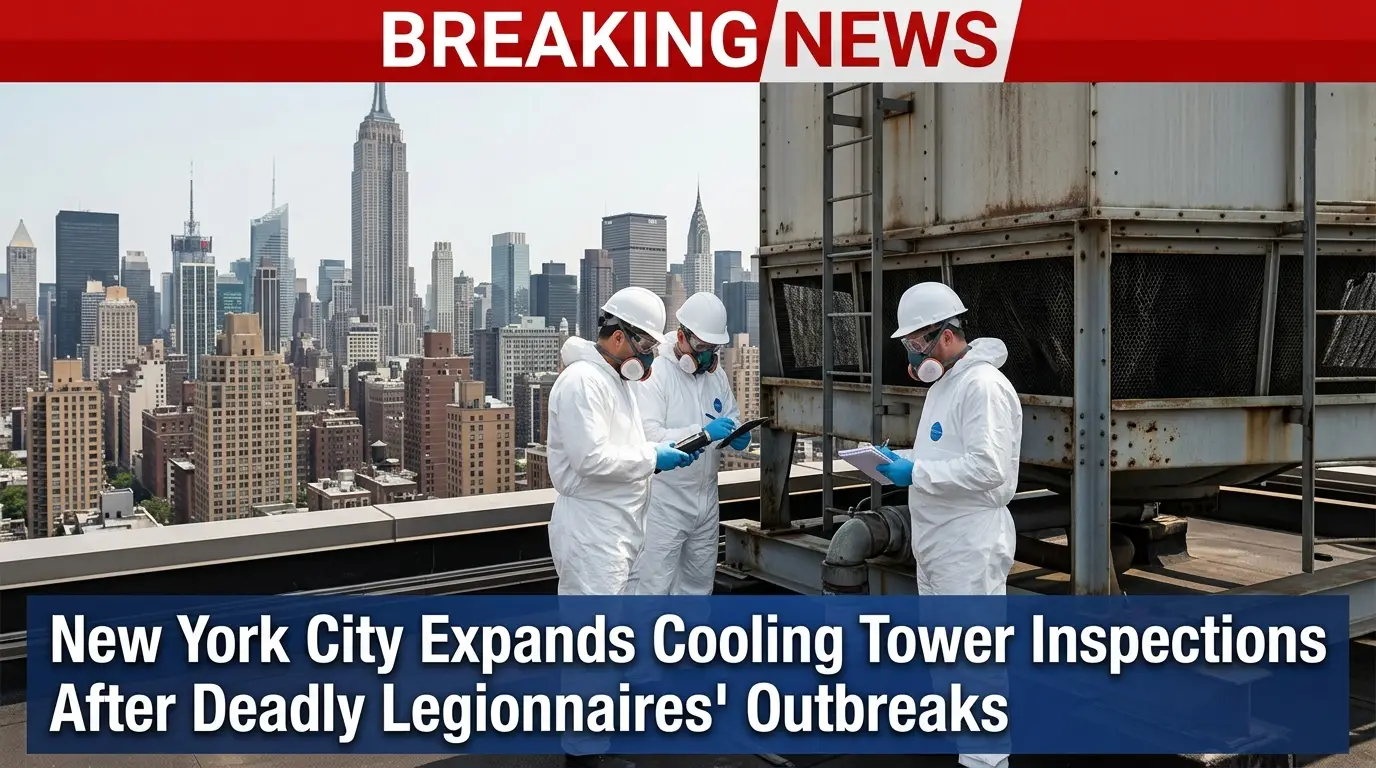


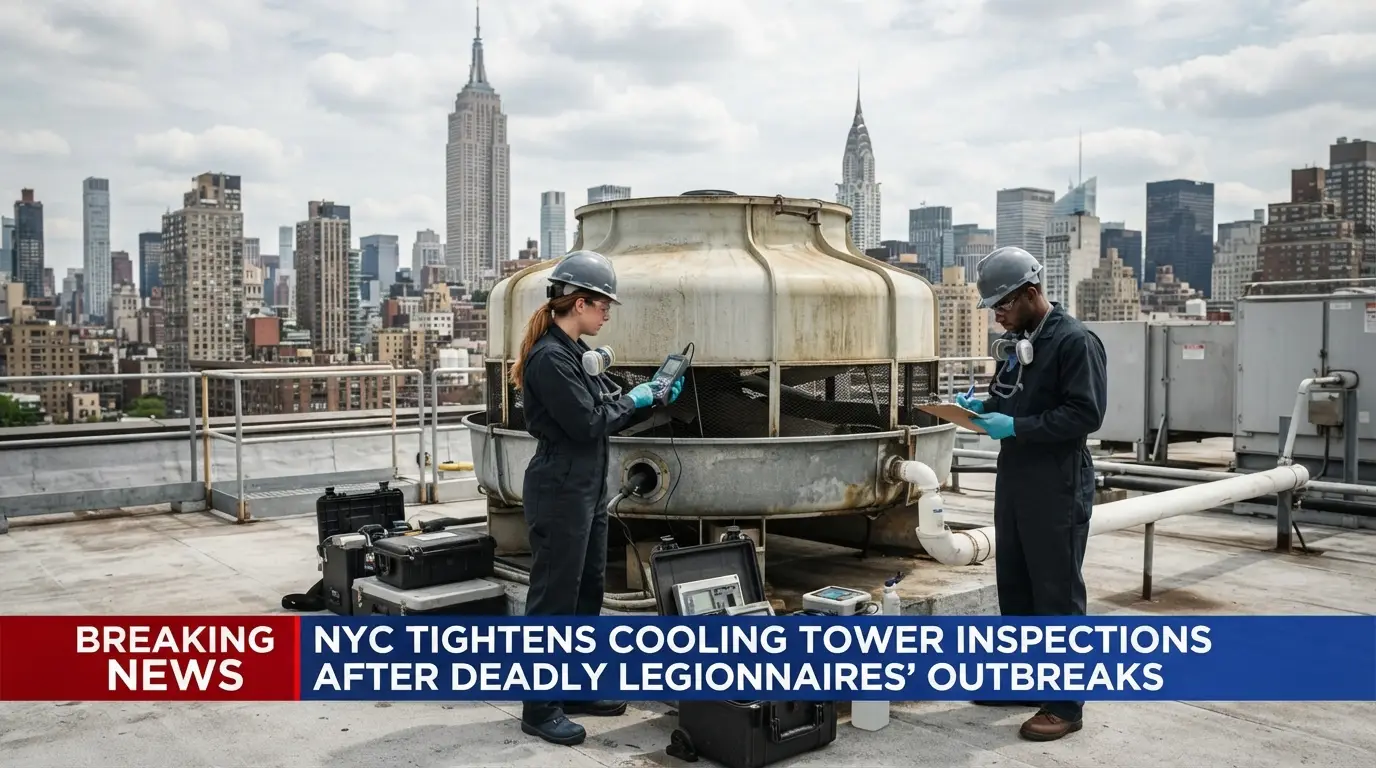


NEW YORK CITY — New York City is increasing inspections and regulation of cooling towers following deadly outbreaks of Legionnaires' disease in recent years.
City officials are allocating additional resources for inspections and strengthening requirements for cooling-tower maintenance and testing.
Officials Target Cooling-Tower Risks
Cooling towers are common components of large air-conditioning systems.
If they are poorly maintained, they can become environments where Legionella bacteria multiply.
The bacteria can spread through airborne water droplets.
People who inhale contaminated droplets can develop Legionnaires' disease, a serious form of pneumonia.
New York has experienced significant outbreaks in recent years.
The city's latest measures are designed to reduce the likelihood of another major outbreak.
The new approach includes more frequent inspections and testing.
Officials are also strengthening cleaning requirements.
The city has allocated millions of dollars toward the inspection effort and plans to add environmental specialists.
The measures come amid concerns that warmer conditions and increased air-conditioning use could make cooling-tower maintenance increasingly important.
Building owners will face greater responsibility for ensuring their systems meet requirements.
Regular cleaning can significantly reduce bacterial growth.
Public-health officials say prevention is critical because outbreaks can become difficult to control once infections begin appearing across a neighborhood.
The issue is particularly important in New York because of the city's concentration of large commercial and residential buildings.
The new inspection program will therefore involve a substantial number of properties.
For New Yorkers, the changes may not be visible day to day.
But officials hope stronger maintenance standards will prevent future outbreaks before they begin.