


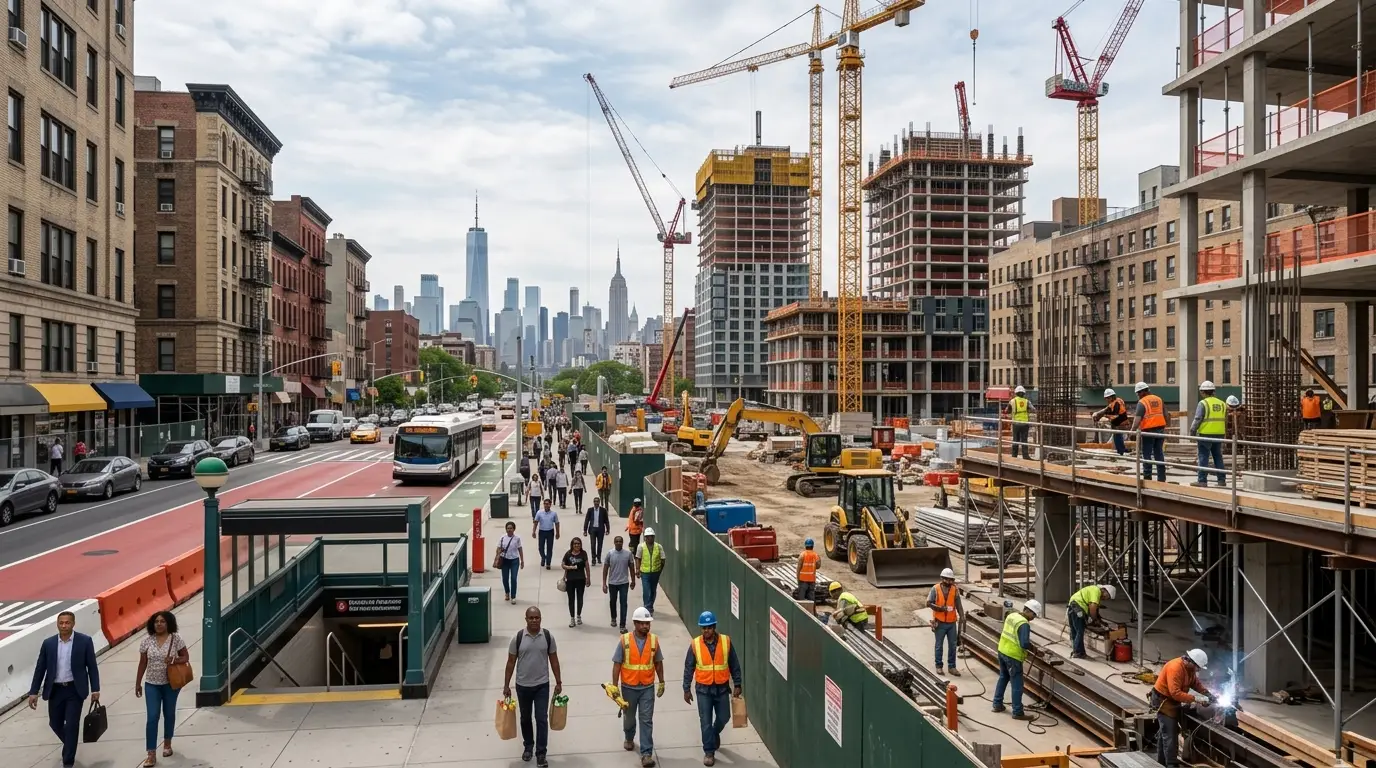


NEW YORK CITY — New York City's housing and construction sectors are entering a period of renewed debate as policymakers consider how to increase housing supply while improving transportation infrastructure.
Industry groups say the city could be positioned for another significant development cycle.
Housing and Infrastructure Linked
The New York Building Congress says the city is positioned for a potential building boom, pointing to housing-development efforts, infrastructure projects and major transportation investments.
The city's housing shortage remains one of the biggest obstacles.
Developers say additional homes are needed across the five boroughs, particularly in neighborhoods with strong transit connections.
Housing advocates agree that construction needs to increase but argue that affordability must remain a central part of new development.
Transit-oriented development is one potential solution.
Building more housing near subway stations and major bus corridors can allow residents to access jobs without relying on cars.
Infrastructure investment can also stimulate economic activity.
Construction projects create jobs and support companies ranging from engineering firms to building-material suppliers.
But New York's construction costs remain among the highest in the country.
Financing is also affected by interest rates and market conditions.
Developers therefore face pressure to make projects financially viable while meeting affordability requirements.
The debate will likely continue as city officials attempt to address the housing shortage.
For residents, the central question is whether new development can eventually produce more affordable homes.
For businesses, increased construction could create new opportunities across the city's economy.