

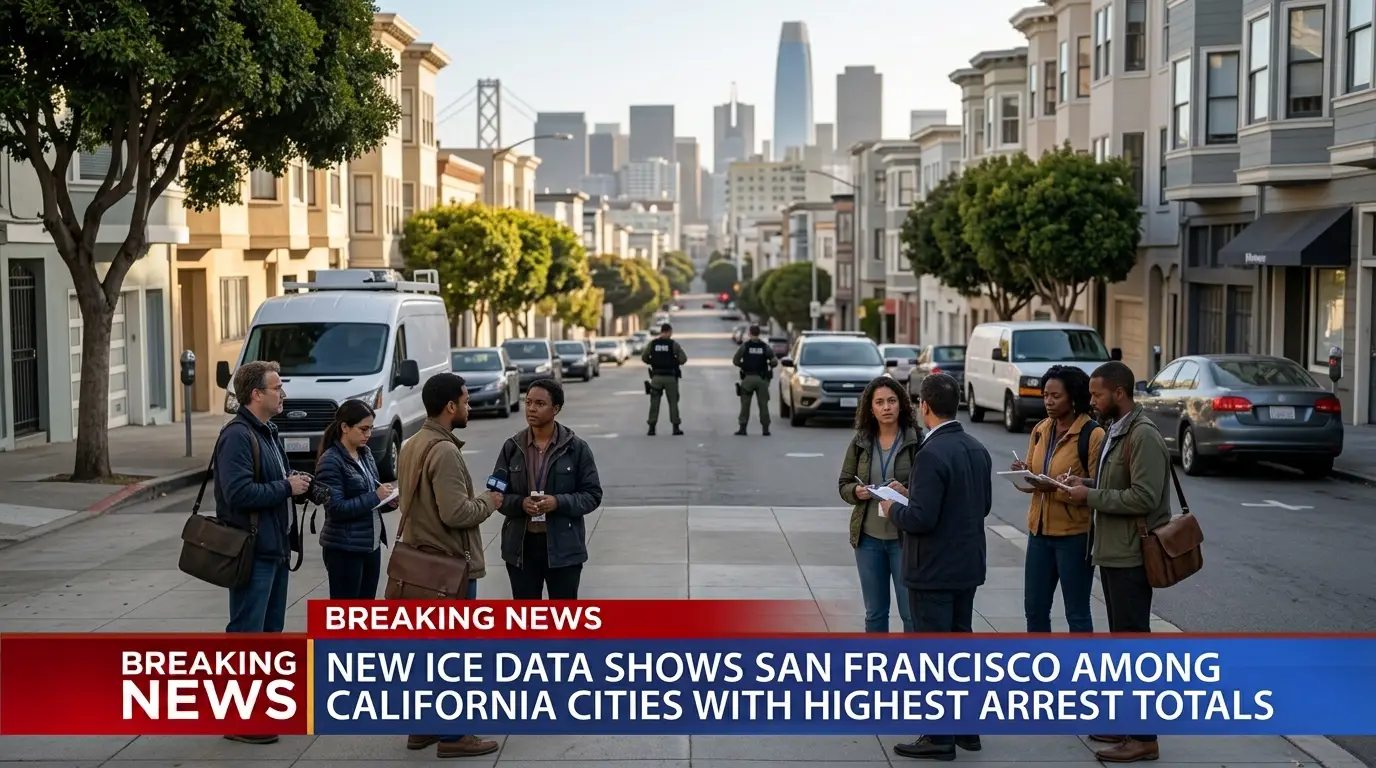


SAN FRANCISCO — Newly released federal data is providing a clearer picture of immigration arrests in California, with San Francisco recording at least 2,440 arrests by Immigration and Customs Enforcement during the period analyzed.
The data, covering Jan. 20, 2025, through July 31, 2026, placed San Francisco fourth among California cities by total ICE arrests. San Diego had the highest total, at nearly 11,500.
Immigration Enforcement Remains Major Bay Area Issue
The numbers come as immigration enforcement continues to be a politically divisive issue across California.
Federal officials have changed their enforcement strategies in response to criticism surrounding highly visible raids in major cities.
According to the newly released data, however, enforcement activity has continued even as some of the most visible operations have received less national attention.
ICE recorded nearly 4,300 arrests in California during July alone, according to the data cited by the San Francisco Chronicle.
That was reportedly a record monthly figure for the current presidential administration.
San Francisco's total is significant because the city has historically maintained policies designed to limit local cooperation with federal immigration authorities.
The latest figures demonstrate that federal enforcement can continue regardless of local policies.
The issue has implications for immigrant communities throughout the Bay Area.
Families may be concerned about detention, deportation and the effect of enforcement operations on workplaces and neighborhoods.
Civil-rights advocates have called for greater transparency around federal enforcement activities.
Federal officials, meanwhile, maintain that immigration laws must be enforced.
The debate has become particularly important in California because of the state's large immigrant population.
The new data provides researchers and policymakers with more information about where federal enforcement is occurring.
It also allows local communities to compare activity between cities.
For San Francisco, the figures are likely to intensify an already significant debate over immigration policy, federal authority and the relationship between local governments and Washington.