


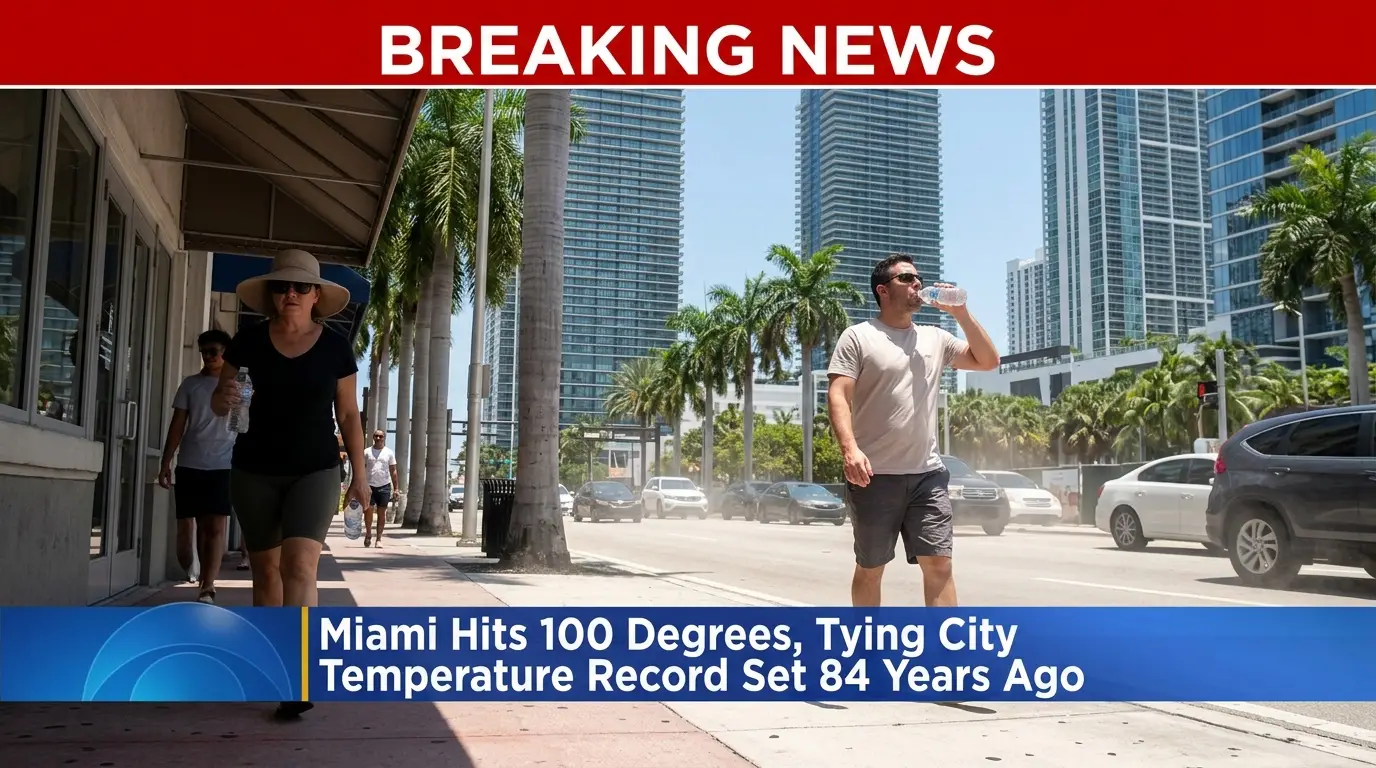


MIAMI — Miami reached 100 degrees earlier this month, tying the city's all-time record high temperature and bringing renewed attention to the risks of extreme heat in South Florida.
The temperature matched a record first established in 1942.
Extreme Heat Tests South Florida
The milestone was particularly significant because Miami's official weather records extend back more than a century.
Reaching 100 degrees is extremely unusual for the city.
The combination of high temperatures and humidity can make conditions feel even hotter.
Health officials urged residents to stay hydrated, spend time in air-conditioned locations and check on vulnerable neighbors.
Older adults, children and people who work outdoors can face greater risks during periods of extreme heat.
Businesses also have to adapt.
Outdoor workers may require additional breaks, while restaurants and other businesses can experience higher electricity demand because of air conditioning.
The heat can also affect infrastructure.
Road surfaces, electrical equipment and buildings are all exposed to greater thermal stress during prolonged periods of extreme temperatures.
Urban development can intensify the effect.
Concrete and asphalt absorb heat during the day and release it slowly after sunset.
Trees and shaded areas can provide some relief.
Miami's record temperature has therefore become part of a broader discussion about how cities should prepare for extreme heat.
Officials are increasingly looking at cooling centers, tree canopies and building standards as tools for protecting residents.
For South Florida, extreme heat is becoming an issue that extends beyond weather forecasts.
It is increasingly a public-health and infrastructure challenge.