


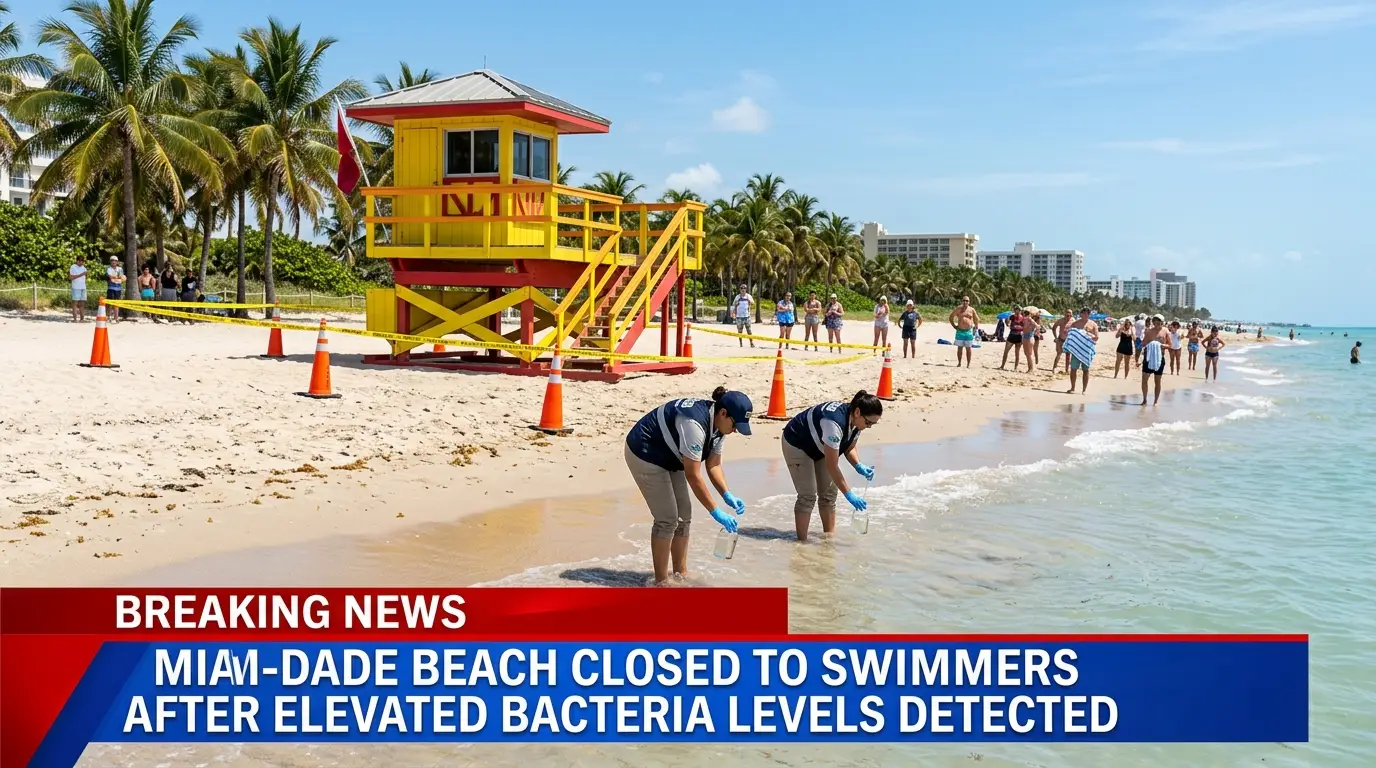


MIAMI-DADE — Officials have issued a water-quality advisory at a Miami-Dade beach after testing detected elevated bacteria levels, warning residents and visitors not to enter the water until conditions improve.
The advisory was reported Sunday as South Florida continued experiencing heavy summer beach activity.
Health Officials Monitor Water Conditions
Beach water is routinely tested for bacteria that can pose health risks to swimmers.
When levels exceed established thresholds, authorities can issue temporary advisories or closures.
The latest warning comes during one of the busiest recreational periods of the year.
South Florida beaches attract both residents and tourists throughout the summer.
Water-quality problems can therefore affect not only public health but also nearby businesses.
Restaurants, hotels, rental operators and other businesses depend heavily on beach visitors.
Officials typically recommend avoiding the water until follow-up testing indicates that conditions have improved.
Heavy rainfall can sometimes contribute to elevated bacteria levels because stormwater can carry contaminants into waterways.
Warm temperatures can also influence water conditions.
Miami-Dade maintains monitoring programs designed to identify potential problems quickly.
The testing allows health officials to communicate warnings before larger numbers of people are exposed.
Residents are encouraged to check current advisories before swimming.
Parents are also urged to pay particular attention to young children, who may accidentally swallow seawater while playing.
For local businesses, a temporary water advisory can be frustrating during the peak summer season.
However, officials say protecting public health remains the priority.
Follow-up testing will determine when the affected area can safely reopen.
The incident is another reminder of the importance of maintaining water-quality monitoring in a region where beaches are central to tourism and everyday life.