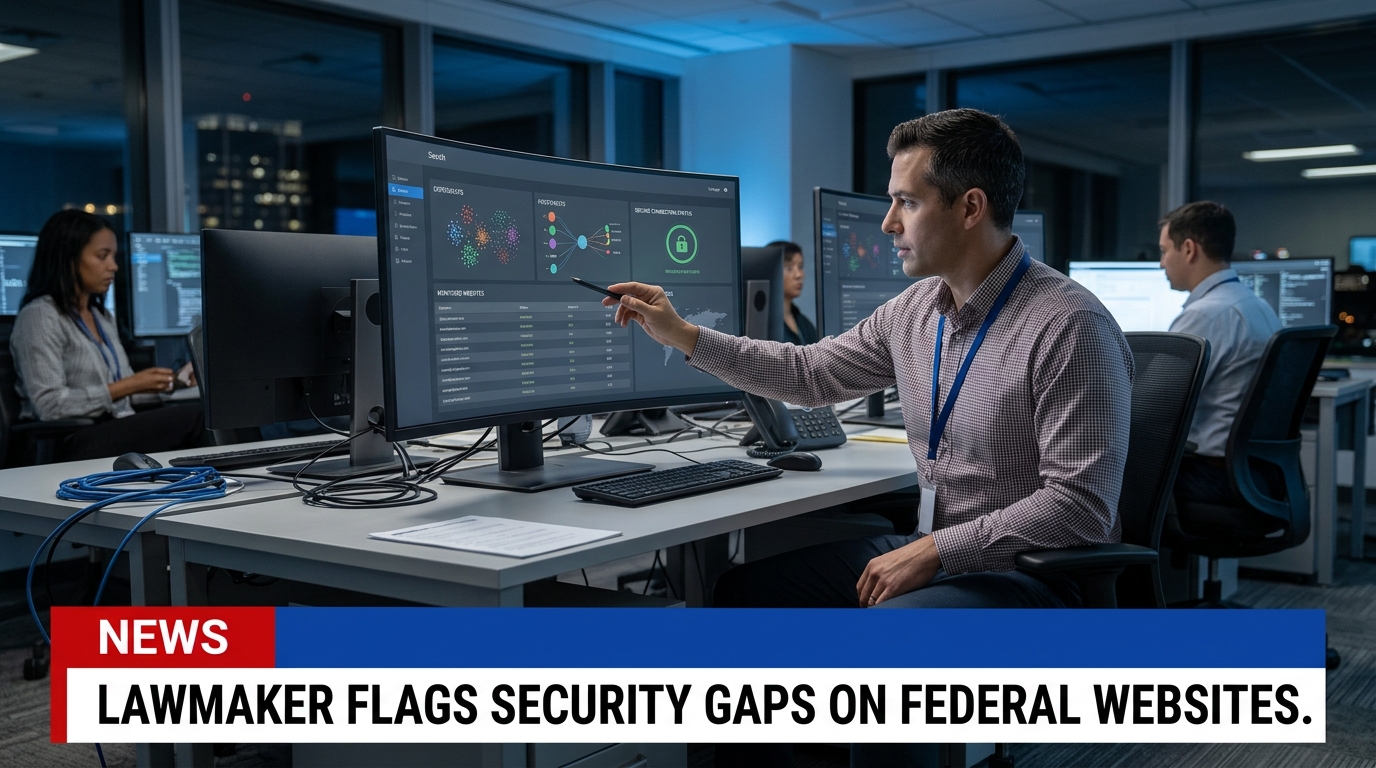


A U.S. senator has warned that hundreds of federal web addresses may lack an important security protection, raising concerns about whether government websites are adequately defended against digital impersonation and other online threats.
The reported concern includes sites used for functions such as FBI tips, intelligence recruitment and the Veterans Crisis Line. The senator’s warning focuses on protections that can help users and systems verify that online communications are legitimate and reduce the risk of certain forms of interception or impersonation.
The security of federal websites is important because members of the public use them to submit sensitive information, seek assistance and communicate with government agencies. If a website’s protections are incomplete or incorrectly configured, users may face increased exposure to fraudulent pages or insecure connections. The actual risk depends on the specific weakness, the website’s configuration and the other safeguards in place.
The report does not establish that all the sites in question have been compromised, nor does the absence of one security feature necessarily mean a website is broadly unsafe. A proper assessment would require technical verification, a clear inventory of affected domains and information about any remedial steps agencies have taken.
The issue highlights a persistent challenge in digital government: security standards must be applied consistently across a large and decentralized collection of websites. Different agencies may use different contractors, hosting services and technical platforms, making centralized oversight difficult.
Congress can press agencies to identify gaps, set deadlines for remediation and report on progress. Inspectors general and technical security teams can also help determine whether the concern reflects a widespread configuration problem or a more limited set of cases.
For the public, the practical lesson is to use verified official websites and avoid entering sensitive information through links received unexpectedly. For agencies, the priority is to validate the reported vulnerabilities and explain what is being done to address them.