


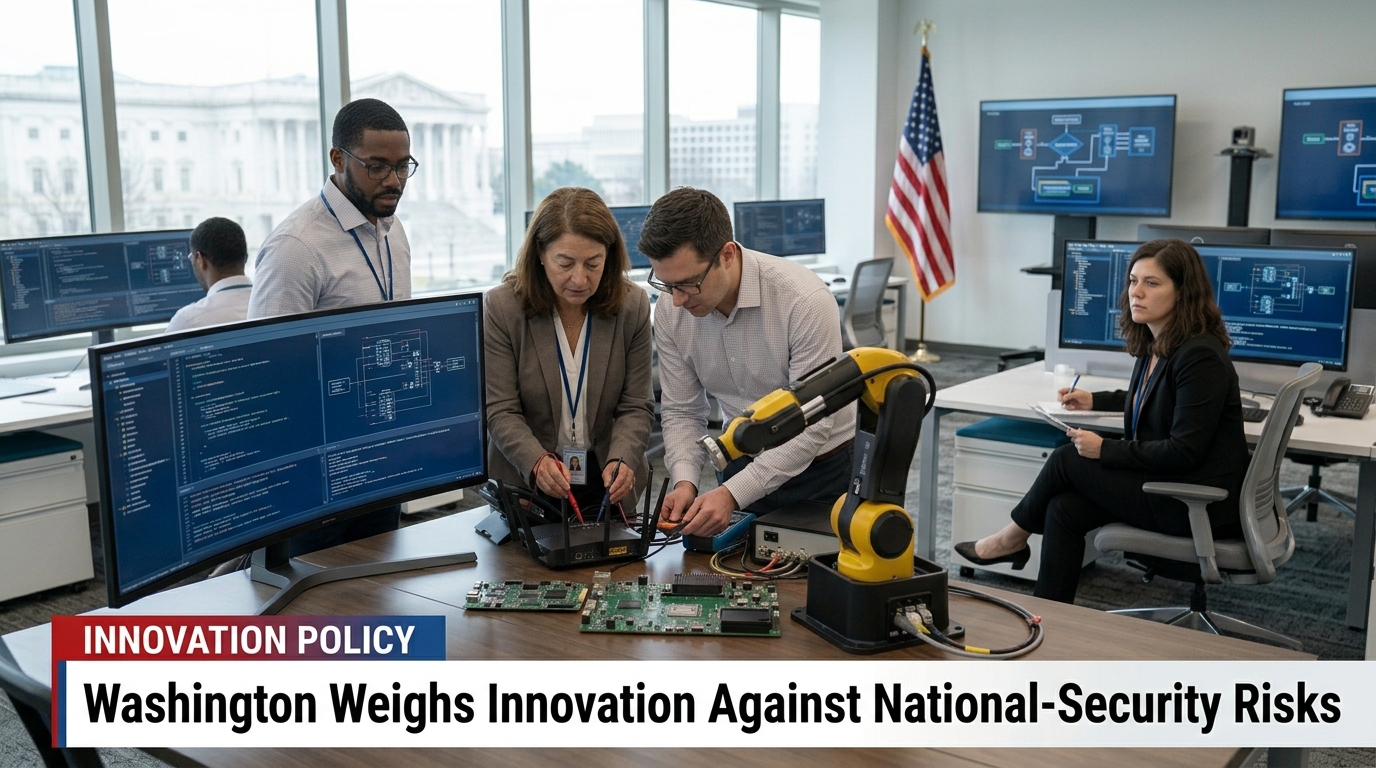


Federal regulators are facing a continuing challenge as emerging technologies develop faster than many traditional regulatory processes. From connected devices to advanced robotics, new products can create economic opportunities while introducing questions about data security, infrastructure resilience and national-security risks.
The debate is not simply about whether regulation is necessary. It concerns how agencies can establish clear standards without treating every new technology as an identical risk.
Rules must reflect real differences
A product’s technical design, intended use and connection to sensitive systems can affect its risk profile. Broad rules may be easier to communicate, but they can also capture devices with very different capabilities and uses. Narrower rules may be more precise but require regulators to maintain detailed technical knowledge and update requirements as products evolve.
Federal agencies must also operate within the authority Congress has granted them. When an agency makes a regulatory decision, the legal basis and the evidence supporting it can become important if affected parties challenge the action.
The importance of transparent decisions
Businesses need to understand the standards they must meet, while consumers and public institutions need confidence that security risks are being assessed seriously. Clear explanations can help distinguish between a prohibition, a conditional approval and a proposal that has not yet become final.
Congress can contribute by clarifying statutory authority, reviewing agency performance and assessing whether regulators have adequate technical expertise. Oversight can also help identify whether multiple agencies are applying inconsistent approaches to similar products.
Innovation and public trust
Regulation that is too uncertain can discourage investment and slow deployment of useful technologies. Weak or poorly enforced safeguards can undermine public confidence and expose systems to avoidable risks.
The goal is a framework that is adaptable, evidence-based and predictable. As new technologies enter the market, the effectiveness of federal policy will depend on whether regulators can explain their decisions, revise outdated standards when necessary and protect the public without imposing unnecessary restrictions on lawful innovation.


