

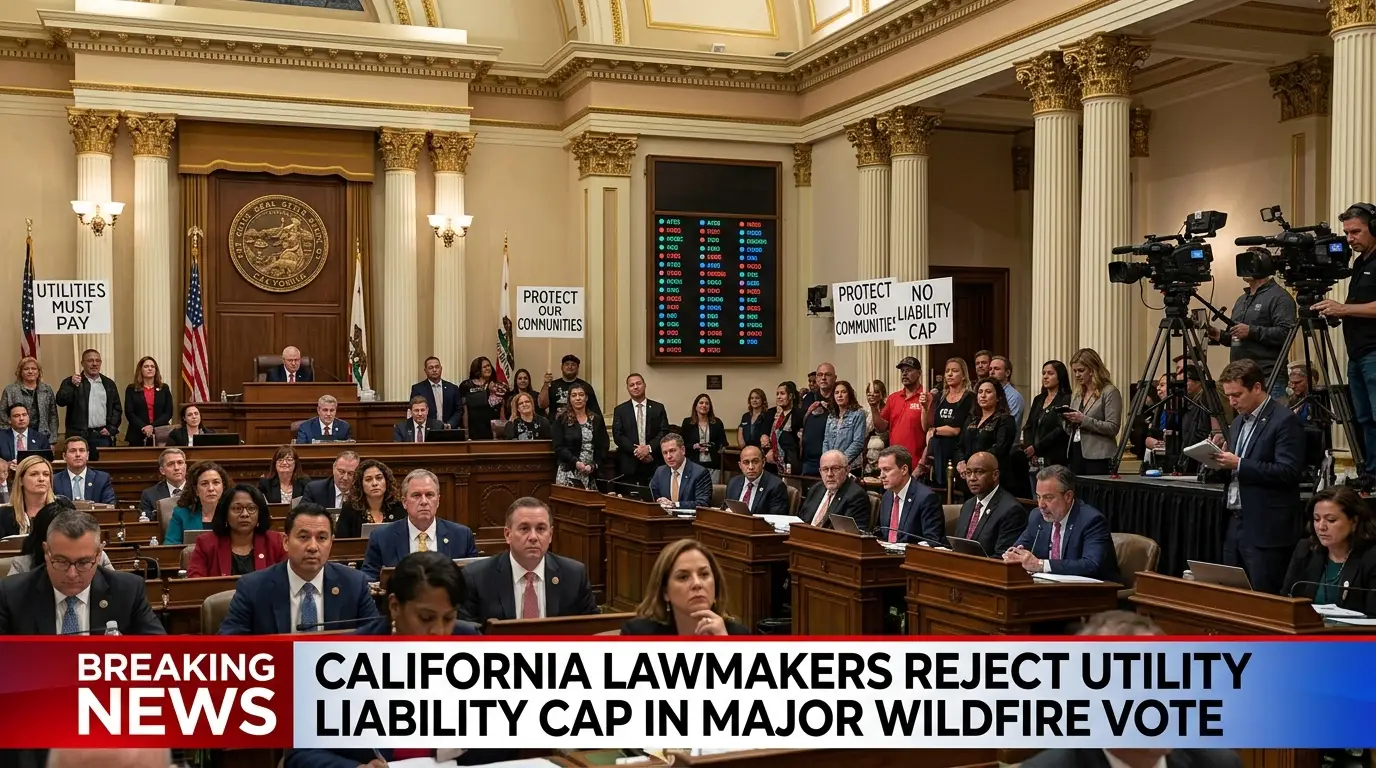


SACRAMENTO, CALIFORNIA — California lawmakers have rejected a proposal that would have limited how much wildfire survivors could recover from utility companies whose equipment is found responsible for starting fires.
The Legislature instead amended the legislation so that it does not cap damages and preserves the ability of local governments and private businesses to seek compensation for losses caused by utility-started fires. The debate has been closely tied to the aftermath of major California wildfires, including the Eaton Fire.
Wildfire Survivors Remain at the Center of Debate
The legislation became one of the most closely watched issues in Sacramento as lawmakers considered how California should handle the enormous financial consequences of destructive wildfires.
Utilities have faced potentially massive liability claims following fires in which their equipment was alleged to have played a role.
Supporters of the original proposal argued that changes were needed to stabilize utilities and prevent wildfire-related financial pressures from contributing to higher electricity costs.
Wildfire survivors and consumer advocates strongly opposed provisions that they believed would reduce their ability to recover losses.
The revised legislation removes a proposed cap on damages and maintains the right of survivors to pursue legal action.
The final measure also includes a so-called Fast Pay approach intended to help survivors receive compensation more quickly while preserving access to lawsuits and evidence gathering.
The issue is particularly significant in Southern California, where thousands of residents have faced the financial and emotional consequences of destructive fires.
Homeowners can lose houses, vehicles, personal belongings and other property.
Businesses and local governments can also face enormous costs when infrastructure is destroyed.
The debate over utility liability therefore extends far beyond insurance companies and power providers.
It involves questions about who should ultimately pay when electrical equipment contributes to a wildfire.
California officials are also trying to address the long-term financial stability of the state's electricity system.
Gov. Gavin Newsom described the compromise as progress while urging lawmakers to continue working on electric-rate stability and the state's long-term wildfire financing system.
For wildfire survivors, however, the most important issue remains accountability.
The latest vote means their legal options remain broader than they would have been under the proposed liability restrictions.