

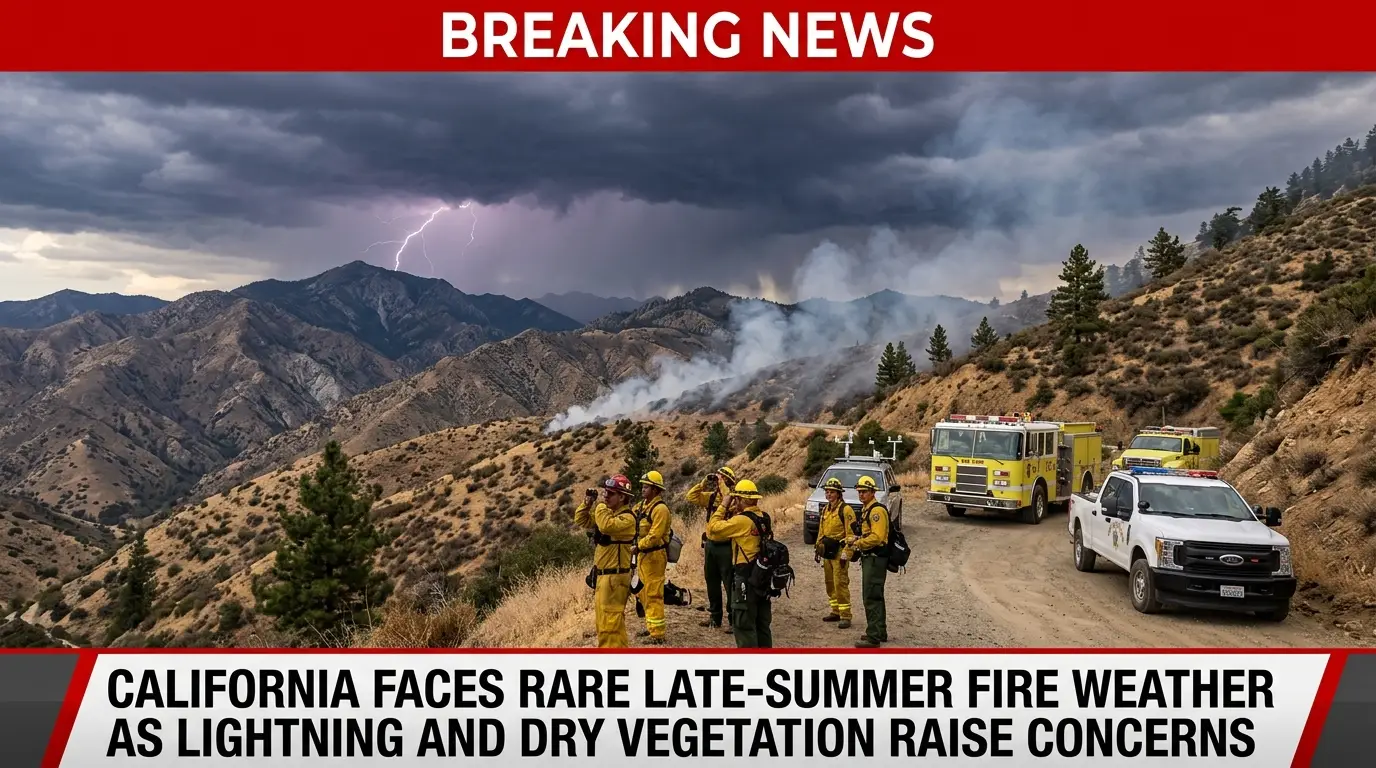


CALIFORNIA — California is confronting another complicated period of fire weather as dry vegetation, changing atmospheric conditions and lightning risks create additional challenges for firefighters.
Recent weather patterns have brought unusual moisture into parts of Northern and Central California, but officials and fire experts remain concerned that lightning can ignite fires in areas where vegetation remains extremely dry.
Unusual Weather Creates New Fire Risks
The combination of moisture and heat can create complicated conditions.
Thunderstorms may produce rain, but lightning can also start new fires.
That is especially concerning in mountainous areas where dry vegetation remains abundant.
Recent weather systems have already brought unusual August showers to portions of the Bay Area.
The rainfall provides some temporary relief, but it does not automatically eliminate wildfire risk.
Fire officials must monitor conditions across large geographic areas.
A single lightning strike in a remote area can start a fire that becomes difficult to detect and contain.
The situation is particularly challenging when firefighters are already working on active fires elsewhere in the state.
California has developed extensive systems for monitoring wildfire activity, including aircraft, satellites and ground crews.
But weather remains one of the most unpredictable factors.
Wind changes can rapidly alter the direction of a fire.
Smoke can also make visibility difficult for aircraft and ground crews.
The latest conditions demonstrate why wildfire preparedness remains a year-round priority.
Residents in fire-prone areas are encouraged to remain aware of evacuation routes and emergency alerts.
Local governments have also continued investing in vegetation management and emergency planning.
California's wildfire challenges are not limited to the hottest and driest days of summer.
Changing weather patterns can produce unusual combinations of heat, moisture and wind that require firefighters to adapt quickly.
As the state moves toward September, fire officials will continue watching weather forecasts closely.