


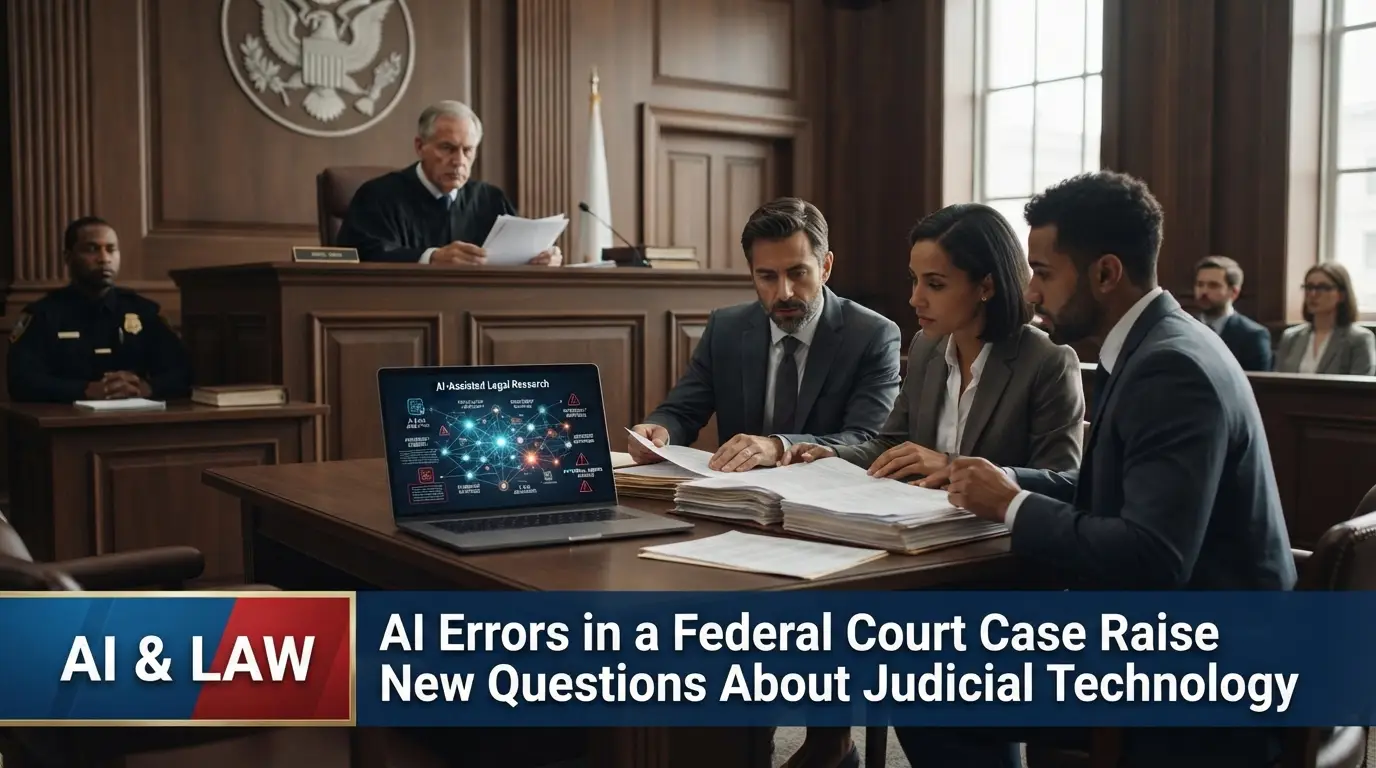


JACKSON, MISSISSIPPI — A federal court dispute in Mississippi is drawing attention to the risks of using artificial intelligence in judicial work after an earlier court order contained errors generated with the assistance of an AI tool.
Mississippi's attorney general has asked an appeals court to overturn a ruling and reassign the judge after an earlier temporary restraining order contained AI-related errors and fictitious legal citations.
Courts Are Still Developing AI Rules
The case highlights a growing problem across the American legal system.
Lawyers and judges are experimenting with AI tools for research, drafting and document analysis.
But courts have not developed uniform rules governing how such systems should be used.
Generative AI can produce convincing text while also creating inaccurate information.
That creates obvious risks in legal proceedings.
A fabricated legal citation can undermine an argument.
An incorrect factual statement can also affect a judicial decision.
The Mississippi case demonstrates why verification remains essential.
AI can potentially save legal professionals substantial amounts of time.
However, lawyers and judges remain responsible for the accuracy of their work.
The issue is becoming more urgent as AI systems become increasingly capable.
Courts are likely to face more cases involving AI-generated documents and research.
Some jurisdictions may eventually establish specific disclosure requirements.
Others could restrict AI use in certain judicial functions.
The debate also involves a larger question.
How much responsibility should humans retain when AI is used to assist government decision-making?
For American citizens, the issue goes beyond technology.
Court decisions can affect property, employment, civil rights and government policy.
The legal system therefore requires a particularly high standard of accuracy.
The Mississippi controversy may become another milestone in America's effort to establish practical rules for AI-assisted government work.