


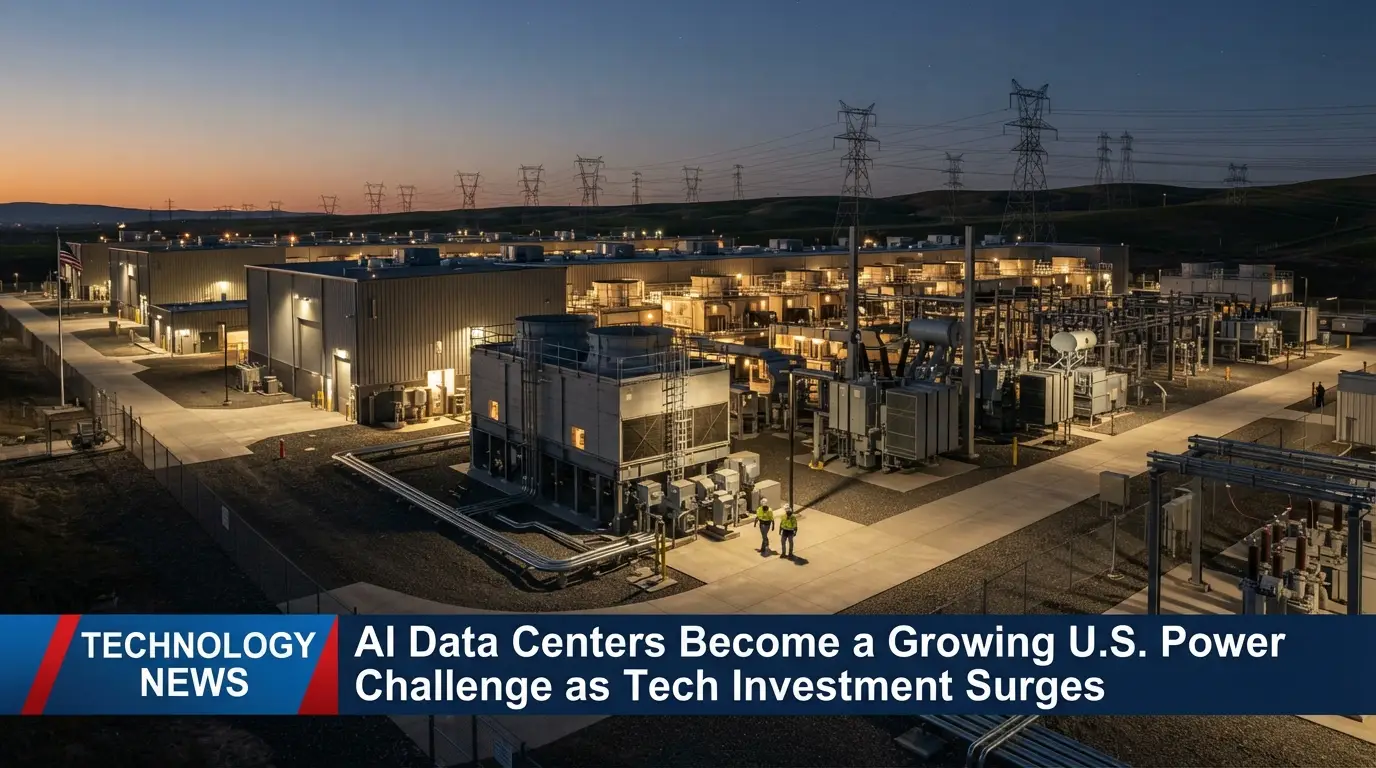


WASHINGTON — America's artificial-intelligence boom is creating a new infrastructure challenge: how to provide enough electricity for the enormous data centers needed to train and operate advanced AI systems.
Data-center construction has accelerated across the United States as technology companies pour billions of dollars into computing infrastructure. Some of the largest facilities now require hundreds of megawatts of electricity.
AI Growth Is Becoming an Energy Story
The rapid expansion of AI has changed the economics of technology infrastructure.
Traditional data centers already consumed significant amounts of electricity.
AI systems can require substantially more computing power because they rely on large numbers of specialized processors operating simultaneously.
That has pushed technology companies toward massive new facilities.
States including Texas, Georgia and other parts of the country are competing to attract these investments.
Data centers can create construction activity and highly skilled jobs.
But they also create concerns involving electricity prices, water use and local infrastructure.
Communities increasingly want to know whether new facilities will provide enough economic benefits to justify the resources they consume.
Utilities are also being forced to plan for potentially dramatic increases in electricity demand.
The issue could become one of the most important constraints on America's AI ambitions.
Technology companies can purchase increasingly powerful chips, but those chips still require physical infrastructure and electricity.
The federal government and state governments are therefore facing pressure to accelerate power generation and grid development.
For the U.S. technology industry, the next phase of the AI race may depend as much on infrastructure as software.
The country has established a strong position in AI development.
Maintaining that advantage will require sufficient computing capacity and a reliable power supply.