


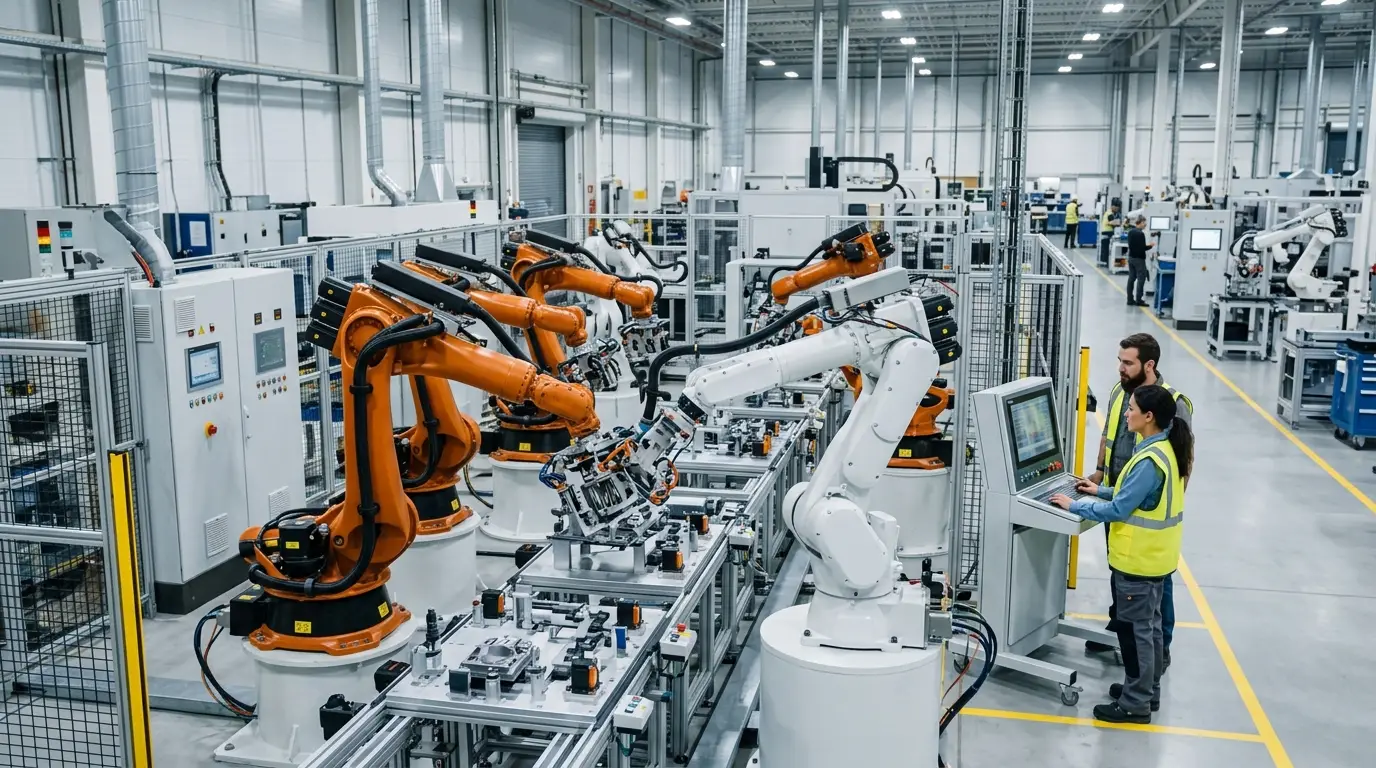


CHICAGO — American manufacturers are increasing investment in robotics, artificial intelligence and automated production systems as companies look for ways to improve productivity and manage rising operating costs.
The trend is transforming factories across several major industries.
Robotics Move Deeper Into American Factories
Automation was once concentrated in large automotive plants.
Today, smaller manufacturers are also adopting robotic systems for packaging, welding, quality control and materials handling.
The technology can help companies operate continuously while reducing repetitive manual work.
Manufacturers say automation is particularly useful when they face difficulty finding skilled workers.
Many factories continue to report shortages of technicians, engineers and specialized machine operators.
Automated systems do not eliminate the need for workers, but they can change the skills companies require.
Employees increasingly need experience with robotics, software and digital manufacturing systems.
Artificial intelligence is also becoming part of the production process.
AI-powered cameras can identify defects, while predictive-maintenance systems can identify potential equipment failures before they interrupt production.
The investment comes with significant upfront costs.
Small manufacturers may need financing to purchase equipment and train employees.
However, companies increasingly view automation as a long-term investment rather than simply a way to reduce payroll expenses.
Government incentives for domestic manufacturing have also encouraged companies to build or expand production facilities in the United States.
The broader economic impact could be substantial.
If automation increases productivity, American manufacturers may become more competitive in global markets.
It could also help companies produce more goods domestically while controlling costs.
The challenge will be ensuring that workers have the training necessary to adapt to the changing industrial environment.