


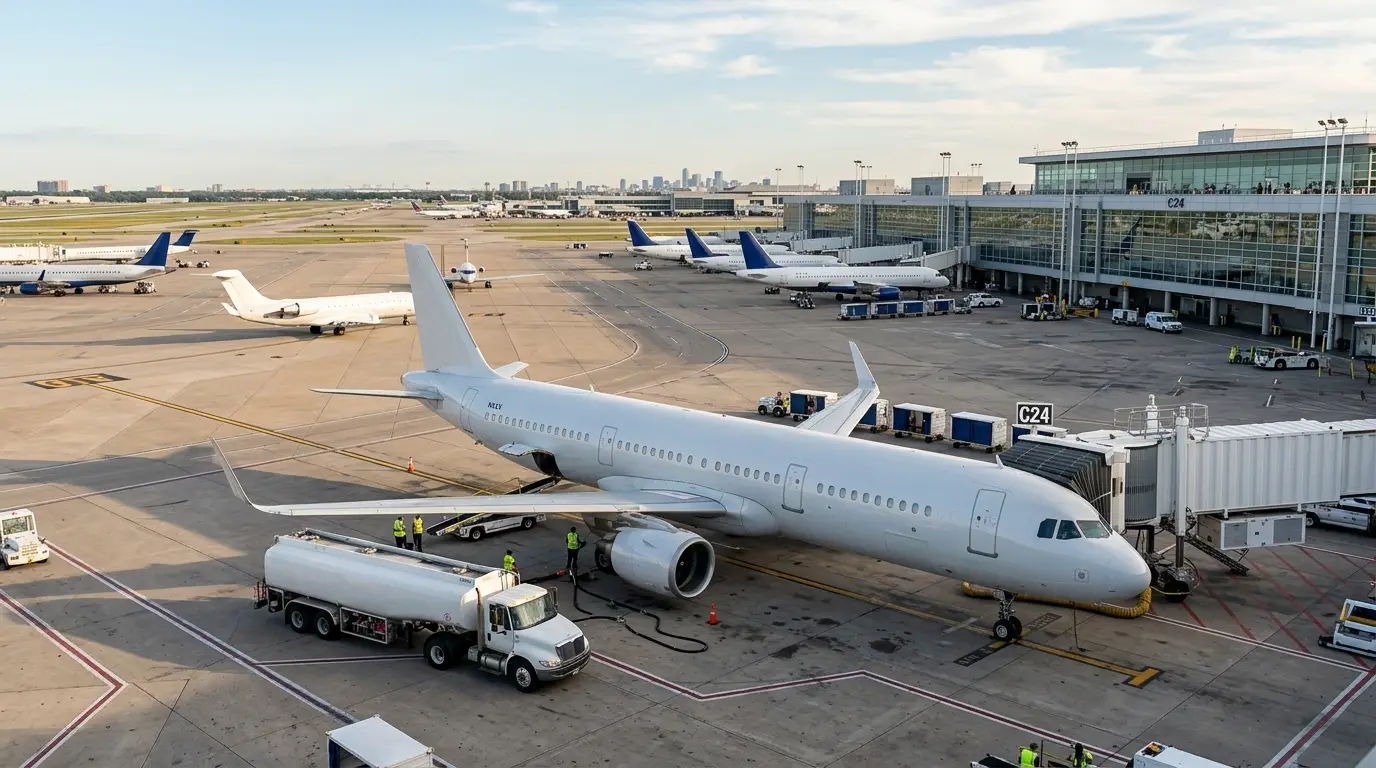


NEW YORK — U.S. airlines are facing renewed pressure from higher fuel costs as disruptions in global energy markets make it more expensive to operate commercial aircraft.
The increase comes at a challenging time for carriers that are already dealing with labor expenses, aircraft shortages and strong competition for passengers.
Fuel Prices Create New Challenge
Jet fuel represents one of the largest operating expenses for airlines.
When crude-oil prices rise, carriers can face substantially higher costs unless they have hedging arrangements or can pass some of the increase to customers through ticket prices.
The prolonged disruption in global energy markets has therefore become an important issue for the aviation industry.
Airlines are closely monitoring fuel markets as they prepare for the busy autumn travel period.
Higher fuel costs could encourage carriers to adjust flight schedules or increase fares on some routes.
However, airlines must balance higher prices against consumer demand.
Travelers have become increasingly price-sensitive, particularly as household budgets remain under pressure.
The industry is also dealing with aircraft-delivery delays.
Manufacturing problems at major aircraft producers have left some airlines waiting longer than expected for new planes.
That has limited capacity and made it more difficult for carriers to expand profitable routes.
Despite these challenges, demand for air travel remains relatively strong.
Business travel has recovered in many major markets, while international tourism continues to support airline revenues.
The coming months could therefore provide an important test for the industry.
If energy prices remain elevated, airlines may have to find new ways to control costs while protecting passenger demand.
For investors, the performance of airline stocks could become another indicator of how energy-market volatility is affecting the broader economy.