


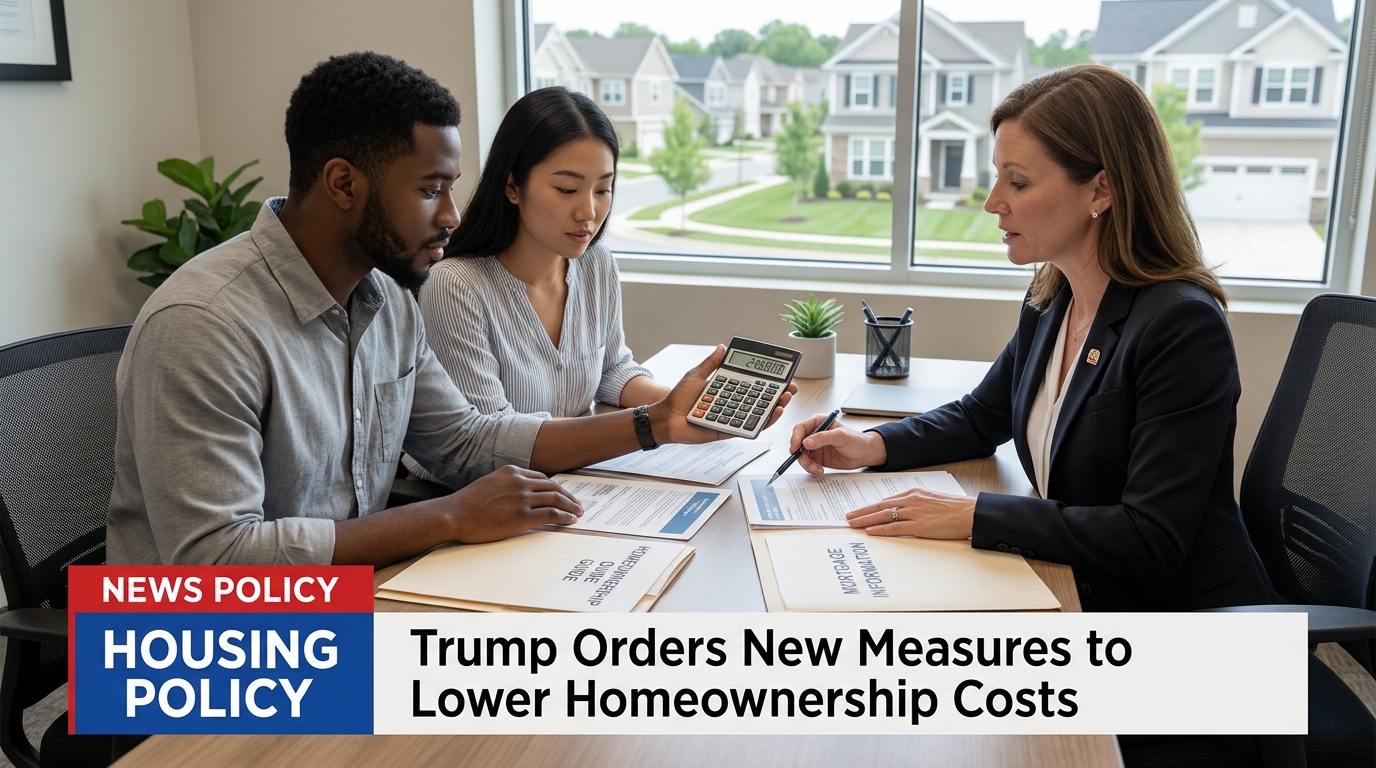


President Donald Trump has signed an executive order directing federal agencies to pursue several changes intended to reduce the cost of owning a home. The measures focus on mortgage insurance, refinancing expenses, selected government-backed loans and the expansion of manufactured housing.
The order comes as high borrowing costs and elevated home prices continue to limit access to homeownership. It also places housing policy more prominently in the political debate ahead of the November midterm elections, with voters increasingly scrutinizing whether federal decisions are making major household purchases more attainable.
Changes target selected homeownership expenses
The order directs the Federal Housing Finance Agency to launch a pilot program that would cancel mortgage insurance premiums for qualifying borrowers once they meet specified equity requirements based on current property values. It also makes permanent an existing pilot program that waives title-insurance requirements for certain mortgage refinancings.
In addition, the administration has directed the departments of Agriculture and Veterans Affairs to reduce interest rates on eligible single-family home loans. A task force will also examine ways to expand manufactured housing that qualifies for federal housing programs.
These measures address particular costs rather than changing every part of the mortgage market. Eligibility rules, agency implementation and the circumstances of individual borrowers will determine who benefits. The order does not guarantee that all homebuyers will see lower payments.
A housing market under pressure
The policy announcement follows a difficult period for prospective buyers. Mortgage rates have remained elevated, while housing construction and pending home sales have weakened. Higher monthly payments can reduce the amount a household qualifies to borrow, forcing some buyers to delay a purchase or look for less expensive properties.
Mortgage insurance and refinancing costs can add to the financial burden. Removing or reducing certain fees could provide relief for eligible borrowers, but it would not directly resolve the broader shortage of homes in many markets or eliminate the effects of high property prices.
Expanding manufactured housing may offer another route to increasing supply, depending on land availability, local zoning rules, infrastructure and the cost of connecting homes to utilities.
Implementation will determine the impact
Federal agencies will need to establish detailed eligibility standards and explain how the new measures will operate. Homebuyers will also need clear information about which loans qualify, when changes take effect and whether refinancing is financially beneficial in their circumstances.
The administration is presenting the order as a practical response to housing pressures. Its effectiveness will ultimately be judged by whether it lowers real costs for eligible households and whether the measures can make homeownership more accessible without creating unintended complications in lending or housing markets.


